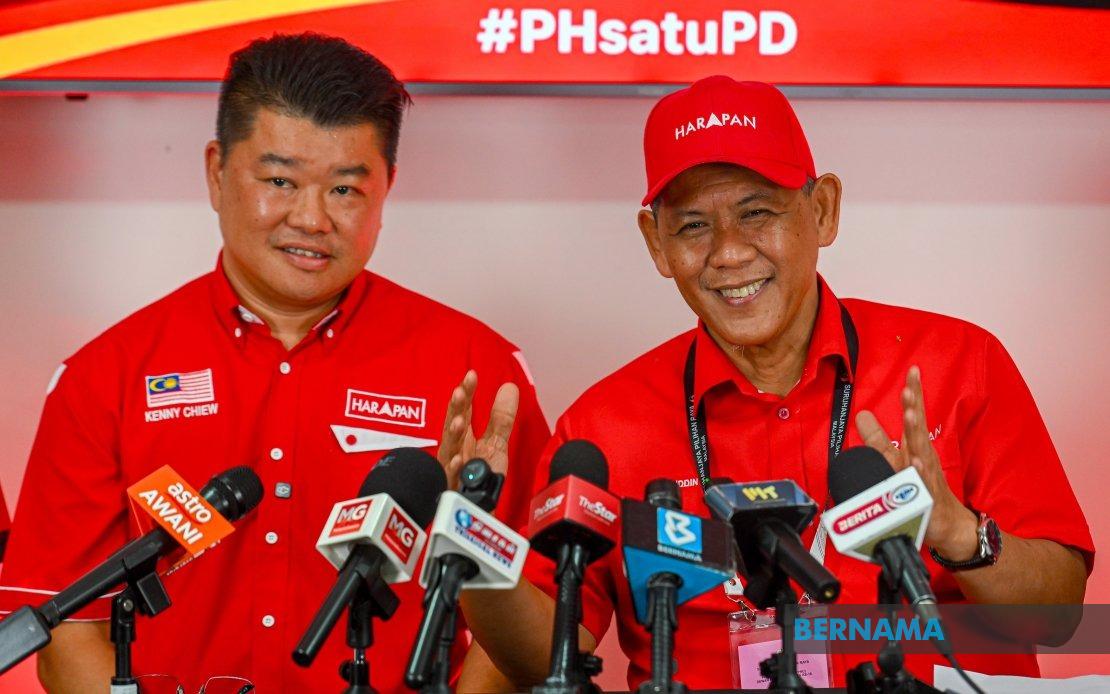
The 16th Negeri Sembilan State Election has entered a critical phase marked by concerns over campaign conduct, with Menteri Besar Datuk Seri Aminuddin Harun publicly appealing for responsible political behaviour from all contestants. Speaking during a campaign stop in the Linggi constituency, Aminuddin stressed that the state must demonstrate the standards befitting a mature democracy, where electoral competition remains vigorous without descending into destructive practices.
Aminuddin's remarks come against a backdrop of mounting tensions on the ground. The Pakatan Harapan coalition has documented several troubling incidents during the opening days of campaigning, including the deliberate burning of party flags in the Palong constituency and the destruction of flagpoles in Chembong. These acts represent a visible escalation beyond conventional political rivalry and have prompted authorities to take notice. The Negeri Sembilan Police Chief, Datuk Alzafny Ahmad, confirmed that law enforcement agencies are investigating reports of vandalism in multiple constituencies, signalling that these breaches are being treated seriously by the state's security apparatus.
The vandalism reports underscore a persistent challenge in Malaysian politics: the disconnect between electoral regulations and their enforcement on the ground. While election laws exist to protect the integrity of campaigns, the actual practice often lags behind statutory requirements. Aminuddin's intervention is notable because it frames the issue not merely as a legal concern but as a matter of democratic culture and state pride. By positioning ethical campaigning as essential to Negeri Sembilan's identity as a civilised state, he appeals to collective values rather than simply invoking penalties or sanctions.
As the Pakatan Harapan candidate for the Linggi state seat, Aminuddin occupies a delicate position. His call for law-abiding conduct carries weight precisely because he leads the coalition that has documented the complaints, yet he presents the appeal as transcending partisan interest. This rhetorical stance—positioning the ruling coalition as the guardian of democratic standards—serves multiple purposes: it establishes moral authority, rallies supporters around an idealised vision of politics, and puts pressure on opposition parties to demonstrate compliance.
The timeline of events is significant for understanding the state of campaign dynamics. The Negeri Sembilan State Legislative Assembly was dissolved on June 5, setting the stage for what has become an unusually contentious electoral period. The Election Commission designated July 28 for early voting and August 1 for polling day, compressing the campaign period and intensifying competition. In such compressed timelines, tensions often escalate as candidates vie for visibility and voter attention in a shrinking window of opportunity.
The incidents in specific constituencies reveal geographical patterns worth noting. Palong and Chembong are areas where contests are likely to be closely fought, suggesting that vandalism may be concentrated in battleground seats where the stakes feel highest to activists on the ground. This concentration pattern implies that the problem is not systemic across all areas but rather concentrated in zones of intense competition, where emotional investment in outcomes is highest. The Jempol vandalism report adds another data point to this emerging picture of isolated but recurring breaches.
From a broader Southeast Asian perspective, the Negeri Sembilan situation reflects trends visible across the region's democracies. Rising political intensity, particularly in state and local elections, has occasionally translated into aggressive tactics that test the boundaries of acceptable conduct. However, Malaysia's response through official statements and police investigations demonstrates institutional mechanisms designed to contain such behaviour. The fact that Aminuddin felt compelled to make a public statement indicates that authorities recognise these issues require not just enforcement but also public messaging and moral suasion.
The role of media and public discourse in shaping campaign behaviour cannot be understated. Aminuddin's direct appeal to reporters, combined with the Election Commission's regulatory framework, creates a multi-layered accountability structure. Voters become informed observers of how parties conduct themselves, not merely as evaluators of policy platforms but as judges of character and commitment to democratic values. This elevation of campaign conduct into a substantive electoral issue itself becomes part of the competitive landscape.
For Malaysian readers, particularly those in Negeri Sembilan, these developments carry implications for how they should evaluate candidates and parties heading into the August 1 polling day. The state election is not merely a choice between policy alternatives but also a referendum on which political actors can be trusted to respect democratic norms even during intense competition. Aminuddin's statement essentially places campaign conduct on the electoral agenda, making it a legitimate factor in voter decision-making.
The broader challenge facing Malaysian democracy is whether ethical appeals and regulatory frameworks prove sufficient to maintain campaign standards as political temperatures rise. In Negeri Sembilan, the visible consequences of vandalism—destroyed flags and damaged infrastructure—serve as tangible reminders that democratic competition, while healthy, requires boundaries. The coming weeks will test whether Aminuddin's call for integrity resonates with party activists and supporters, or whether competitive pressures prove stronger than appeals to democratic virtue.
As investigations proceed and the campaign continues toward August 1, the spotlight on campaign conduct in Negeri Sembilan offers a case study relevant to other Malaysian states. How effectively authorities respond to breaches, how seriously political parties take ethical standards, and whether voters themselves prioritise conduct in their electoral choices will collectively determine whether this election becomes a model for responsible campaigning or merely another cycle marked by incidents later forgotten.

