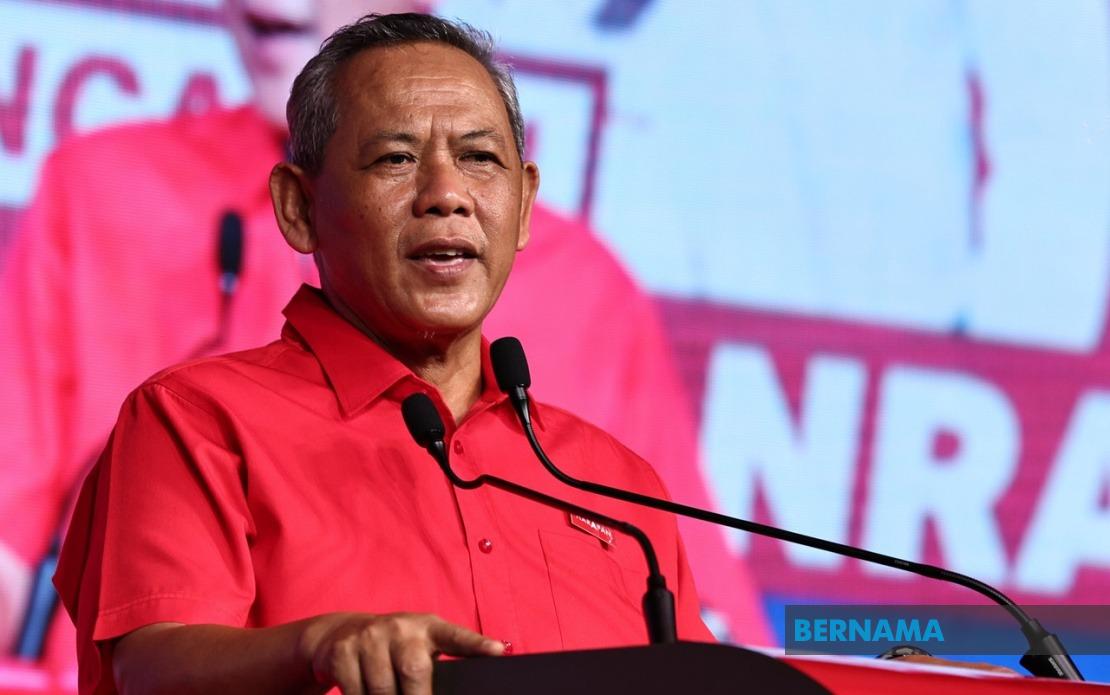
Negeri Sembilan Menteri Besar Datuk Seri Aminuddin Harun has firmly pushed back against speculation that his decision to contest the Linggi state seat in the forthcoming state election was motivated by tactical considerations to evade defending Sikamat. Speaking through a Facebook post in Seremban on July 16, Aminuddin framed the constituency switch as an autonomous decision reflecting his commitment to public service rather than a calculated manoeuvre to avoid electoral vulnerability.
As chairman of Pakatan Harapan in Negeri Sembilan, Aminuddin expressed his intention to channel the same energy and dedication he has invested in Sikamat towards serving the residents of Linggi. His public statement addressed growing speculation within political circles about the timing and rationale of his relocation, suggesting he anticipated questions about whether the move signalled concern about retaining his current seat against potential opposition challenges. By reframing the narrative as a voluntary transition driven by strategic vision rather than defensive necessity, Aminuddin sought to maintain control of the political messaging surrounding his candidacy.
The Menteri Besar's extensive tenure in Sikamat spans four consecutive election cycles, establishing him as an entrenched figure in that constituency's political landscape. Throughout these terms, he has accumulated substantial grassroots experience and accumulated a base of supporters who have witnessed his political evolution. His nostalgic reflection on Sikamat's early years underscores this deep connection, recalling a period when his team operated from cramped quarters above a commercial shophouse with minimal state resources whilst navigating opposition status. These circumstances required unconventional fundraising approaches and community-mobilised initiatives to sustain constituent services, shaping his political philosophy around resourcefulness and collective action.
Aminuddin's decision to relocate represents a significant development in the structure of Pakatan Harapan's slate for the 16th Negeri Sembilan state election. The transition introduces organisational implications for both constituencies affected by his departure. By nominating Nor Azman Mohamad as his successor in Sikamat, the coalition has signalled continuity in representation whilst creating an opportunity to test a fresh political operator within a relatively secure coalition stronghold. Aminuddin's public endorsement of his nominated replacement carries weight among Sikamat voters, potentially facilitating a smoother transition and reducing the risk of voter alienation that sometimes accompanies changes in long-serving representatives.
The electoral contest awaiting Aminuddin in Linggi carries distinct characteristics that differentiate it from his previous four campaigns. He faces an experienced incumbent from Barisan Nasional, Datuk Mohd Faizal Ramli, who brings his own established network and advantage of administrative incumbency. This matchup represents a test of whether the Menteri Besar's state-level position and broader coalition machinery can overcome a sitting assemblyman's local entrenchment. The Linggi contest will provide empirical evidence about voter receptiveness to leadership changes and whether Aminuddin's stature at state level translates into constituency-level electoral advantage.
The timing of Aminuddin's transition carries broader implications for understanding coalition strategy in Negeri Sembilan. The proximity between his seat change announcement and the formal nomination period suggests deliberate planning to position candidates before electoral battles commence. The election calendar itself—with nominations scheduled for Saturday, early voting on July 28, and polling on August 1—compressed the window for campaigning, making prior strategic positioning essential for candidates seeking to establish campaign infrastructure and voter contact frameworks.
From a Malaysian political perspective, Aminuddin's manoeuvre illustrates the calculated nature of coalition seat allocations at state level, where considerations of incumbent vulnerability, candidate strength, and organisational capacity intersect with broader coalition dynamics. His relocation from a familiar political home to contest a more challenging seat against an incumbent demonstrates confidence in his personal electoral appeal whilst potentially signalling that coalition strategists assessed Sikamat as winnable under alternative leadership. Such decisions reflect sophisticated analysis of demographic shifts, voter sentiment trajectories, and individual candidate performance metrics across constituencies.
The Menteri Besar's public messaging emphasised gratitude towards Sikamat residents, seeking to preserve goodwill within the constituency after his departure. This approach acknowledges that voters who have supported him repeatedly may experience his relocation as personal rejection, requiring diplomatic communication to prevent resentment that could translate into depressed turnout or reduced support for his nominated successor. His recollection of shared sacrifices and communal achievements during challenging opposition years invokes emotional resonance and historical legitimacy that transcends electoral competition.
For Southeast Asian observers, the Negeri Sembilan election illustrates the competitive intensity and strategic sophistication characteristic of Malaysian state-level politics. Coalition seat allocation decisions involve quantitative analysis of voting patterns, qualitative assessment of community dynamics, and organisational capacity evaluation across multiple constituencies. Aminuddin's decision to contest Linggi rather than defend Sikamat encapsulates these calculation methods, demonstrating that political retirement or seat avoidance is consciously chosen based on strategic assessment rather than individual preference alone.
The electoral dynamics unfolding in Negeri Sembilan will provide indicators about coalition performance and voter sentiment in a state that has alternated between coalition control and opposition governance in recent electoral cycles. Results from Linggi and across the state will offer early signals about national political trajectories and the resilience of various coalition formations ahead of future national elections. The Menteri Besar's personal electoral outcome in this high-profile contest carries implications extending beyond Negeri Sembilan's borders, contributing to broader assessments of leadership viability and coalition competitiveness across Malaysia.

