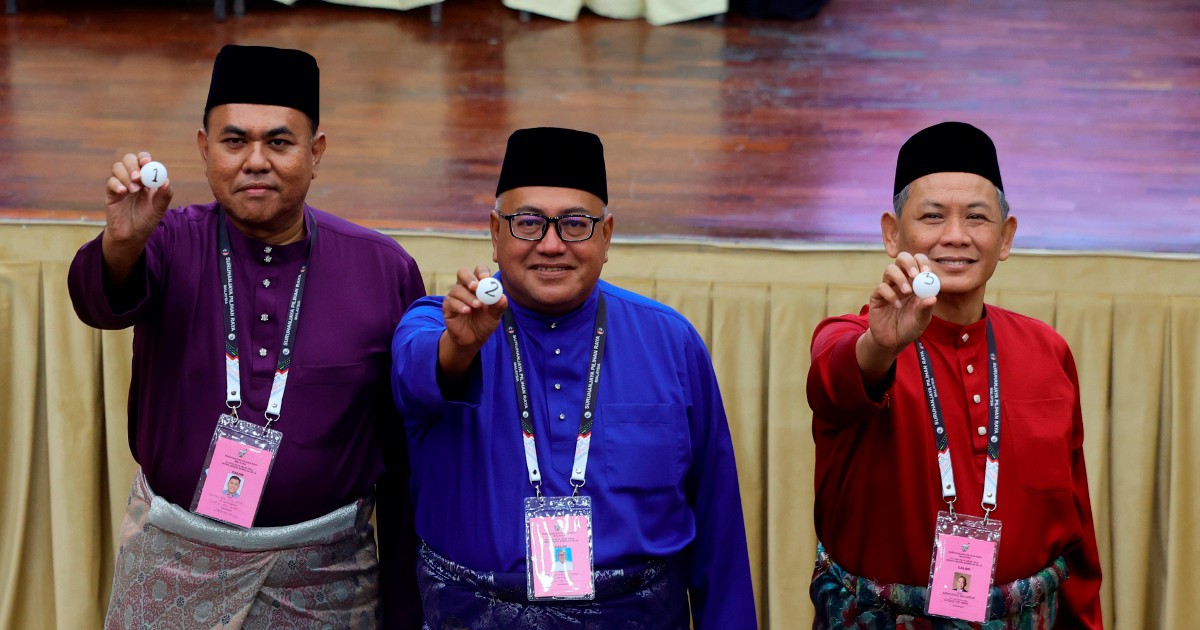
The political landscape in Negri Sembilan's Linggi constituency is shaping up to be far more unpredictable than the traditional stronghold status might suggest. Caretaker Menteri Besar Datuk Seri Aminuddin Harun made the candid admission while campaigning in Port Dickson, signalling that defending his seat will demand significantly greater effort than anticipated. His assessment of the contest as essentially deadlocked between major political forces represents a notable shift from the customary dominance that Barisan Nasional has historically maintained in this particular division.
The characterisation of a "50-50" race carries particular weight given Aminuddin's position as the state's chief executive and the frontrunner for continued leadership. In normal electoral circumstances, an incumbent menteri besar wielding the machinery and resources of state government would be considered the overwhelming favourite to retain his constituency. His willingness to publicly acknowledge genuine uncertainty suggests that ground conditions have shifted materially, potentially reflecting broader voter sentiment changes across the state or specific local grievances within Linggi that have eroded what was previously secure support.
Linggi has represented one of Barisan Nasional's more reliable electoral assets within Negri Sembilan for decades. The constituency's traditional socio-economic composition and voter demographics have historically favoured the coalition, making it a relatively safe seat for incumbent administrations. However, the current political climate at both federal and state levels has introduced variables that complicate such traditional calculations. Shifts in voter alignment across urban and semi-urban Peninsular Malaysian constituencies have become increasingly unpredictable, with younger voters and urban professionals showing greater willingness to consider alternative political options.
The broader context of Negri Sembilan's political evolution cannot be divorced from national trends. Since the watershed 2018 general election and subsequent political realignments, the state has witnessed changing voter preferences and emergent competition in constituencies previously considered safe territory for the ruling coalition. The emergence of stronger opposition machinery in various districts has translated into keenly contested races where incumbents can no longer assume comfortable victory margins. Linggi's status as a battleground seat reflects this wider transformation affecting competitive politics across the state.
Aminuddin's acknowledgement of the tight contest also carries implications for Barisan Nasional's overall strategy in the Negri Sembilan state elections. If the menteri besar himself faces significant electoral uncertainty in his own seat, the ruling coalition's performance across other constituencies becomes correspondingly critical. The race may influence overall campaign messaging and resource allocation decisions as election day approaches. A loss in Linggi would fundamentally alter the political trajectory in the state, potentially forcing significant leadership changes and coalition restructuring.
The opposition's competitive positioning in Linggi appears to have strengthened measurably compared to previous election cycles. Whether this stems from improved ground organisation, stronger candidate appeal, or accumulated voter frustration with specific state-level policies and development priorities remains to be seen through continued campaigning. The tightness of the contest suggests that neither major political force can claim commanding advantages in terms of grassroots support or voter sentiment within the constituency.
Voter demographics and electoral behaviour in Linggi have likely undergone gradual evolution since the last state election. Urban growth, demographic shifts, and generational changes may have altered the political preferences of the constituency in ways that traditional electoral assumptions do not fully capture. Aminuddin's direct articulation of electoral uncertainty appears to reflect sophisticated appreciation of these changing ground realities rather than mere political caution or modesty.
For Malaysian observers of state-level politics, the Linggi race exemplifies the competitive dynamics increasingly characteristic of peninsular state elections. Gone are the days when incumbency and administrative control alone guaranteed electoral success, particularly when menteri besar candidates are directly competitive at the constituency level. The need for continuous engagement with constituents, responsiveness to legitimate grievances, and credible articulation of future policy direction have become essential prerequisites for electoral success even in traditionally supportive constituencies.
As Negri Sembilan's state elections draw nearer, Linggi will undoubtedly receive heightened attention from both major political coalitions. The constituency's outcome could prove determinative in shaping the overall state election results and subsequent government formation. Aminuddin's candid acknowledgement of the challenging prospects he faces suggests that both Barisan Nasional and opposition parties recognise the seat's potential significance. The next phase of campaigning in Linggi will likely witness intensified political activity, candidate engagement, and voter mobilisation efforts as the contest unfolds toward polling day.

