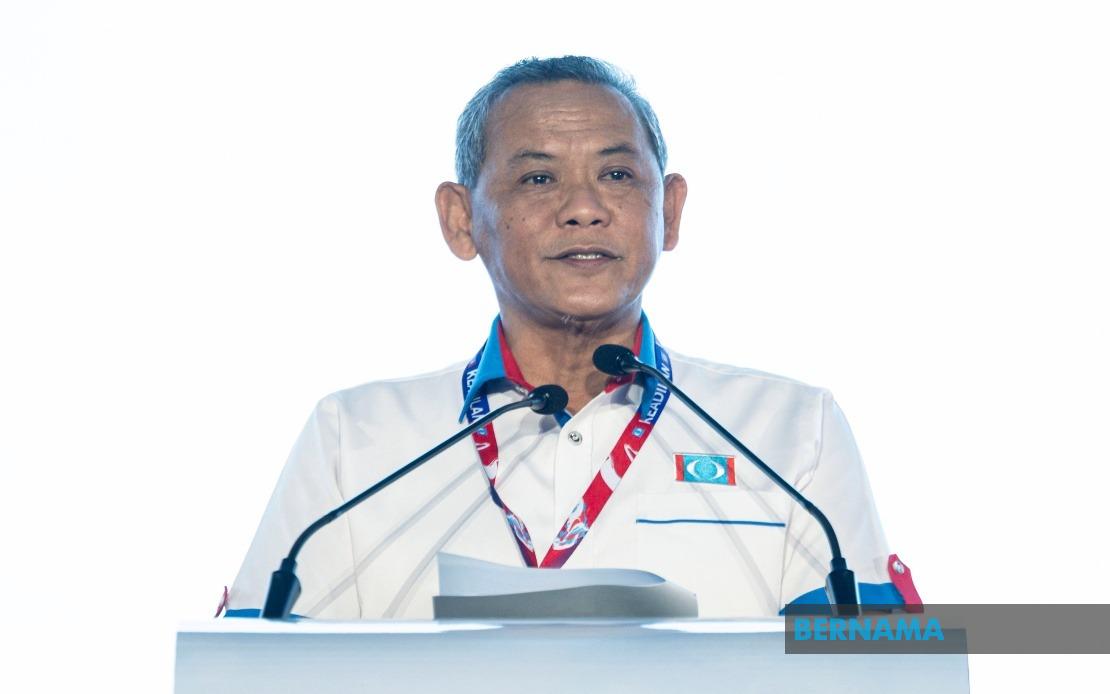
Datuk Seri Aminuddin Harun, the former Menteri Besar of Negeri Sembilan, has signalled his willingness to relinquish his post as chairman of the Negeri Sembilan State Leadership Council of Parti Keadilan Rakyat, marking a significant leadership transition within the party following its disappointing electoral showing. Speaking during his closing address at the PKR National Congress in Melaka on August 16, Aminuddin acknowledged the mounting pressure from six branch leaders within the state who have publicly called for a reassessment of the party's direction in light of recent developments.
The catalyst for this shift stems from PKR's underwhelming performance in the Negeri Sembilan state election held on August 1. The party managed to retain only two legislative seats—Chuah and Sri Tanjung—out of a total of 15 constituencies it contested. This outcome represents a significant setback for the party's ambitions in the state and has prompted internal calls for accountability at the leadership level. The electoral disappointment has created an opening for party figures to reassess strategies and personnel responsible for campaigning efforts.
Aminuddin's public acceptance of responsibility carries particular weight given his personal electoral loss in the Linggi state seat. Running in a three-way contest, he secured 6,163 votes but fell short against Barisan Nasional's Datuk Mohd Faizal Ramli, who garnered 9,139 votes, and Bersatu's Datuk Zamri Md Said, who obtained 391 votes. This margin of defeat—2,976 votes—underscores the competitive nature of the contest and reflects broader voter sentiment across the state that may have contributed to PKR's overall poor showing.
In his statement, Aminuddin demonstrated a measured approach to the situation, explicitly agreeing with the demands raised by the six PKR branch leaders. Rather than adopting a defensive posture or seeking to deflect criticism, he framed his potential resignation as a matter of principle and accountability. He stated that the position itself is not a personal possession but rather a trust held on behalf of the party, thereby positioning any decision regarding his future role as ultimately resting with the party machinery rather than with himself alone.
Despite accepting responsibility for the electoral defeat, Aminuddin remained steadfast in his commitment to the party's broader mission and vision. He explicitly rejected the notion that setbacks should discourage continued political engagement or serve as justification for withdrawal from public life. Instead, he reframed the defeat as a necessary prelude to organisational rebuilding and strategic recalibration, a perspective that may resonate with party members seeking to maintain morale in the aftermath of disappointing electoral results.
For Malaysian political observers, this development reflects a pattern increasingly common in Malaysian politics whereby parties are more willing to acknowledge electoral accountability and undertake leadership changes in response to poor performance. This contrasts with historical patterns in which losses were frequently attributed to external factors or systemic issues rather than organisational shortcomings. Aminuddin's willingness to shoulder responsibility publicly demonstrates a degree of institutional maturity that may strengthen PKR's position among voters who have grown weary of defensive political rhetoric.
The timing of Aminuddin's announcement during the PKR National Congress carries strategic significance. By making this statement in a public forum before party delegates, he has effectively seized control of the narrative surrounding his potential departure. This approach allows the party to frame any transition in leadership as a proactive measure driven by internal reflection rather than as a reluctant capitulation to external pressure. Such framing can be instrumentally valuable for the party's broader positioning and credibility.
The Negeri Sembilan electoral result reflects broader challenges confronting PKR as it seeks to establish itself as a viable alternative force in state-level politics across Malaysia. The party's inability to secure more than two seats in a state of 15 constituencies suggests significant organisational or messaging difficulties that extend beyond individual leadership failings. The party will need to undertake comprehensive analysis of voter preferences, local campaign effectiveness, and candidate selection processes if it hopes to improve performance in future elections.
Looking ahead, the party faces the task of identifying Aminuddin's successor and ensuring that the transition proceeds smoothly without undermining internal cohesion. The acceptance of responsibility by a senior figure like Aminuddin may create space for younger party leaders to step forward with fresh perspectives and organisational approaches. This generational shift could potentially benefit PKR's long-term development if managed carefully and with adequate attention to retaining the institutional knowledge and political experience that figures like Aminuddin possess.
The broader implications for PKR's national trajectory remain to be seen. State-level setbacks can either catalyse productive internal reflection and organisational reform or contribute to broader patterns of institutional decline. Aminuddin's measured response suggests the former outcome may be possible, though much will depend on whether the party leadership can translate the rhetoric of rebuilding into concrete policy and organisational changes. For Malaysian voters and observers interested in the health of the country's democratic institutions, the manner in which PKR navigates this transition will offer important signals about the party's viability as a long-term political force.

