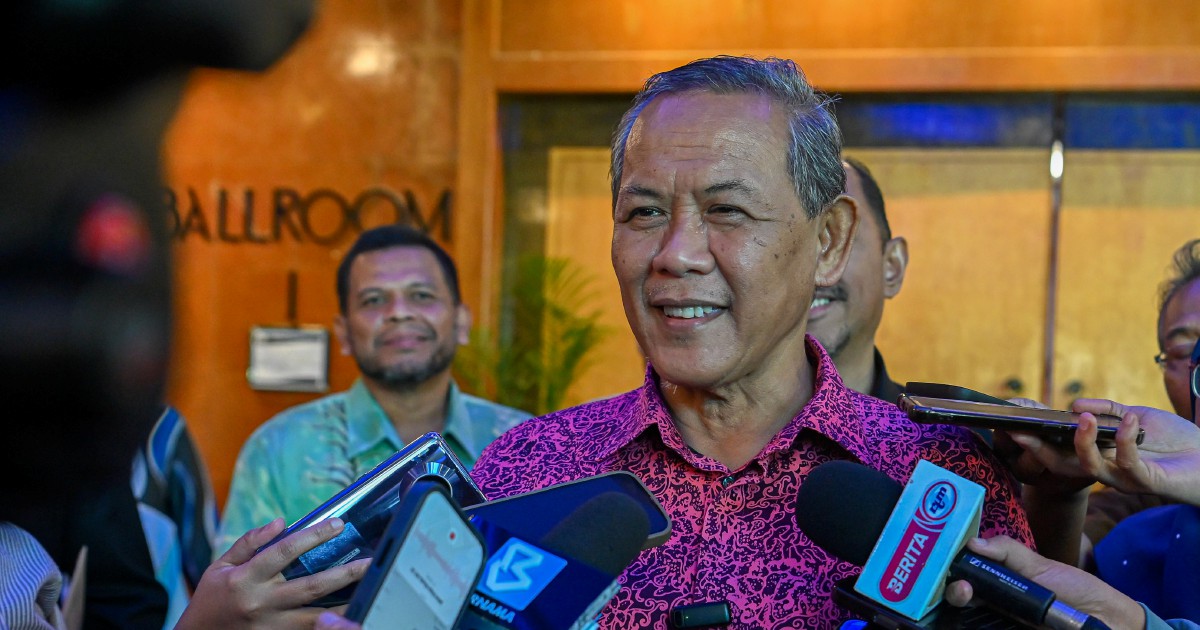
Negri Sembilan Menteri Besar Datuk Seri Aminuddin Harun has made a direct appeal to the state's electorate to evaluate his administration's substantive response to the Linggi area's recurring inundation challenges, rather than permit the matter to become entangled in partisan political maneuvering. Speaking in Seremban, the state leader's remarks underscore growing tension over how regional flooding emergencies are being framed in public discourse as the 16th Negri Sembilan state election approaches.
The Linggi river basin, which encompasses areas across multiple districts in the state, has historically been prone to seasonal and unexpected flooding that displaces residents, damages properties, and disrupts economic activity. The recurrent nature of these disasters has made flood mitigation a persistent concern for voters in affected communities, who have endured repeated cycles of emergency evacuation, rehabilitation, and infrastructure damage. This history has positioned the issue as a significant electoral consideration, with various political factions seeking to capitalize on public dissatisfaction or highlight their respective approaches to environmental management and disaster preparedness.
Aminuddin's intervention signals an attempt to reframe the conversation away from blame assignment and toward tangible outcomes. The Menteri Besar indicated that mitigation work is actively progressing, suggesting that his government views the situation not as an intractable problem but as one being systematically addressed through engineering and administrative interventions. By appealing to voters to consider actual measures rather than rhetorical promises, he is attempting to position the incumbent administration as action-oriented and pragmatic in its approach to infrastructure and public safety challenges.
The politicization of natural disasters is a recurring phenomenon throughout Southeast Asia, where flooding regularly affects multiple nations and communities. In Malaysia's context, flood management has become increasingly central to state-level politics, particularly in areas with vulnerable infrastructure or geographic susceptibility to inundation. Voters in flood-prone regions often view electoral campaigns through the lens of which candidate or party can best protect their homes and livelihoods, making these areas politically contested territory during election cycles.
Negri Sembilan's approaching state election has intensified scrutiny of the government's disaster management record. Opposition parties have likely seized on any perception of inadequate flood prevention, while the ruling administration has invested political capital in demonstrating competence and commitment to resolving the issue. Aminuddin's statement reflects the calculated messaging of an incumbent facing electoral pressure, seeking to shift the conversation from past problems to future solutions and present efforts.
The specific nature of flood mitigation work in the Linggi area may include river dredging, embankment reinforcement, improved drainage systems, early warning infrastructure, and land-use planning modifications. These technical interventions require sustained funding, inter-agency coordination, and sometimes compensation or relocation arrangements for affected residents. The complexity of comprehensive flood management means results often appear gradually, making it challenging for any administration to demonstrate quick fixes during an election cycle.
For Malaysian voters in the Linggi region, the Menteri Besar's plea represents a broader governance question: whether electoral decisions should be based on evaluating demonstrated competence and ongoing work, or whether political messaging and blame allocation should dominate public discourse. This tension between substance and politics is particularly acute in Malaysia's multi-level governance system, where state governments must balance central government coordination with local implementation and accountability to regional constituencies.
The timing of Aminuddin's remarks also suggests awareness that opposition parties may be leveraging flood grievances as a campaign platform. By explicitly urging voters not to politicize the issue, he is paradoxically making a political argument—that competent administration and practical problem-solving should outweigh partisan point-scoring. Whether this framing will persuade voters or whether communities remember past inundations as failures of governance will significantly influence electoral outcomes in affected areas.
Regionally, Linggi's flooding challenges reflect broader Southeast Asian vulnerability to climate variability, rapid urbanization, and aging infrastructure. Negri Sembilan, like many Malaysian states, faces the dual pressure of development and environmental management. The state government's capacity to simultaneously facilitate economic growth while protecting communities from natural hazards remains a fundamental measure of administrative effectiveness that voters across the region closely monitor.
Aminuddin's emphasis on ongoing mitigation work rather than future promises suggests recognition that flood-affected communities have heard electoral commitments before. Residents in low-lying areas have accumulated lived experience with inundation, and their skepticism regarding political pledges is understandable. Whether current mitigation efforts represent genuinely transformative interventions or incremental improvements will become apparent through implementation over coming months, providing voters with concrete evidence upon which to base their electoral calculations.

