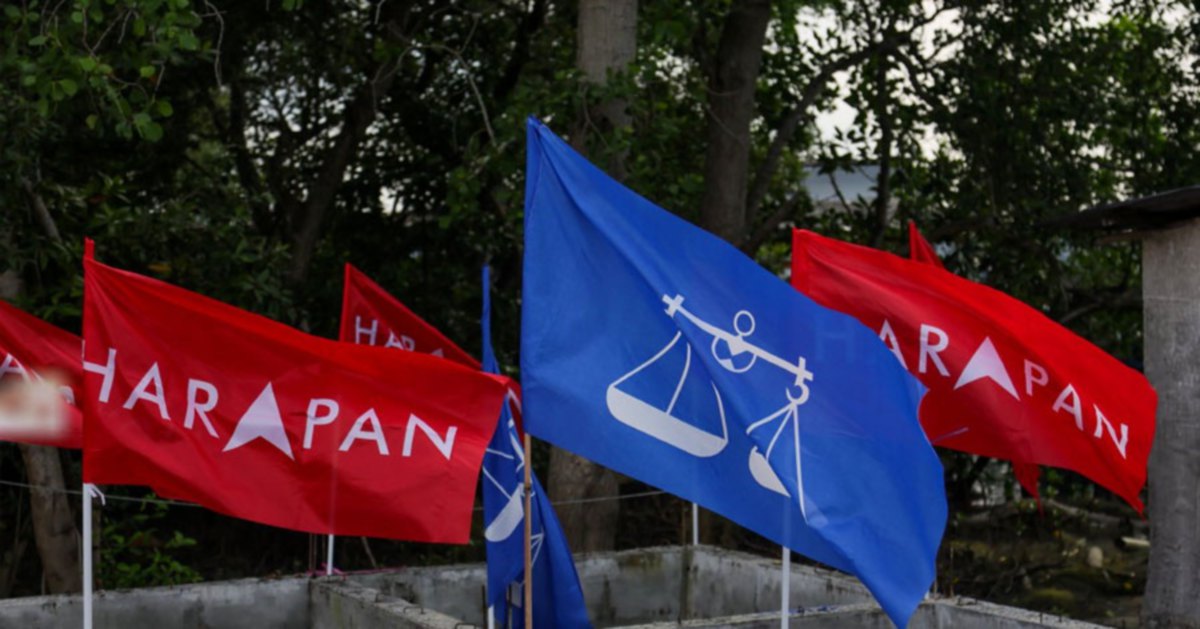
Pakatan Harapan communications director Datuk Seri Fahmi Fadzil has publicly verified that coalition election chief Datuk Seri Amirudin Shari convened with the opposition alliance's chairman Datuk Seri Anwar Ibrahim, underscoring the intensity of negotiations currently underway between the two major political blocs regarding seat allocation in upcoming electoral contests.
The confirmation of this high-level engagement marks a critical juncture in discussions between Pakatan Harapan and Barisan Nasional, two coalitions that have navigated an intricate relationship oscillating between cooperation and rivalry since the 2018 general election reshaped Malaysia's political landscape. Such meetings between senior figures typically signal substantive progress or significant hurdles in coalition-building efforts, suggesting that both alliances are actively engaged in detailed discussions to finalise their respective electoral strategies.
Amirudin Shari's role as election director places him at the operational core of Pakatan Harapan's campaign machinery, making his direct interaction with party chairman Anwar Ibrahim on seat matters a signal of the gravity attached to these negotiations. The election director traditionally oversees candidate selection, electoral resource deployment, and strategic positioning across constituencies, meaning discussions at this level frequently address complex trade-offs between ambition and pragmatism.
For Malaysian readers following coalition politics, such confirmations illuminate the formal machinery driving electoral preparations. The acknowledgment by Fahmi Fadzil, himself a prominent communications strategist and minister in the incumbent administration, demonstrates that party leadership recognises the public interest in understanding how major coalitional decisions are being shaped. Transparency regarding inter-coalition dialogue at this level reassures members and supporters that their interests are being represented in strategic deliberations.
The backdrop of PH-BN seat talks gains significance within Malaysia's contemporary political context, where neither alliance commands an outright parliamentary supermajority without potential cooperation from the other. This structural reality has necessitated a sophisticated approach to seat distribution, where both coalitions must balance internal demands from constituent parties against the imperative to present a united front against opposition forces. Previous iterations of such negotiations have historically proven contentious, with smaller coalition partners often feeling marginalised in favour of larger, more electorally competitive parties.
Packatan Harapan itself comprises parties with distinct ideological orientations and geographic strongholds—the Democratic Action Party drawing support from urban and Chinese-majority areas, Amanah and the Malaysian United Democratic Alliance commanding particular regional concentrations, and the People's Justice Party presenting itself as a cross-communal force. Barisan Nasional similarly encompasses the United Malays National Organisation as its dominant partner alongside the Malaysian Chinese Association, the Malaysian Indian Congress, and various other component parties. Harmonising the aspirations of these numerous parties into a coherent seat arrangement represents a monumental organisational challenge requiring leadership engagement at the highest levels.
The timing of such meetings often carries strategic implications. Amirudin's engagement with Anwar Ibrahim, as confirmed by party communications leadership, suggests that discussions have progressed beyond preliminary exchanges into substantive negotiation phases. This progression typically indicates that parties have moved past positional posturing and are engaging with concrete scenarios regarding constituency allocation, campaign coordination, and post-election cooperation frameworks. The involvement of election directors and coalition chairmen simultaneously suggests that both technical and political considerations are being addressed in parallel.
For Southeast Asian observers monitoring Malaysian political developments, these negotiations underscore broader regional patterns where traditional ideological divisions have become secondary to pragmatic coalition management. Indonesia, Thailand, and the Philippines have similarly witnessed the emergence of fluid political alliances based on electoral mathematics rather than programmatic coherence. Malaysia's approach to managing these complexities through structured inter-coalition dialogue represents a distinctly institutional response to modern electoral volatility.
The public confirmation of Amirudin's meeting with Anwar Ibrahim also reflects evolving communication strategies within Malaysian politics. Rather than allowing speculation to dominate media discourse, party leadership has chosen to acknowledge such meetings openly, potentially seeking to frame negotiations as orderly and professional rather than as evidence of backroom dealing. This communication approach itself signals sophistication in managing public perception during sensitive political negotiations that can attract criticism from rivals seeking to portray coalitions as unprincipled opportunists.
Moving forward, the substance of discussions between these senior figures will likely determine the trajectory of pre-election positioning. Successful resolution of seat disputes would allow both coalitions to consolidate internal support and present themselves effectively to voters. Conversely, protracted negotiations or contentious outcomes could generate internal friction and provide opposition parties with rhetorical ammunition regarding coalition stability and internal democracy. The confirmation of these meetings thus represents both a transparency measure and an implicit assertion of coalitional resilience and organisational maturity.

