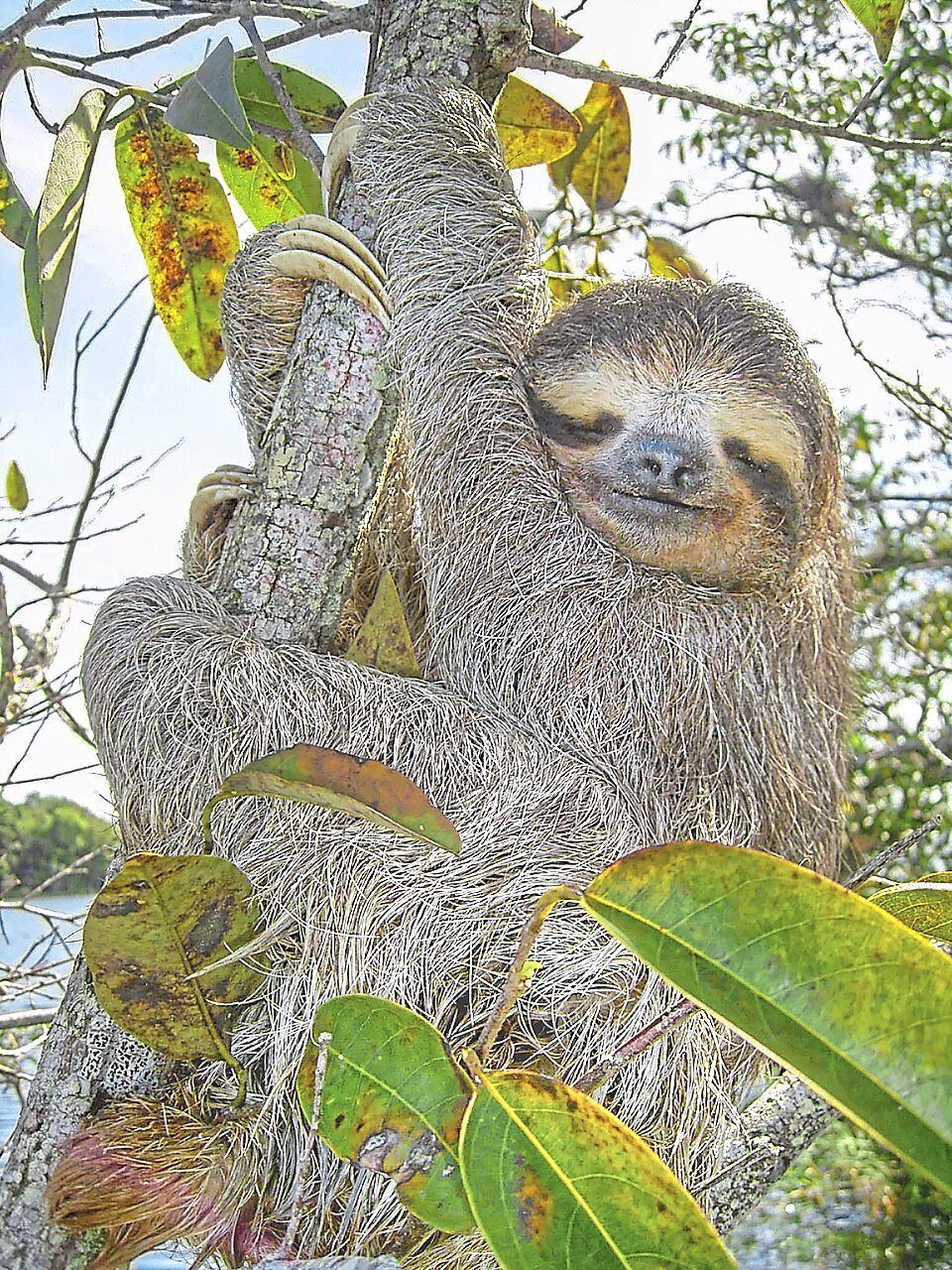
International researchers have identified a remarkable genetic feature in sloths that could fundamentally reshape how scientists approach human ageing and disease. The discovery centres on preserved "jumping genes" – mobile DNA sequences that have remained active in sloths for approximately 30 million years – a phenomenon almost entirely absent in modern humans. This breakthrough, achieved through collaboration between the Wellcome Sanger Institute, the Leibniz Institute for Zoo and Wildlife Research (IZW), the Hospital Sirio Libanes, and colleagues at the Max-Planck Institute for Molecular Cell Biology & Genetics in Germany, represents the first comprehensive genomic analysis of these enigmatic tree-dwelling creatures.
The research began when scientists extracted DNA from tissue samples of a captive sloth and subjected the material to advanced sequencing techniques in Germany. Using a methodology called comparative genomics, researchers then systematically compared the sloth genome against genetic blueprints from other mammals, particularly the anteater and armadillo. These three species share membership in Xenarthra, a unique mammalian group that evolved exclusively in South America and represents the only clade of placental mammals from that continent. By examining their genetic similarities and differences, the team could isolate what makes sloths biologically exceptional.
The analysis revealed that sloths possess multiple copies of active transposable elements – commonly known as "transposons" or "jumping genes" – sequences of DNA capable of moving between different positions within the genome. While humans and most other mammals do carry transposons, these are typically ancient evolutionary relics that have been silenced and rendered inactive over millions of years. The critical distinction with sloths is that their jumping genes have remained dynamically active, suggesting they serve an ongoing functional purpose rather than merely existing as genomic remnants. By tracing evolutionary pathways backward through time, researchers determined that these genetic elements emerged in the last common ancestor shared by all modern sloth species, making them roughly 30 million years old.
What makes this discovery particularly significant is the connection between these jumping genes and the sloth's metabolic machinery. Many of the preserved transposons are directly associated with mitochondria – the cellular structures responsible for producing energy and regulating metabolic processes. Scientists believe these genetic elements contributed to the evolution of the sloth's famously sluggish metabolism, which is the lowest recorded among all mammals. Rather than viewing their slow movement and lethargy as evolutionary disadvantages, researchers now understand these traits as deeply interconnected with sophisticated genetic adaptations that allow sloths to thrive despite dramatically reduced energy expenditure.
This finding carries profound implications for human medicine and biology. Dr Marcela Uliano-Silva, senior bioinformatician and co-lead author at the Wellcome Sanger Institute, emphasises that evolution represents "billions of experiments" conducted over incomprehensible spans of time. By studying unusual organisms like sloths, scientists occasionally discover biological solutions that humans never independently developed. The sloth genome, in this sense, offers a window into alternative evolutionary strategies for managing cellular energy, maintaining health, and adapting to environmental constraints – solutions that may prove directly applicable to contemporary human health challenges.
The medical relevance becomes clear when considering common human ailments. Dr Pedro Galante, co-lead author at the Hospital Sirio Libanes in Sao Paulo, Brazil, notes that numerous serious conditions – encompassing diabetes, age-related disorders, neurodegeneration, and progressive muscle wasting – fundamentally involve malfunctions in energy production and mitochondrial function. While sloths maintain robust health despite their extraordinarily low metabolic rate, humans typically develop pathologies under similar energy-constrained conditions. Understanding how sloth cells successfully manage low-energy states could provide researchers with crucial insights into what goes wrong in disease states. This knowledge might eventually inform therapeutic strategies for conditions currently lacking effective treatments.
The potential applications extend well beyond terrestrial medicine. Dr Galante suggests that sloth cell lines could function as natural experimental models for investigating tissue preservation, critical care medicine, and long-duration space travel. Astronauts travelling to distant planets would face severely restricted energy supplies and would need to maintain bodily functions while minimizing metabolic demands – precisely the challenge sloths have evolved to solve. By understanding the genetic and cellular mechanisms underpinning sloth metabolism, space agencies might develop interventions allowing human cells and tissues to survive extended periods in low-energy states, fundamentally altering the feasibility of deep-space exploration.
Dr Camila Mazzoni, head of evolutionary and conservation genomics at the IZW in Berlin, adds another crucial perspective: sloths have apparently evolved "genetic back-up systems" that compensate for their relaxed mitochondrial function and support their distinctive lifestyle. Rather than relying on a single metabolic strategy, these creatures possess redundant genetic safeguards – multiple pathways capable of maintaining cellular energy production when primary mechanisms falter. This redundancy might explain how sloths remain healthy despite operating under conditions that would ordinarily cause serious physiological stress in other mammals.
For Southeast Asian readers and researchers, this discovery opens intriguing research opportunities. The genomic tools and methodologies employed to sequence and analyse the sloth genome are increasingly accessible to regional institutions, potentially enabling comparative studies of unique Southeast Asian fauna. Species facing metabolic challenges due to habitat loss or climate change might harbour genetic solutions relevant to conservation biology and even human health. Additionally, understanding how ancient genetic elements influence modern metabolism could inform nutritional and pharmaceutical approaches tailored to regional populations with distinct metabolic characteristics.
The broader significance lies in recognising that solutions to humanity's most pressing health challenges may not emerge solely from studying human biology or conventional laboratory organisms. Instead, evolution's vast library of biological experiments – encoded in species ranging from sloths to less-studied creatures – contains answers waiting to be deciphered. As genomic sequencing becomes progressively faster and cheaper, researchers worldwide can systematically mine this repository, potentially unlocking treatments for ageing, metabolic disease, and conditions currently considered intractable. The sloth genome represents merely the beginning of this systematic exploration.

