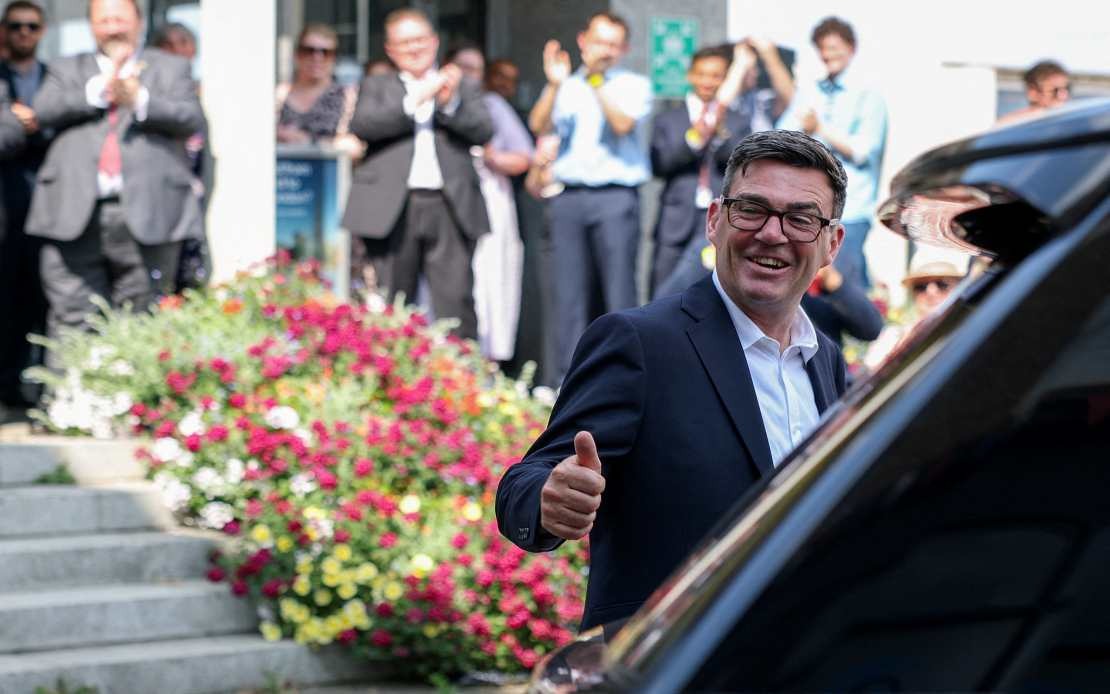
Andy Burnham will assume the position of British Prime Minister on Monday following an audience with King Charles III, stepping into leadership at a moment he is expected to frame as demanding both honest assessment of national challenges and demonstrable resolve to address them. The transition marks a significant juncture for the Labour government, arriving after a period of considerable political turbulence that has seen the United Kingdom cycle through seven different prime ministers over the past decade—a turnover that has eroded public confidence in Westminster's capacity for coherent governance.
In his inaugural address from Downing Street, the former mayor of Greater Manchester will centre his message on restoring trust in the political system and delivering what he has termed "breathing room" for ordinary households grappling with the persistent squeeze on household finances. His allies have signalled that the new premier intends to position his administration as one committed to genuine stability—not merely as a rhetorical device, but as a framework designed to translate political continuity into tangible improvements in living standards. This emphasis on connecting institutional steadiness to material outcomes reflects recognition that public scepticism toward political leadership has deepened, making promises of reform without demonstrated delivery increasingly hollow.
Burnham's ascension to the highest office represents an unconventional path to power. He entered Parliament anew barely a month before the Labour leadership contest, yet faced no competitive challenge to the premiership, a compressed timeline that has left much of his governing agenda still to be articulated in detail. However, he has already signalled certain commitments that will shape his administration's early direction. Chief among these is an ambitious devolution agenda aimed at shifting power away from London's centralised apparatus, a priority that aligns with longstanding sentiment in regional Britain for greater autonomous control over local affairs and resource allocation.
Among his first policy announcements, Burnham has pledged to dismantle the Starmer government's digital identification programme, rechanelling the resources previously allocated to that initiative toward tackling the cost-of-living crisis. This decision carries symbolic weight beyond its immediate budgetary implications, signalling a recalibration of governmental priorities away from what he evidently views as lower-order technological ambitions and toward the bread-and-butter concerns that dominate household anxiety. The scrapping of the digital ID scheme also represents a concession to civil liberties advocates who have long viewed such programmes with suspicion, potentially building broader political consensus around his administration's opening moves.
Energy policy looms as a central battleground for Burnham in his opening weeks. Reports suggest he may authorise expanded oil and gas exploration in the North Sea, a decision ostensibly framed as necessary to ease energy costs for struggling families. Environmental campaigners have mounted vigorous resistance, contending that Burnham would contradict Labour's 2024 election manifesto, which explicitly committed against issuing new North Sea drilling licences. They argue further that expanded extraction will provide minimal relief to energy bills while accelerating carbon emissions trajectories—a tension that will test the new premier's capacity to balance climate commitments against immediate consumer pressures.
The Thames Water crisis adds another urgent test to Burnham's early tenure. The utility company staggered beneath a £20 billion debt burden, and speculation has intensified regarding whether temporary nationalisation might become necessary to prevent the firm's collapse into special administration. Burnham has previously expressed openness to expanded public stewardship of essential infrastructure, and Thames Water's creditors have indicated willingness to negotiate with his incoming ministers about rescue arrangements. This situation carries broader implications for how his government conceptualises the appropriate relationship between public ownership and private enterprise—a question with resonance throughout Southeast Asia's developing economies as they navigate similar infrastructure challenges.
Burnham's first week in office will include Cabinet announcements that will substantially define his administration's character and capabilities. Particular attention has focused on the chancellorship, the office responsible for economic policy and fiscal management. The contest for this pivotal position has narrowed to two prominent figures: Energy Secretary Ed Miliband and Home Secretary Shabana Mahmood. Each brings distinct experience and represents different emphases within the broader Labour coalition—a choice that will signal whether Burnham intends to prioritise energy transition, security concerns, or economic recovery in his governing hierarchy.
The broader context of Burnham's transition deserves consideration for Southeast Asian observers monitoring British politics. The instability characterising Westminster over the past decade reflects deeper fractures within the UK political system—unresolved questions about Scotland's constitutional status, tensions between London and the regions, and fundamental disagreements about economic direction. These same strains animate political debates across the wider Commonwealth and beyond, offering instructive patterns for how established democracies navigate periods of institutional stress and leadership churn. Burnham's emphasis on stability rather than radical transformation suggests he recognises that restoring public confidence in government requires demonstration of competent administration before undertaking transformative agendas.
The incoming prime minister inherits an economically strained Britain, regional inequalities that have deepened markedly, and infrastructure deficits in transport, housing, and energy that have accumulated across successive administrations. His commitment to devolution and breathing room suggests a strategy of delivering incremental improvements while building the political capital necessary for longer-term restructuring. For Malaysian and Southeast Asian policymakers, the Burnham transition offers instructive observation regarding how stable democracies manage leadership transitions and balance regional autonomy against national coordination—questions that remain perpetually relevant across the region as nations continue developing federal and devolutionary arrangements.

