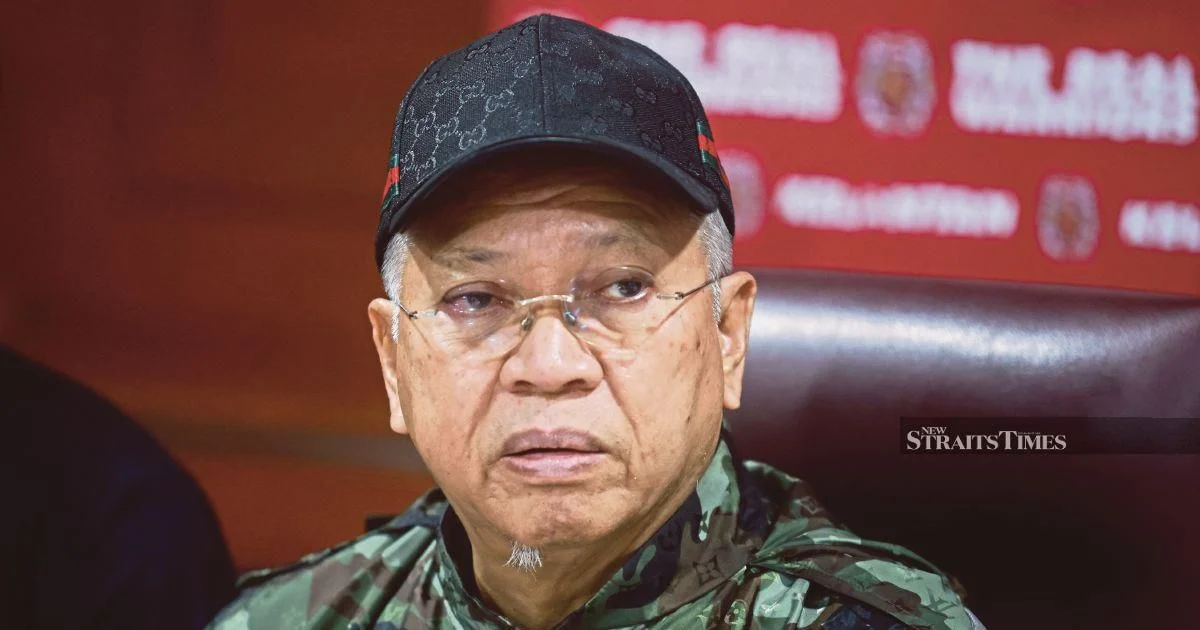
Tan Sri Annuar Musa has acknowledged a significant setback in his efforts to unify key components of the Perikatan Nasional coalition, revealing he personally pursued multiple reconciliation initiatives between PAS and internal Bersatu divisions without achieving lasting results. Speaking in his home state of Kelantan yesterday, the senior politician's candid admission underscores the mounting pressure fracturing the political alliance, which has served as a cornerstone of Malaysian governance since 2020.
The disclosure comes at a precarious moment for Malaysian politics, as the Perikatan Nasional framework increasingly struggles to maintain cohesion among its constituent parties. Annuar's intervention represented a high-level attempt to address what has become a fundamental structural weakness—the inability of PAS, as the dominant component, and the competing Bersatu factions to find common ground on critical issues affecting the coalition's stability and policy direction.
PAS, the Islamist party that controls several northern states and holds substantial parliamentary representation, has grown increasingly assertive in coalition matters, creating tensions with former Prime Minister Muhyiddin Yassin's Bersatu faction and its rivals. These internal Bersatu tensions had been anticipated to be resolved through Annuar's mediation, given his position as a respected senior figure within the alliance structure and his standing across party lines.
The failure of reconciliation efforts has broader implications for Malaysia's political landscape. The Perikatan Nasional coalition emerged as a significant alternative political force, successfully positioning itself as a counterweight to traditional power structures. However, without internal unity, the coalition risks becoming a transactional arrangement rather than a cohesive political movement capable of presenting a unified policy agenda or leadership vision to Malaysian voters.
Bersatu's internal fragmentation represents a particularly acute challenge, as the party has experienced successive defections and leadership disputes that have weakened its organisational capacity. The presence of competing factions within the party itself complicates coalition management, as different Bersatu groups may have divergent interests and strategic objectives that do not necessarily align with PAS priorities or broader Perikatan Nasional goals.
For Malaysian readers and observers tracking political developments, Annuar's candid acknowledgement of failure carries significant weight. Unlike earlier opaque political manoeuvres that kept coalition tensions hidden from public view, this transparent admission suggests the leadership recognises that the problems have become too substantial to conceal. The decision to publicly discuss failed mediation attempts may indicate an assessment that the coalition's structural problems require more fundamental solutions than behind-the-scenes negotiations.
The ramifications extend to governance and legislative effectiveness. A fragmented Perikatan Nasional may struggle to maintain discipline among its parliamentary members, potentially affecting the government's ability to pass legislation or maintain stability on crucial votes. This vulnerability could be exploited by opposition parties seeking to demonstrate that the coalition lacks the coherence necessary for effective administration.
Regional analysts note that such coalition instability in Malaysia carries implications beyond domestic politics. Southeast Asia's largest Muslim-majority democracy serves as a barometer for political stability in the broader region. Persistent internal divisions within Malaysia's governing coalitions can undermine investor confidence and complicate Malaysia's engagement with regional institutions and international partners.
Annuar's disclosure also raises questions about the coalition's future trajectory. If high-level reconciliation efforts between PAS and Bersatu factions have exhausted themselves, alternative scenarios may include party reorganisation, leadership transitions, or even structural changes to the coalition arrangement itself. Such developments could reshape Malaysian politics considerably, potentially opening new possibilities for opposition parties or prompting realignments that shift the political balance.
Looking forward, the failed reconciliation attempts may necessitate deeper conversations about what holds the Perikatan Nasional coalition together beyond electoral calculations and short-term political convenience. Whether the alliance can transition from managing crises to building genuine institutional foundations for cooperation remains an open question that will likely preoccupy Malaysian political observers in the coming months.
The episode also highlights the limitations of personality-driven mediation in managing structural political conflicts. While respected figures like Annuar can facilitate dialogue, resolving fundamental differences between parties with competing ideological orientations, organisational interests, and leadership ambitions requires more comprehensive institutional mechanisms and possibly constitutional or party-level reforms.
As the Perikatan Nasional coalition navigates these challenges, the success or failure of alternative approaches to unity will determine whether the political alliance emerges stronger through renewed commitment to shared principles or fragments into competing political entities pursuing separate paths.


%22%2F%3E%3C%2Fpattern%3E%3C%2Fdefs%3E%3Crect%20width%3D%22100%25%22%20height%3D%22100%25%22%20fill%3D%22url(%23ph1ejxxg)%22%2F%3E%3Crect%20width%3D%22100%25%22%20height%3D%22100%25%22%20fill%3D%22url(%23ph1ejxxp)%22%2F%3E%3Ctext%20x%3D%2250%25%22%20y%3D%2250%25%22%20text-anchor%3D%22middle%22%20dominant-baseline%3D%22central%22%20fill%3D%22rgba(255%2C255%2C255%2C0.95)%22%20font-family%3D%22Georgia%2C%20'Times%20New%20Roman'%2C%20serif%22%20font-weight%3D%22700%22%20font-size%3D%22320%22%20letter-spacing%3D%22-0.02em%22%3EMMC%3C%2Ftext%3E%3C%2Fsvg%3E)