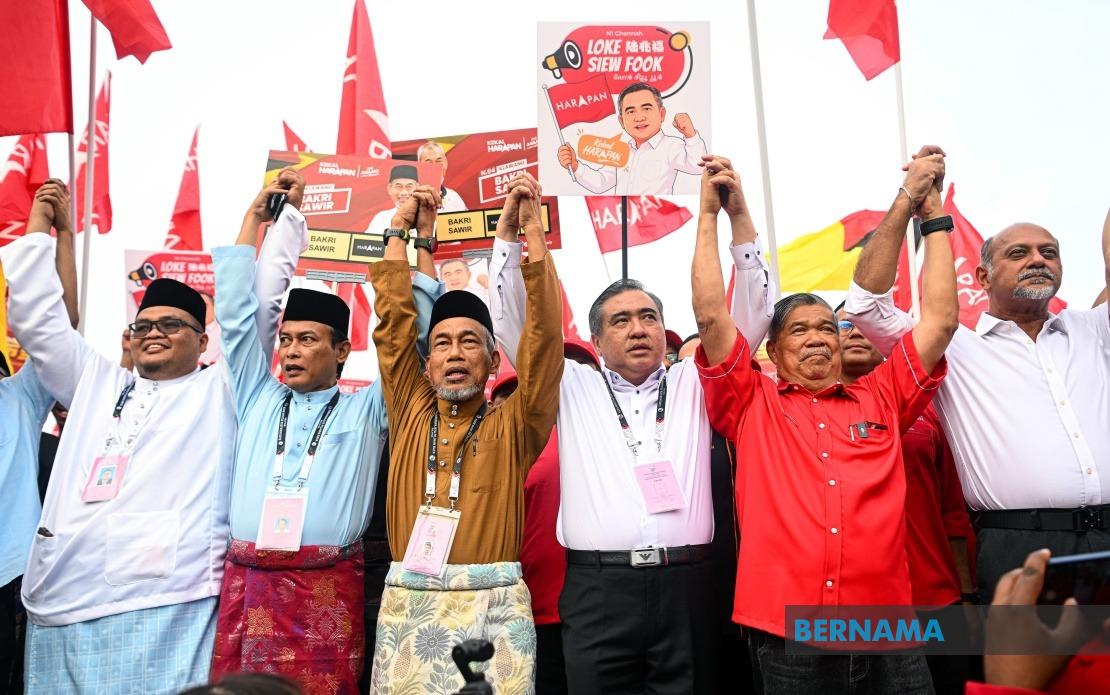
Transport Minister and DAP secretary-general Anthony Loke will face a direct contest to retain the Chennah state seat in the 16th Negeri Sembilan state election, which commenced today. His challenger is Siow Kong Choon, who serves as state MCA Youth chief and carries the Barisan Nasional banner into this closely watched constituency battle. The nomination process concluded this morning in Jelebu, with both candidates formally submitting their papers and setting the stage for what is expected to be a competitive fight for the seat.
The constituency has been represented by Loke since 2013, making this his bid for a fourth consecutive term in the state assembly. As Seremban Member of Parliament, Loke holds significant national responsibilities alongside his state duties, representing a rare dual position that underscores his political standing within the DAP leadership hierarchy. His credentials as Transport Minister add ministerial weight to his candidacy, though such national profiles can prove double-edged in state elections where local concerns often dominate voter priorities.
Siow's nomination represents the Barisan Nasional's strategic response in this contest, with the MCA—traditionally a component of the BN coalition—fielding a youth leader rather than an incumbent or more senior figure. This choice reflects the broader coalition dynamics in Negeri Sembilan, where the BN is attempting to reclaim ground following recent electoral setbacks. The MCA Youth designation suggests a generational shift in BN's candidate selection, though Siow's relative youth in political terms may pose organisational and name-recognition challenges against the incumbent Loke's established presence.
The returning officer's official announcement of the straight fight eliminates the complexity of three-way contests that sometimes fragment opposition votes. A direct bilateral contest typically sharpens the campaign narrative and makes voting calculations more straightforward for constituents. This format particularly suits incumbent advantage, though it also concentrates electoral messaging around the core ideological and policy differences between the DAP and BN.
Loke's previous electoral performance in Chennah provides a benchmark for assessing the competitive landscape. In the 2023 Negeri Sembilan state election, he accumulated 5,888 votes, securing victory by a margin of 2,200 votes over his Perikatan Nasional opponent Rosmadi Arif. That result demonstrated a clear majority within the constituency's voting population, though the scale of victory suggests room for both consolidation and challenge. The shift from facing PN to confronting a BN candidate may alter voter coalitions, particularly if BN efforts to recapture Malay-majority areas prove successful across Negeri Sembilan.
The electoral calendar provides a compressed timeframe for campaigning activity. Early voting has been scheduled for July 28, with the main polling day set for August 1. This compressed schedule—roughly two weeks from the opening of nominations—means campaigns must move rapidly to mobilise support and communicate their messages effectively. Both candidates will need to maximise ground operations and media engagement during this critical window, particularly given how state elections often receive less sustained media attention than federal contests.
Negeri Sembilan's political landscape has undergone considerable transformation in recent years, reflecting broader shifts in Malaysian politics. The state's voting patterns will carry significance beyond the immediate contest, as results may signal broader trends ahead of future national elections. DAP's performance in this Malay-majority state represents a test case for multi-ethnic coalition politics, while BN's competitiveness reflects the coalition's efforts at rejuvenation after experiencing fragmentation and internal tensions.
The appointment of officers and announcement of election dates through proper procedural channels demonstrates the institutional machinery underlying Malaysia's electoral system. These administrative details—though procedurally routine—underpin the democratic legitimacy of contests by ensuring transparent, regulated processes. For constituents in Chennah, the formal commencement of this electoral cycle marks the opening of a period where choices will reshape their representation and voice in state affairs.
Loke's position as Transport Minister introduces a dimension beyond traditional state politics. National ministries often intersect with local concerns—infrastructure projects, transportation networks, and development priorities affect daily life in constituencies. Voters may assess both his national performance and constituency service record when making their choice. Conversely, Siow will likely emphasise BN's traditional governance experience and national network, appealing to constituents who prioritise stability and established administrative relationships.
The outcome in Chennah will contribute to the overall composition of the Negeri Sembilan state assembly and potentially influence post-election coalition formation. While single-seat contests determine individual representation, aggregated results shape which coalition or party forms government. For Malaysian political observers monitoring the evolution of state-level politics and inter-party dynamics, this contest offers insight into how voters assess incumbent performance, evaluate opposition alternatives, and respond to broader political messaging during an election cycle.

