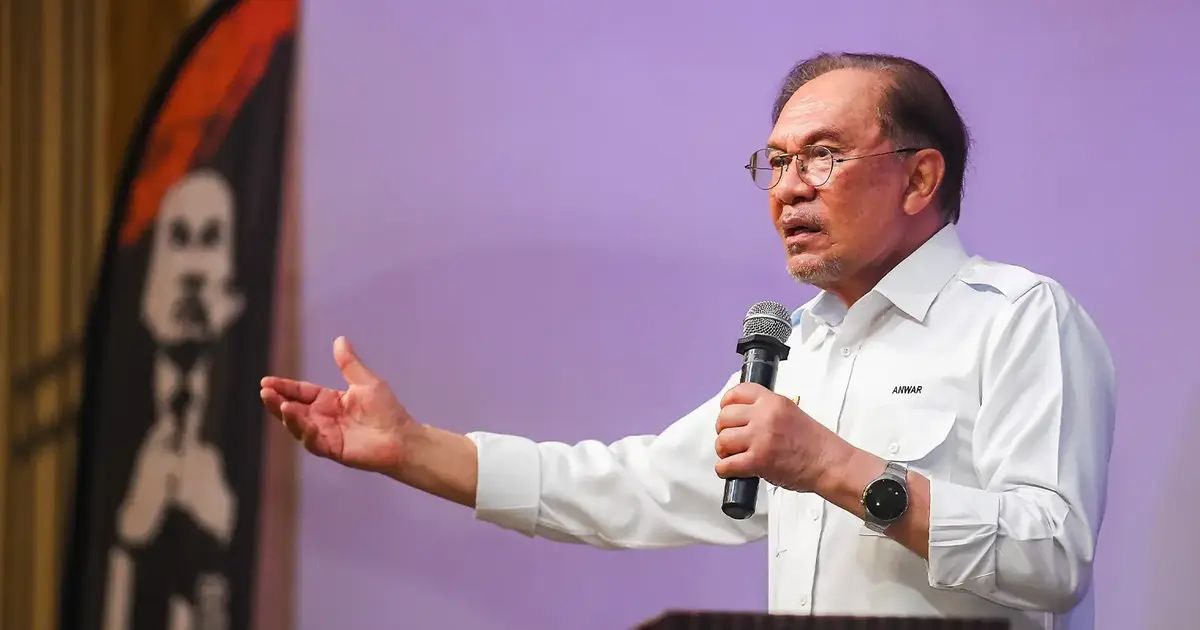
Prime Minister Anwar Ibrahim has levelled a pointed accusation at the "Free Najib" movement, asserting that the group effectively compelled Pakatan Harapan into contesting the Johor state election without any genuine political necessity. Speaking as Pakatan Harapan chairman, Anwar expressed frustration that his coalition found itself drawn into the electoral fray due to pressure from advocates seeking to secure the release of former Prime Minister Najib Razak. The remarks highlight how the contentious issue of Najib's legal status continues to inject instability into Malaysia's political landscape, complicating governance and strategic planning across the country.
The timing of Johor's state election has been a source of considerable scrutiny among political observers and analysts. Anwar's position underscores a broader frustration within Pakatan Harapan that the electoral calendar was disrupted not by ordinary political calculations or legitimate democratic processes, but rather by organised pressure from a single-issue advocacy movement. This framing suggests that the ruling coalition believes it was manoeuvred into a defensive posture, responding to external pressure rather than initiating elections on its own terms. Such defensive positioning in electoral campaigns typically poses challenges for incumbents seeking to project control and forward momentum.
The "Free Najib" movement represents a complex political phenomenon in Malaysia's post-2018 landscape. Since Najib's conviction on multiple counts of corruption and abuse of power related to the 1MDB scandal, supporters have mobilised to campaign for his release or a reduction of his sentence. What began as isolated grassroots sentiment has evolved into a more organised movement with political dimensions. The movement's appeal extends beyond Najib's immediate supporters to encompass broader constituencies that have grown disillusioned with Pakatan Harapan's governance or harbour resentment toward the coalition's earlier promises to hold members of the previous Barisan Nasional administration accountable.
For Pakatan Harapan, the "Free Najib" phenomenon presents a particular vulnerability. The coalition came to power in 2018 partly on the promise of addressing corruption and holding the previous government accountable. Yet Pakatan Harapan's subsequent inability to deliver swiftly on economic improvements, coupled with internal political realignments and coalition tensions, has allowed critics to reframe the narrative. What Pakatan Harapan positioned as commitment to the rule of law became, in the eyes of detractors, an exercise in weaponising the judiciary against political opponents. This reframing has resonated in certain voter demographics, particularly in rural areas and traditional Barisan Nasional strongholds.
Anwar's public complaints about being dragged into the Johor election underscore the reactive nature of Malaysian coalition politics. Rather than setting the political agenda, Pakatan Harapan found itself responding to pressures that threatened its electoral viability in a crucial state. Johor has historically been a Barisan Nasional bastion, making it strategically vital for any ruling coalition. For Pakatan Harapan to concede that it felt compelled to contest elections in Johor due to external pressure—rather than by choice—signals a loss of political initiative. This dynamic weakens a governing coalition's ability to choose optimal timing and terrain for electoral contests.
The broader implications for Southeast Asia warrant consideration as well. Malaysian politics serves as a bellwether for democratic practice across the region. When governance becomes subordinated to single-issue movements or when courts become perceived as tools of partisan advantage, confidence in institutional legitimacy erodes. The "Free Najib" movement's capacity to influence electoral timing demonstrates how organised pressure from organised constituencies can distort normal democratic processes. Other Southeast Asian democracies with similar institutional vulnerabilities may face comparable challenges as organised movements mobilise around specific causes or individuals.
Johor itself occupies particular significance in Malaysian politics. As the nation's second-largest state by population and a traditional power base for United Malays National Organisation leadership, Johor elections carry symbolic weight beyond the state's administrative boundaries. Control of Johor influences calculations about federal stability and coalition viability. Anwar's frustration likely stems from recognising that Johor represented difficult terrain for Pakatan Harapan, particularly against a resurgent Barisan Nasional-Perikatan Nasional alliance. Being forced to contest in unfavourable circumstances placed the coalition in a worse negotiating position.
The mechanics of how the "Free Najib" movement influenced electoral timing reveal deeper weaknesses in Pakatan Harapan's political consolidation. The coalition has struggled throughout its tenure to maintain unity around coherent policy platforms or public messaging. When external pressure can force electoral contests, it suggests insufficient internal consensus and shared political vision. Strong coalitions typically weather such pressure by presenting united fronts and controlling their own narratives. Pakatan Harapan's apparent vulnerability to the "Free Najib" campaign indicates fractious internal dynamics and incomplete control over political discourse.
Looking forward, Anwar's public attribution of electoral pressure to the "Free Najib" movement establishes a narrative frame that could influence how Malaysian voters interpret Pakatan Harapan's electoral performance in Johor. By arguing that the coalition was forced into the election by external pressure, Anwar potentially deflects responsibility for electoral outcomes onto forces beyond the government's control. However, this framing simultaneously concedes that Pakatan Harapan lacks sufficient political strength to resist pressure from organised movements—a potentially damaging admission in competitive democracies where strength and decisiveness traditionally translate into electoral advantage.
The episode illuminates persistent tensions within Malaysia's political system regarding accountability, justice, and the rule of law. The Najib case remains unresolved in the court of public opinion despite legal verdicts. Until broader consensus emerges about how Malaysia should address its corruption challenges and balance them against reconciliation or political pragmatism, movements like "Free Najib" will continue generating pressure that disrupts governance and complicates coalition management. Anwar's complaints suggest that the Pakatan Harapan leadership believes it has moved beyond these issues, yet public sentiment indicates otherwise.

