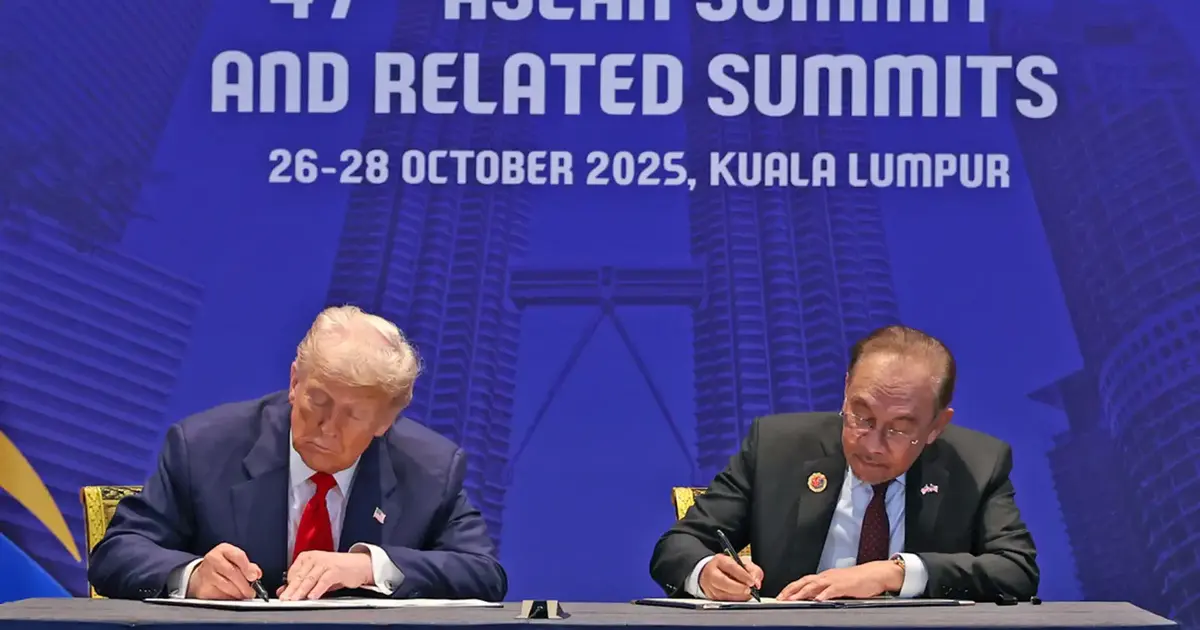
Prime Minister Anwar Ibrahim's government has launched a legal move to have a lawsuit brought by opposition Members of Parliament struck out entirely, concerning the bilateral trade agreement between Malaysia and the United States. The filing represents an escalation in the political and legal dispute surrounding the reciprocal trade arrangement, which has become a flashpoint for opposition criticism of the administration's economic agenda.
The opposition lawmakers, who initiated the legal challenge, have simultaneously pursued a parallel strategy by submitting an application requesting that constitutional questions related to the trade agreement be referred to the Federal Court for authoritative interpretation. This dual-track approach suggests the opposition intends to exhaust available legal avenues to contest what they characterise as a problematic trade arrangement, even as the government moves to prevent the case from proceeding in lower courts.
The Malaysia-US reciprocal trade agreement represents a significant policy initiative under Anwar's administration, reflecting the government's commitment to deepening economic ties with Washington. Such agreements typically involve negotiations over tariffs, regulatory standards, and market access across multiple sectors, making them inherently contentious domestic political matters that affect businesses, workers, and consumers across different industries.
The opposition's legal strategy reveals deep concerns within parliamentary ranks about the agreement's potential implications. Rather than accepting the executive's authority to negotiate and conclude trade deals, the MPs have chosen to challenge the arrangement through the courts, suggesting they believe the transaction may violate constitutional principles or require parliamentary approval beyond what was provided. The constitutional questions they seek to raise likely centre on whether the agreement needs legislative ratification or whether specific parliamentary procedures were followed.
Government attempts to strike out the suit indicate confidence that the legal challenge lacks sufficient merit to warrant proceeding to trial. Such motions are typically filed when the government believes the court should not hear the case on procedural grounds or that the plaintiff has failed to establish a proper legal basis for their claim. This defensive posture, while routine in litigation, carries symbolic weight in Malaysia's politically fractious environment, where legal proceedings often become proxies for broader policy disputes.
For Malaysian business and civil society observers, this legal wrangle highlights tension between executive flexibility in trade negotiations and parliamentary oversight of major economic commitments. Trade agreements inherently involve balancing domestic interests against international obligations, and the question of who holds authority—the executive or the legislature—remains unresolved in practice despite constitutional frameworks. The court's eventual ruling could establish important precedent regarding parliament's role in scrutinising major international economic agreements.
Southeast Asian trade analysts note that bilateral agreements with major economic partners like the United States have become increasingly important for regional economies seeking to diversify their external partnerships beyond traditional arrangements. Malaysia's pursuit of the reciprocal trade agreement reflects a strategic positioning within global trade networks, particularly as regional economies navigate evolving arrangements involving China, India, Japan, and the European Union. Opposition to such agreements, however, often stems from concerns about labour standards, environmental protections, or sectoral impacts that may differ from the executive's assessment of national benefit.
The simultaneous filing of the application to refer constitutional questions to the Federal Court demonstrates sophisticated legal strategy, as this pathway potentially allows senior judges to provide authoritative guidance on fundamental questions about trade agreement authority without requiring the MPs to prove specific wrongdoing. A Federal Court ruling establishing that certain procedures are constitutionally necessary for trade agreements could reshape how future administrations—regardless of their political complexion—conduct international negotiations.
The timing of these legal manoeuvres, occurring while the agreement presumably remains in negotiation or early implementation stages, suggests opposition lawmakers view window opportunities for intervention as limited. Once an agreement takes effect and establishes operational realities, courts become more reluctant to unwind arrangements that affect third parties and international relations. The opposition's urgency reflects awareness that delaying challenge allows facts on the ground to accumulate.
Politically, the government's aggressive defense of its trade agreement signals that the Anwar administration views this deal as central to its economic narrative and will not permit parliamentary obstruction or judicial restraint to derail its implementation. The administration's choice to seek dismissal rather than engage substantively with the opposition's concerns reflects confidence both in the agreement's merits and in its political standing with voters.
For Malaysian citizens, the outcome of this legal contest carries practical implications. Trade agreements affect consumer prices, job availability, investment flows, and sectoral competitiveness. Whether courts ultimately require greater parliamentary involvement in approving such arrangements could influence how future trade policy develops and whether constituent concerns receive adequate ventilation before commitments become binding.
The unfolding legal contest also reflects broader questions about Malaysia's constitutional architecture in an era of complex international economic engagement. As nations negotiate increasingly intricate trade arrangements covering services, intellectual property, and digital commerce, clarity about which branches of government hold decisive authority becomes essential. The courts' handling of this case will help determine whether Malaysia's governance framework keeps pace with modern trade realities or whether constitutional uncertainties persist.