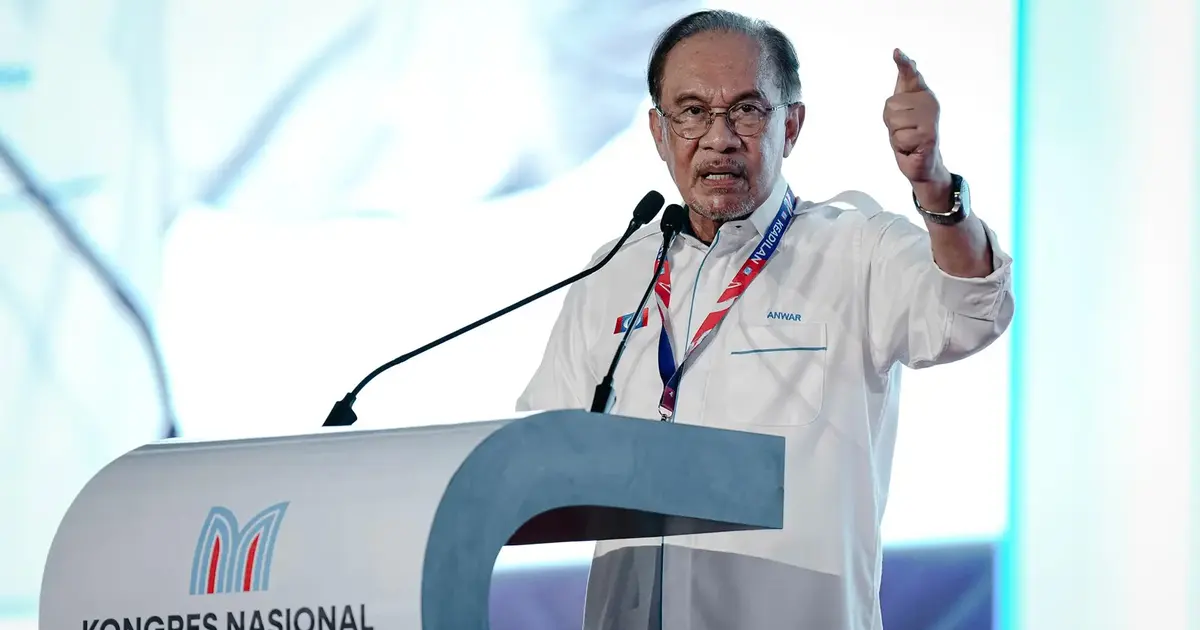
Prime Minister Anwar Ibrahim has unveiled a new spending initiative directing an additional RM1 million to every parliamentary constituency across the nation, a move that simultaneously addresses persistent grievances about unequal resource distribution and signals the government's commitment to nationwide development. The announcement comes amid mounting criticism from opposition figures who have repeatedly alleged that the federal administration deliberately channels fewer development resources to states governed by opposition parties, a charge that Ibrahim has consistently rejected as politically motivated misrepresentation.
The breadth of this allocation underscores a deliberate strategy to neutralise one of the opposition's most effective talking points heading into future electoral contests. By extending equivalent funding to all 222 parliamentary constituencies regardless of political affiliation, Ibrahim aims to demonstrate that development policy remains merit-based and impartial rather than serving as an instrument for partisan advantage. The uniformity of the allocation also simplifies implementation logistics and reduces opportunities for contentious disputes over funding calculations that might otherwise invite further allegations of impropriety.
Opposition politicians have long maintained that constituencies controlled by non-Pakatan Harapan parties face systemic disadvantages in accessing federal grants and development programmes. These allegations have particularly intensified in states such as Perak, Perlis, and Kedah, where opposition coalitions hold sway but federal funds ostensibly flow disproportionately to government-aligned local authorities. Such claims, whether substantiated or not, carry significant political weight in Malaysian constituencies where voters remain keenly aware that access to development resources directly impacts local employment, infrastructure quality, and economic opportunity.
Ibrahim's categorical denial of these allegations reflects the government's position that all constituencies receive equitable treatment under existing allocation formulas based on population size, infrastructure needs, and developmental priorities. The administration has previously released breakdowns demonstrating that funding distributions across opposition-led and government-led areas align with demographic and technical criteria rather than political calculations. However, the announcement of this additional universal allocation suggests recognition that perception matters as much as documented reality in political discourse, and that extra resources allocated visibly and uniformly can help reshape narratives about governmental fairness.
The financial commitment extends to approximately RM222 million when calculated across all parliamentary constituencies, representing a substantial supplementary injection into local development budgets. This allocation comes during a period when the government navigates complex macroeconomic conditions including inflation pressures, revenue constraints from fluctuating commodity prices, and competing demands for expenditure across healthcare, education, and infrastructure modernisation. The decision to prioritise this broad-based allocation reflects political calculations about the electoral significance of locally visible development projects that constituency-level politicians can credibly attribute to federal government support.
For Malaysian states governed by opposition coalitions, this announcement carries particular significance because it potentially alleviates longstanding frustrations about accessing federal infrastructure funds. Menteri Besar and state assemblypersons from opposition parties have frequently complained that their constituents face disadvantages in securing approvals for federal-linked projects, even when proposals meet technical standards and demonstrate genuine local need. The universal RM1 million allocation sidesteps these bureaucratic bottlenecks by providing direct funding that operates outside traditional approval mechanisms potentially subject to political influence.
The timing of this announcement also merits attention within Malaysia's political calendar. With the next general election potentially occurring within the next two years, Ibrahim's government remains engaged in positioning itself as development-focused and equitable in resource distribution. Every RM1 million directed to opposition constituencies represents tangible political capital that can be highlighted in campaign messaging and community engagements. Opposition parties will simultaneously face the awkward task of accepting benefits from a government they criticise while maintaining their narrative about federal bias, a tension that may complicate their political messaging.
Regionally, Malaysia's approach to balancing political competition with resource distribution offers insights into how democracies manage tensions between partisan preferences and principles of equal citizenship. Unlike systems where governments weaponise development funding as explicit punishment for electoral opponents, the Malaysian approach, at least officially, maintains veneer of impartiality while permitting subtle mechanisms for preferential treatment. Ibrahim's announcement reinforces that veneer, whether or not underlying practices actually shift. The announcement also signals to potential coalition partners and fence-sitting voters that the government takes equitable governance seriously as a principle, not merely as aspiration.
Implementation details remain crucial for assessing whether this allocation achieves its intended political and developmental objectives. Parliamentary constituencies must receive clear guidance about fund utilisation parameters, whether allocations finance infrastructure, service provision, capacity building, or other developmental objectives. Inadequate oversight could invite criticism that funds were ineffectively deployed or allowed to dissipate through administrative inefficiency. Conversely, transparent implementation procedures demonstrating tangible local benefits could significantly enhance the government's credibility on fairness and reinforce Ibrahim's explicit rejection of the withholding allegation.
The announcement represents Ibrahim's administration attempting to navigate legitimacy challenges by demonstrating responsiveness to opposition grievances even while rejecting their underlying premises. Whether this approach proves politically effective depends substantially on how voters perceive the sincerity of the government's commitment to equitable governance and whether opposition-led constituencies ultimately experience improved access to federal resources. For Malaysian democracy, the initiative exemplifies ongoing negotiations about what equitable federalism actually entails in practice.

