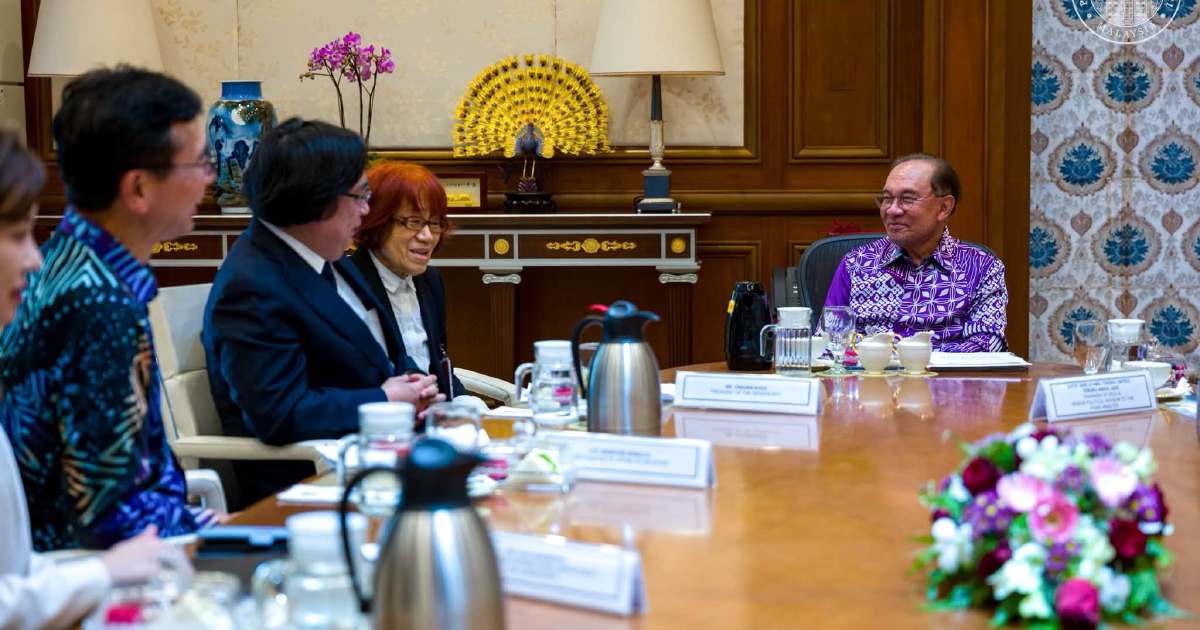
Prime Minister Datuk Seri Anwar Ibrahim has hosted Genron NPO president Yasushi Kudo for wide-ranging discussions aimed at fortifying the strategic partnership between Malaysia and Japan. The courtesy call, held at the Prime Minister's office in Kuala Lumpur, underscores Kuala Lumpur's commitment to cultivating deeper institutional dialogue with Tokyo beyond conventional governmental channels.
Genron NPO, formally known as the Japan Policy Forum, functions as Japan's most influential non-governmental policy research organization. The think tank plays a pivotal advisory role in shaping Japanese strategic thinking on regional security, economic partnerships, and diplomatic initiatives across Asia. Its engagement with Malaysian leadership reflects the organization's recognition of Malaysia's significance within regional geopolitics and economic architecture.
The meeting between Anwar and Kudo signals Malaysia's proactive approach to broadening the scope of bilateral engagement beyond formal trade and defence frameworks. By welcoming representations from Japan's premier policy institutes, Malaysia demonstrates its appetite for sustained intellectual exchange and long-term strategic coordination with one of Asia's most developed economies. Such engagements create informal channels that often precede more formal policy adjustments and institutional collaborations.
Malaysia and Japan maintain robust relations across multiple sectors including manufacturing, energy, infrastructure development, and education. Japanese investment remains substantial in Malaysia's automotive and electronics industries, while Japanese companies continue to explore opportunities in renewable energy and industrial infrastructure. Enhanced strategic dialogue through organizations like Genron NPO could facilitate smoother coordination on emerging regional challenges and identify new collaboration opportunities.
The timing of this engagement carries particular significance given the evolving security landscape in Southeast Asia. Rising geopolitical tensions in the South China Sea, supply chain vulnerabilities exposed during global crises, and the strategic importance of maritime pathways have elevated the value of coordinated policy responses among regional partners. Japan's position as a security-conscious Asian democracy with substantial economic interests in Southeast Asia makes its strategic perspectives increasingly relevant to Malaysian policymakers.
Genron NPO's role extends beyond academic analysis; the organization serves as a bridge between Japanese policymakers, business leaders, and regional counterparts. Through its networks and research initiatives, the forum influences how Tokyo approaches regional partnerships and identifies priority areas for bilateral cooperation. A productive engagement with Malaysian leadership could result in Genron NPO championing Malaysia's interests within Japanese policy circles and vice versa.
For Malaysia, such discussions with Japanese thought leaders offer opportunities to articulate the country's development priorities, regional security concerns, and aspirations for deeper technological and economic cooperation. Malaysian perspectives on ASEAN unity, maritime security, and the strategic balance in Asia carry weight in Tokyo's calculus. Establishing stronger institutional relationships ensures Malaysian viewpoints receive due consideration in Japanese strategic planning.
The broader context involves ASEAN's navigation of major power competition and efforts to maintain strategic autonomy. Malaysia, as a founding ASEAN member with significant economic and geopolitical importance, plays a crucial role in maintaining ASEAN cohesion and external relations. Strengthening ties with Japan through multiple channels, including non-governmental organizations, reinforces Malaysia's position as a reliable partner capable of bridging different regional interests.
Business and investment considerations also feature prominently in Malaysia-Japan relations. Japanese companies seeking diversification away from China and increased regional integration opportunities view Malaysia as an attractive investment destination. Enhanced policy dialogue facilitates the removal of regulatory barriers, clarifies Malaysia's medium and long-term development trajectory, and builds confidence among Japanese investors about Malaysia's commitment to stable, transparent governance.
Educational and people-to-people exchanges represent another dimension where deeper strategic dialogue bears fruit. Japanese universities attract increasing numbers of Malaysian students, while technical cooperation programmes foster skills transfer and institutional learning. Policy discussions between Malaysian leaders and influential Japanese think tanks can help identify areas where educational partnerships might expand and mutual capacity-building accelerates.
The engagement also reflects Japan's pivot toward strengthening its network of partnerships across Asia as a counterbalance to shifting regional dynamics. Rather than relying solely on official government-to-government channels, Japanese institutions increasingly cultivate relationships with influential voices in key regional nations. Malaysia's position as a moderate Muslim-majority democracy with significant regional influence makes it an obvious priority for such multifaceted engagement.
Looking ahead, the discussions between Anwar and Kudo may catalyse collaborative initiatives spanning economic partnerships, security cooperation, and knowledge exchange. The involvement of respected policy organizations like Genron NPO lends credibility and longevity to bilateral engagements, as these institutions maintain continuity regardless of electoral cycles or administrative changes. Such relationships often generate policy recommendations that shape both nations' strategic priorities in years to come.

