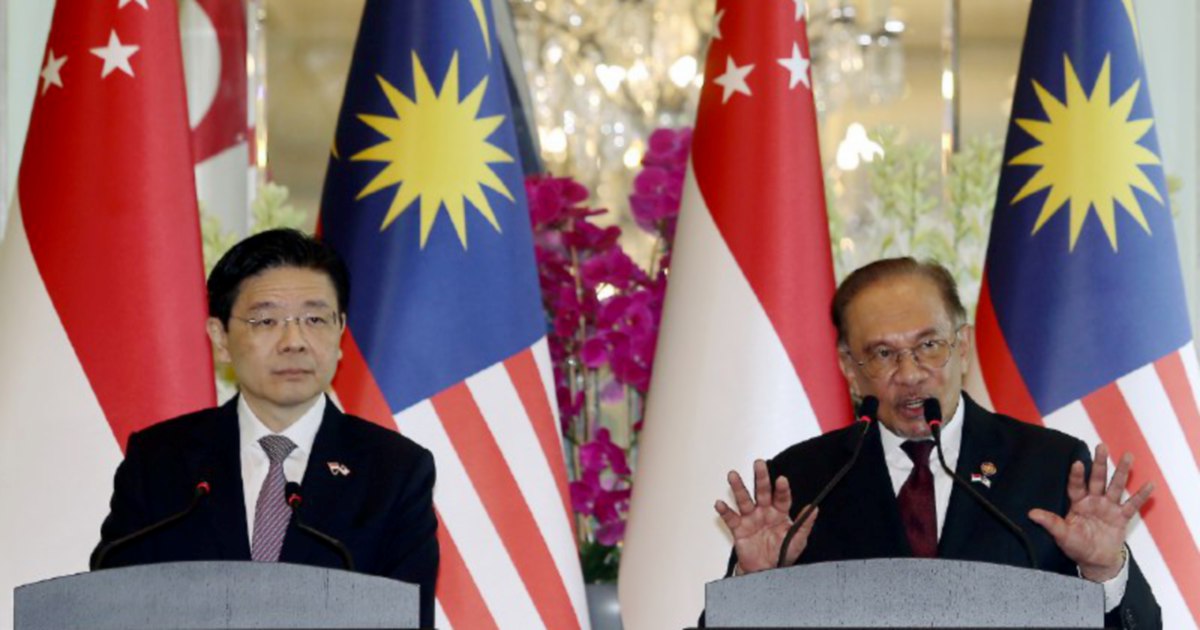
Prime Minister Datuk Seri Anwar Ibrahim and his Singapore counterpart Lawrence Wong are poised to publicly present the comprehensive master plan for the Johor-Singapore Special Economic Zone (JS-SEZ) at the forthcoming Annual Leaders' Retreat scheduled for December, according to officials familiar with the bilateral engagement. The long-awaited unveiling represents a critical juncture in one of Southeast Asia's most ambitious cross-border economic integration initiatives, promising to reshape trade and investment dynamics across the region for decades to come.
The Johor-Singapore Special Economic Zone has emerged as a flagship project under both nations' collaborative framework, designed to leverage the geographic proximity and complementary economic strengths of Malaysia's most developed state and Asia's wealthiest city-state. The partnership seeks to create an integrated economic corridor that transcends traditional border constraints, positioning the zone as a competitive alternative to established regional hubs. The project's scope encompasses manufacturing, logistics, technology innovation, and value-added services, with potential spillover benefits throughout Southeast Asia.
Malaysia and Singapore have invested considerable diplomatic and technical effort over the past years to develop a viable framework that addresses infrastructure, regulatory harmonisation, and investment incentives. The master plan development involved extensive consultations with private sector stakeholders, government agencies from both countries, and international advisors specialising in special economic zones. The thoroughness of this preparatory work underscores the strategic importance both governments attach to realising the JS-SEZ's potential as a transformative regional economic initiative.
For Malaysian readers and businesses, the JS-SEZ represents unprecedented opportunities to participate in Singapore's sophisticated financial and trading ecosystems while maintaining lower operational costs and larger land availability compared to the island nation. Johor's position as Malaysia's industrial heartland, combined with improved connectivity via the Johor Bahru-Singapore Causeway and the planned high-speed rail link, creates natural advantages for firms seeking regional headquarters or production facilities. The zone could catalyse technology transfer, skills development, and export-oriented manufacturing expansion throughout Malaysia's southern corridor.
Singapore's perspective reflects its need to secure hinterland resources and production capacity as its domestic land constraints and labour costs limit conventional industrial expansion. By deepening economic integration with Johor, Singapore effectively extends its economic footprint while maintaining strict quality and governance standards. This arrangement allows Singaporean companies and investors to establish larger operations than possible within the island, while preserving Singapore's role as a premium financial and services hub serving the broader region.
The December announcement arrives at a moment when regional economic integration faces renewed emphasis following global supply chain disruptions and geopolitical uncertainties. Both countries recognise that the JS-SEZ could enhance ASEAN's collective resilience by creating a demonstration model of effective bilateral cooperation within the broader Southeast Asian economic architecture. The initiative also aligns with Singapore's broader engagement strategy under Lawrence Wong's premiership, which emphasises deepening ties with immediate neighbours and strengthening ASEAN cohesion.
Investment flows are likely to accelerate following the master plan's public launch, as multinational corporations and regional investors gain clarity on regulatory frameworks, tax incentives, and infrastructure timelines. The December announcement will probably include specific details regarding land allocation, phase-wise development schedules, and government support mechanisms. International business confidence in the JS-SEZ hinges substantially on how decisively and transparently both governments communicate their long-term commitment to implementation.
Malaysian small and medium enterprises merit particular attention in the development strategy, as the JS-SEZ's success depends partly on creating accessible pathways for domestic companies to integrate into higher-value supply chains. Without deliberate inclusion mechanisms, the zone risks becoming a platform primarily for large multinational corporations, limiting broader Malaysian participation. Government policies supporting SME capability upgrading and financing will determine whether the zone generates inclusive prosperity or concentrates benefits among elite economic players.
The timing of the announcement reflects both countries' desire to demonstrate concrete progress on mega-projects despite the challenging global economic environment. An unveiled master plan provides investors with actionable intelligence and regulatory certainty, potentially triggering capital commitments that drive employment and infrastructure development. The December retreat setting also enables both leaders to address broader bilateral issues contextually, ensuring the JS-SEZ announcement resonates within a comprehensive partnership narrative.
Regional competitors are watching the JS-SEZ initiative closely, as successful implementation could reshape investment preferences across Southeast Asia. Indonesia, Thailand, and Vietnam operate their own special economic zones but may face competitive pressure if the JS-SEZ achieves superior investment climate outcomes through seamless bilateral coordination. The project thus carries implications extending well beyond Malaysia and Singapore, potentially influencing how other Southeast Asian nations approach cross-border economic integration in coming years.

