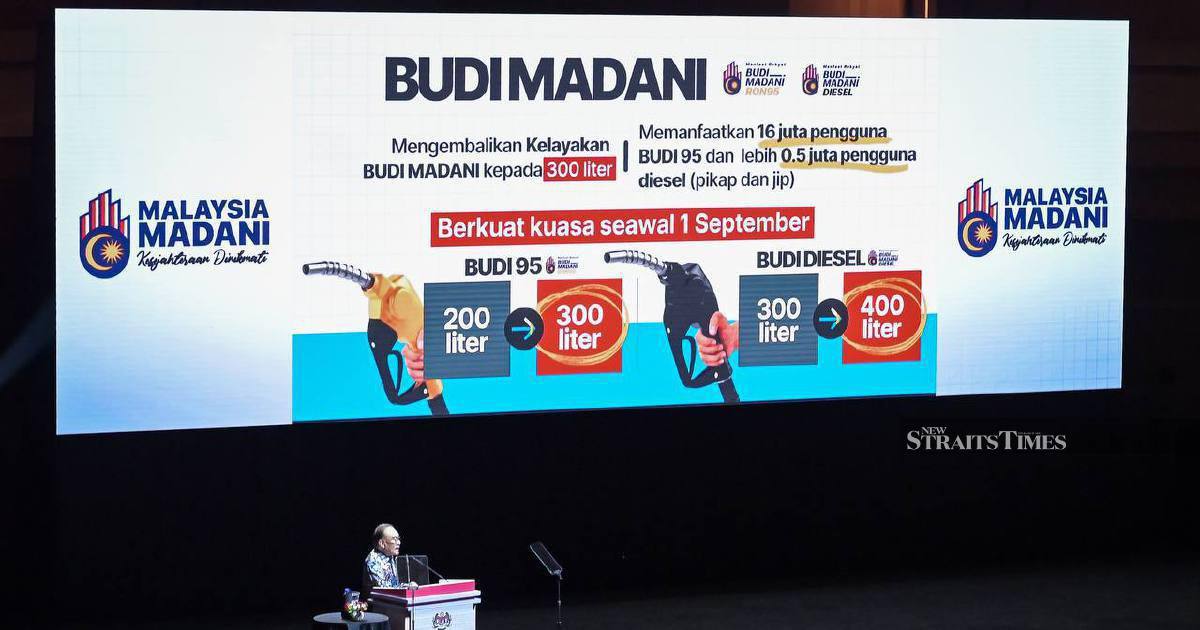
Prime Minister Datuk Seri Anwar Ibrahim has unveiled a comprehensive package of six immediate measures designed to alleviate cost-of-living pressures facing Malaysian households and businesses, signalling the government's determination to tackle affordability challenges before the 2027 Budget is presented to parliament in October. The announcement came during the National Day Eve address, a significant platform where the Prime Minister traditionally outlines priorities shaping the nation's economic direction and policy agenda.
The timing of these measures reflects growing concerns about household expenses across Malaysia, where inflation and rising prices have affected purchasing power. By announcing relief initiatives ahead of the formal budget process, the government seeks to demonstrate responsiveness to citizen concerns while laying groundwork for broader fiscal measures expected in the full budget package. This approach allows policymakers to gauge public reception to targeted interventions before committing to larger spending or tax measures.
Cost-of-living pressures represent one of the most visible challenges affecting Malaysian voters across income levels. From transportation and food prices to housing costs and utilities, inflationary pressures have accumulated over recent years, placing particular strain on middle and lower-income households managing fixed incomes. Urban residents, rural communities, and small business owners all face distinct affordability challenges that any comprehensive relief strategy must address with targeted precision.
The government's decision to bundle support for businesses alongside consumer relief reflects understanding that household welfare depends significantly on employment stability and economic vitality. When enterprises struggle with operational costs, they face difficult choices between maintaining workforce size or raising prices, directly affecting consumer expenses. Business-friendly measures therefore represent an indirect but crucial component of consumer cost relief, ensuring jobs remain secure and wage growth can proceed.
Public services enhancement mentioned alongside cost-of-living measures suggests the government views service quality and accessibility as complementary to direct financial relief. Improved public transportation efficiency, healthcare service delivery, or educational facilities can reduce household expenses by providing accessible alternatives to private-sector equivalents. This integrated approach acknowledges that genuine affordability improvement requires both direct intervention and systemic improvements in public service provision.
The October timeline for the 2027 Budget presents significant constraints and opportunities. Limited months remain for consultation, analysis, and proposal development before parliament receives the comprehensive spending blueprint. However, this timeframe also creates urgency for the government to identify genuine priority areas and demonstrate commitment through concrete preliminary action rather than promises contained only in future budget documents.
Regional context matters considerably for Malaysian policymakers. Neighbouring economies including Singapore, Thailand, and Indonesia have implemented various cost-of-living strategies with mixed results. Singapore's emphasis on targeted subsidies for lower-income groups, Indonesia's fuel subsidy management challenges, and Thailand's informal price controls offer cautionary lessons about implementation complexity. Malaysian officials can draw insights from both successful initiatives and failures in regional approaches.
The six-measure package likely includes diverse tools spanning fiscal stimulus, subsidy mechanisms, regulatory adjustments, and efficiency improvements across different sectors. Comprehensive relief requires multifaceted approaches rather than single-focus interventions, acknowledging that cost pressures arise from energy prices, food supply dynamics, labour availability, transportation efficiency, and asset constraints—each requiring distinct policy responses tailored to specific circumstances.
For ordinary Malaysians, these announcements signal government acknowledgement of genuine hardship many households experience. Whether implemented measures prove sufficient depends on execution quality, funding adequacy, and alignment with actual expenses most families face. Effectiveness ultimately derives from matching policy design to real economic constraints experienced by target beneficiaries rather than bureaucratic assumptions about where relief matters most.
Small and medium enterprises constitute Malaysia's employment backbone, making business support measures economically consequential far beyond direct company benefits. When SMEs gain operational breathing room through cost reduction initiatives, they typically invest in employee retention, modest wage increases, or capacity expansion—each improving household financial circumstances. Business and household relief therefore intertwine in complex ways that single-focus policies often overlook.
Public service improvements offer long-term affordability benefits often underestimated in immediate policy discussions. Reliable public transportation reduces household fuel expenses and vehicle maintenance costs. Efficient health services reduce out-of-pocket medical spending. Quality public education diminishes private tuition dependence. These systemic improvements compound into substantial household savings when implemented effectively, though benefits take months or years to materialise fully.
The October budget presentation will reveal whether preliminary measures announced now represent merely symbolic gestures or genuine commitments with substantial funding allocated. Budget documents demonstrate sincerity through actual allocation decisions. Measures announced before the formal budget without subsequent funding availability signal limited genuine commitment, whereas properly resourced initiatives show government seriousness about addressing announced priorities.
Ultimately, these measures reflect evolving recognition that sustained economic growth requires not merely aggregate prosperity but broadly-distributed welfare improvements. Voters increasingly evaluate government performance through cost-of-living outcomes affecting daily life rather than abstract economic statistics. By addressing affordability challenges directly, the government attempts to connect macro-economic management with household financial realities, a connection increasingly important for political legitimacy and sustained public confidence in leadership.

