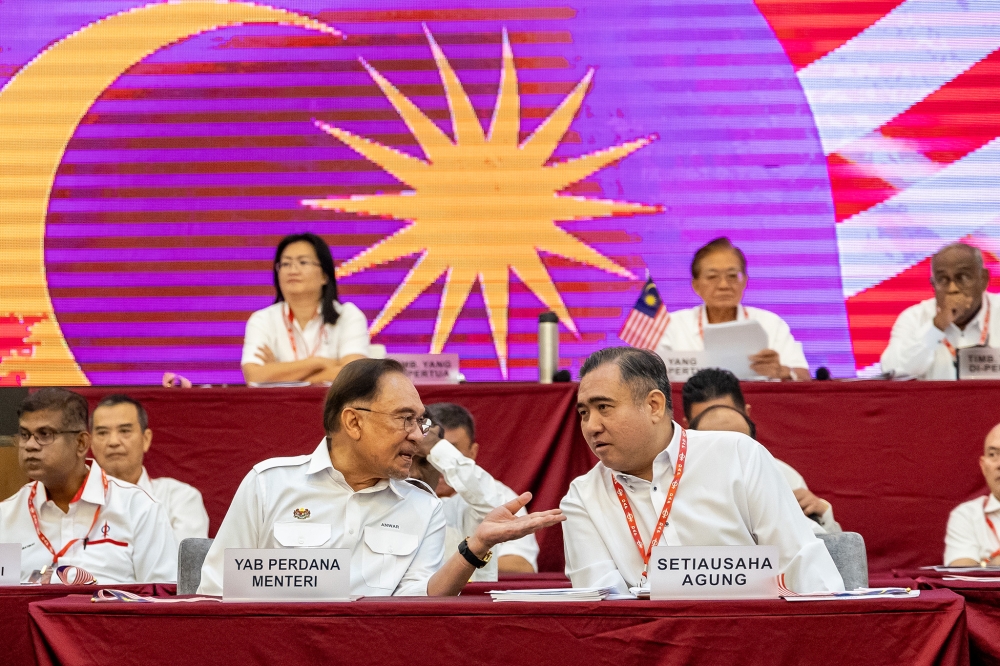
Prime Minister Datuk Seri Anwar Ibrahim has made a direct appeal to the Democratic Action Party (DAP) in Melaka to reconsider its decision to exit the state government, urging the party leadership to maintain its commitment to the coalition and continue delivering services to the electorate. Speaking at Port Dickson on July 14, Anwar framed the DAP's potential departure as premature and counterproductive to the broader stability of the Pakatan Harapan alliance, which has been a cornerstone of Malaysia's political landscape since 2018.
The timing of Anwar's intervention reflects growing concern within federal leadership about the ripple effects of state-level political shifts. The Melaka DAP's announcement to withdraw from the state government had raised questions about coalition cohesion at a critical juncture when the federal administration is working to consolidate gains ahead of the next general election. By appealing directly to the party, Anwar attempted to signal that such moves require consultation and consensus-building rather than unilateral action, a principle that has historically guided opposition-to-ruling coalition transitions.
Anwar's core argument centres on accountability and duty. He contended that political parties entering government assume obligations to the voters who supported them, and departing before a full cycle is completed constitutes an abandonment of those responsibilities. This perspective aligns with his broader vision of institutional stability and predictable governance, themes he has emphasised throughout his tenure as prime minister. The appeal also underscores the delicate mathematics of coalition politics in Malaysia, where state governments often depend on narrow majorities that can be destabilised by the exit of any coalition partner.
The Melaka situation is particularly sensitive because the state has experienced considerable political volatility in recent years. The timing of DAP's exit announcement, coming when regional stability appeared to be improving, suggested internal party grievances rather than fundamental policy disagreements. Anwar's intervention attempts to address whatever underlying issues prompted the decision, whether they relate to resource allocation, political representation within the state administration, or broader positioning within the federal alliance.
For Malaysian observers, the episode illustrates the tension between local and national political interests. State-level decisions taken by individual parties can have consequences that extend far beyond their immediate constituencies. The Melaka DAP's contemplated withdrawal highlighted how component parties within Pakatan Harapan sometimes pursue autonomous strategies that may not align with federal coalition objectives. Anwar's appeal represents an attempt to reimpose discipline and ensure that major political moves receive proper vetting at the coalition's central level.
The implications for Southeast Asian regional politics are also noteworthy. Malaysia's coalition governments, despite their challenges, have generally managed transitions more smoothly than several neighbouring democracies. The durability of Pakatan Harapan and the willingness of its leaders to address internal disputes through dialogue rather than confrontation provides a model of institutional maturity. Anwar's approach, emphasising persuasion over coercion, reflects this tradition.
For the DAP specifically, the appeal from the prime minister carries considerable weight. As a party that has long championed democratic governance and institutional responsibility, the DAP faces pressure to align its actions with these stated principles. A withdrawal would need to be justified in terms that go beyond internal party management and speak to broader principles of democratic accountability. Anwar's framing challenged the party to justify its decision in precisely these terms, placing the burden of explanation squarely on DAP leadership.
The broader coalition context cannot be overlooked. Pakatan Harapan comprises multiple parties with distinct constituencies and interests, ranging from Keadilan to PKR to Amanah, each with its own strategic considerations. The Melaka situation represents a test case for how such disagreements are resolved. If the DAP proceeds with withdrawal despite Anwar's appeal, it sends a signal that component parties prioritise autonomy over coalition discipline. Conversely, if the party reverses course, it reaffirms the principle that major decisions require collective deliberation.
The election cycle also figures prominently in Anwar's reasoning. By asking DAP to remain until the next state election, the prime minister is essentially requesting continuity of governance to allow coalition efforts to demonstrate competence and delivery. Early exits create perceptions of instability and political dysfunction, impressions that opposition parties eagerly exploit in campaign messaging. Anwar's appeal is thus both a practical governance matter and a strategic political calculation regarding how coalitions present themselves to voters.
Looking ahead, the resolution of this matter will likely reveal important information about the power dynamics within Pakatan Harapan and the relative autonomy that state parties possess. Should DAP reverse its decision, credit will accrue to Anwar's leadership and persuasive capacity. Should the party proceed with withdrawal, it would demonstrate limits to federal coordination and suggest that coalition discipline remains more aspirational than actual in Malaysian politics. Either outcome will have consequences for how future coalition governments manage internal disputes and maintain political stability across multiple tiers of government.

