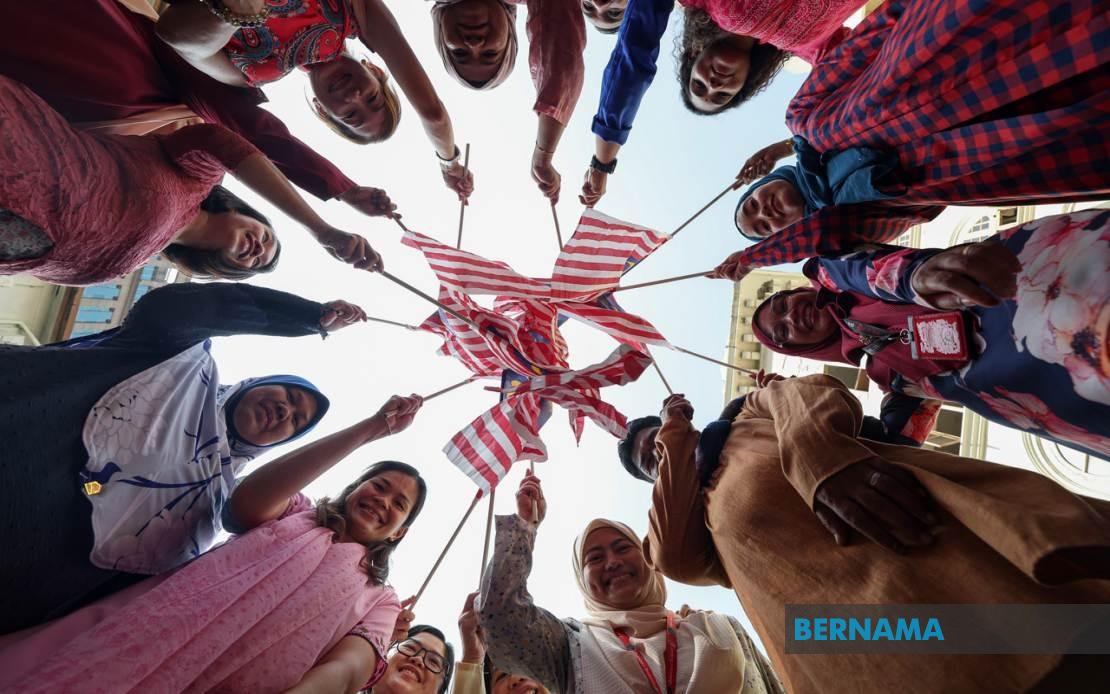
Prime Minister Datuk Seri Anwar Ibrahim has made an impassioned appeal to Malaysians to become vigilant guardians of their nation and cement intercommunal unity as the cornerstone of the country's future stability and prosperity. Speaking on the eve of Malaysia's 69th National Day, Anwar framed the preservation of the nation and the maintenance of harmonious relations among its diverse population as shared responsibilities that transcend individual or sectional interests.
The Prime Minister articulated a vision of independence rooted not merely in sovereignty or administrative autonomy, but in the collective confidence and moral fortitude of a unified people. In his perspective, true independence means the freedom for the nation to chart its own course and for its citizens to take genuine pride in their country's standing as a dignified and self-determining state. This framing suggests Anwar's concern that external pressures and internal fractures could undermine Malaysia's hard-won autonomy if citizens become complacent or allow divisive forces to gain traction.
Anwar's message emphasized that the achievements Malaysians enjoy in the present day are not spontaneous or inevitable but are instead the accumulated legacy of generations who laboured, sacrificed blood and sweat, and endured hardship to build the nation. By invoking this historical debt, he implicitly urged contemporary Malaysians to recognize their obligation to preserve what their forebears established and to pass it forward intact to future generations. This invocation of historical memory serves as a rhetorical device to elevate the stakes of current political and social decisions beyond short-term interests.
Central to Anwar's appeal is the assertion that Malaysia's multi-ethnic composition—encompassing Malays, Chinese, Indians, Ibans, Kadazans, Muruts, Bidayuhs, and Orang Ulu communities—represents a source of collective strength rather than a potential vulnerability. The Prime Minister's explicit naming of each major ethnic and indigenous group signals an intention to acknowledge the contributions and presence of all communities in the national project. This inclusive rhetorical strategy contrasts with narratives that might position certain groups as threats to national cohesion or as less integral to the national fabric.
Anwar stressed that national interest must supersede ethnic and regional loyalties, a statement that carries particular weight in a context where Malaysian politics has occasionally been inflected by communal and regional divisions. His assertion that Malaysia should be distinguished by its commitment to justice for all citizens, including those who are marginalized or excluded, suggests an interpretation of national unity that encompasses social equity and fairness. This framing connects social justice to national stability, implying that a nation that fails to protect its vulnerable populations risks fracturing along lines of grievance and resentment.
The Prime Minister's video message reinforced these themes through direct address, lending personal gravity to his words and suggesting that the call to action is not merely a ceremonial gesture but a genuine exhortation rooted in his conviction about the nation's future. By deploying multiple platforms and formats—social media posts and video messages—Anwar ensured that his message would reach diverse segments of the population and be encountered through channels that Malaysians frequently use to consume information and engage with public discourse.
Anwar's reiteration that Malaysia achieved independence through the collective strength of all its people frames current national cohesion not as a nice-to-have luxury but as a practical necessity that mirrors the conditions of the nation's founding. This historical parallel suggests that unity is not merely an aspirational value but a functional requirement for national survival and success. The invocation of the word "Merdeka"—which means independence in Malay—carries emotional resonance and connects contemporary unity to the achievement of independence itself.
The timing of these remarks, delivered on the eve of Malaysia's 69th National Day celebration, is deliberate. National Day provides a focal point for collective reflection on the nation's identity and trajectory. By framing the upcoming celebration around themes of protection, unity, and shared purpose, Anwar positioned National Day not as a ceremonial pageant but as an occasion for recommitting to core national values. The official theme for this year's celebration—"Malaysia MADANI: Kesejahteraan Dinikmati" (Malaysia MADANI: Shared Prosperity Enjoyed)—aligns with the Prime Minister's emphasis on equitable development and inclusive national progress.
For Malaysian readers and observers in the Southeast Asian region, Anwar's message carries significance beyond its immediate rhetorical content. It reflects the current administration's prioritization of social cohesion in a period when Malaysia faces economic pressures, political contestation, and regional strategic challenges. The emphasis on unity and collective purpose suggests that policymakers view social fragmentation as a tangible risk that could impede economic growth and regional standing. In this reading, calls for national solidarity are not mere symbolic politics but reflect genuine concerns about the foundations of Malaysia's stability.
The Prime Minister's appeal also implicitly addresses concerns about the durability of Malaysia's traditional social contract—the postcolonial understanding whereby different communities agreed to coexist within a shared national framework. Anwar's invocation of this contract and his call to reaffirm it suggest awareness that this foundational consensus requires periodic reinforcement and renewal, particularly in periods of rapid social change and economic transformation. His emphasis that Malaysia must guarantee justice for all its people reframes national unity not as the preservation of an existing order but as a commitment to continuous improvement and inclusive development.
For the broader Southeast Asian context, Malaysia's experience with managing ethnic diversity and maintaining political stability despite communal differences has long been of regional interest. Anwar's framing of unity as a source of strength rather than an obstacle to overcome positions Malaysia as a counterweight to narratives of ethnic conflict and civilizational incompatibility. This messaging may carry implications for how Malaysia navigates its regional relationships and how it presents itself within ASEAN and the wider international community as a functioning multi-ethnic democracy.
The broader implications of Anwar's message extend to questions of how Malaysia will address future governance challenges, economic inequality, and the integration of marginalized communities into the national project. By tying these concerns to the maintenance of national unity and the protection of hard-won independence, the Prime Minister frames social inclusion and equitable development as strategic necessities rather than optional charitable considerations. This framing may help mobilize political will around policies intended to address regional disparities and community grievances that could otherwise threaten social cohesion.

