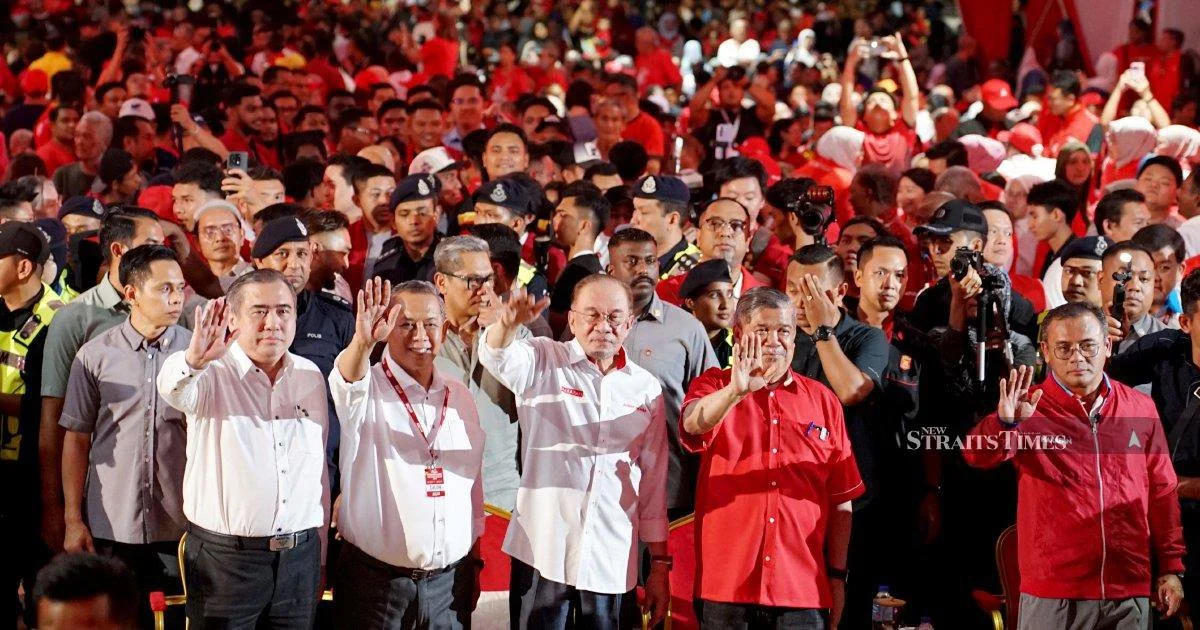
Prime Minister Datuk Seri Anwar Ibrahim has issued a firm reminder to all stakeholders, particularly those in political leadership positions, to refrain from leveraging the royal institution as a means of accumulating political advantage during the Negri Sembilan state election campaign. Speaking in Kuala Pilah, Malaysia's top elected official underscored the importance of keeping the institution of the monarchy insulated from the cut-and-thrust of electoral politics, a principle that sits at the heart of Malaysia's constitutional framework.
The warning comes amid heightened political activity in Negri Sembilan as various parties prepare their election machinery and messaging strategies. By explicitly cautioning against the politicisation of royal institutions, Anwar has effectively drawn a line in the sand regarding what tactics he considers acceptable in competitive politics. This intervention reflects broader concerns about the boundaries between ceremonial constitutional roles and partisan political activity, a distinction that remains crucial for maintaining public confidence in the monarchy.
Malaysia's constitutional monarchy has historically occupied a unique and revered position in the nation's political system. The institution derives its legitimacy and durability from its elevation above everyday partisan conflicts and its portrayal as a unifying symbol for all Malaysians, regardless of political affiliation. When political actors attempt to appropriate or exploit royal associations for campaign purposes, they risk undermining this carefully cultivated neutrality and potentially eroding public respect for the institution itself.
Anwar's comments carry particular weight given his position as Prime Minister and his responsibility for upholding constitutional principles and democratic norms. His statement serves as both a caution to his own coalition partners and a broader message to the opposition that such tactics will not be tolerated. The timing of the warning suggests that concerns about potential violations of this convention may have already emerged in preliminary campaign activities or public discourse surrounding the Negri Sembilan contest.
The Negri Sembilan state election presents a significant test of political maturity within Malaysia's electoral system. State-level contests often feature intense competition and sometimes resort to aggressive tactics that might be considered beyond the pale in federal elections. By establishing clear expectations before the campaign reaches full intensity, Anwar has attempted to establish guardrails that protect constitutional institutions from partisan exploitation.
From a Southeast Asian perspective, Malaysia's approach to maintaining institutional separation between the monarchy and partisan politics serves as a model for democratic stability in the region. Several neighbouring countries struggle with similar tensions between powerful symbolic institutions and political competition. Malaysia's constitutional settlement, despite occasional strains, has generally succeeded in preserving royal neutrality through mutual agreement among political actors to respect certain boundaries.
The broader context for this warning includes Malaysia's recent political volatility, which has witnessed multiple changes of government and shifting coalition alignments at both federal and state levels. In such fluid circumstances, the temptation to mobilise every available asset, including institutional relationships and patronage networks, becomes more acute. Anwar's intervention seeks to prevent the institutional foundations of the Malaysian state from becoming collateral damage in these political struggles.
For voters in Negri Sembilan and across Malaysia, Anwar's warning reinforces the principle that elections should be decided on the basis of policy platforms, leadership competence, and party programmes rather than emotional appeals tied to constitutional institutions. This distinction, while perhaps subtle to some observers, matters significantly for the health of democratic governance. When institutions become prizes to be contested, their functional independence deteriorates and public trust diminishes accordingly.
The enforcement of such boundaries depends ultimately on collective adherence rather than legal prohibition. Political parties must voluntarily observe the convention that the monarchy remains above the fray of electoral competition. Anwar's public statement serves as a form of social enforcement, signalling that violations will be noticed and criticised, potentially incurring reputational costs for offenders.
As Negri Sembilan moves toward its state election, the political landscape will reveal whether all parties have internalised the Prime Minister's message. Monitoring campaign rhetoric, advertising materials, and public statements from candidates and party officials will demonstrate the degree to which political actors respect this constitutional convention. Any apparent breaches will likely provoke public commentary and potentially formal responses from state and federal authorities.
The sustainability of Malaysia's constitutional order depends on maintaining the mutual respect that democratic competitors owe to shared institutions and fundamental principles. While political competition naturally generates friction and pushes participants toward increasingly aggressive tactics, certain boundaries must remain inviolable. Anwar's reminder that the royal institution falls within these protected boundaries reflects a commitment to preserving the institutional architecture that has enabled Malaysian democracy to function despite considerable political turbulence.
Looking forward, the test of Anwar's warning will be whether all political actors—from government coalition parties to opposition groups—demonstrate the restraint and institutional consciousness that preserving democratic norms requires. The Negri Sembilan election thus becomes not merely a contest for state-level political control but a referendum on whether Malaysia's political culture remains capable of self-regulation in defence of its constitutional foundations.

