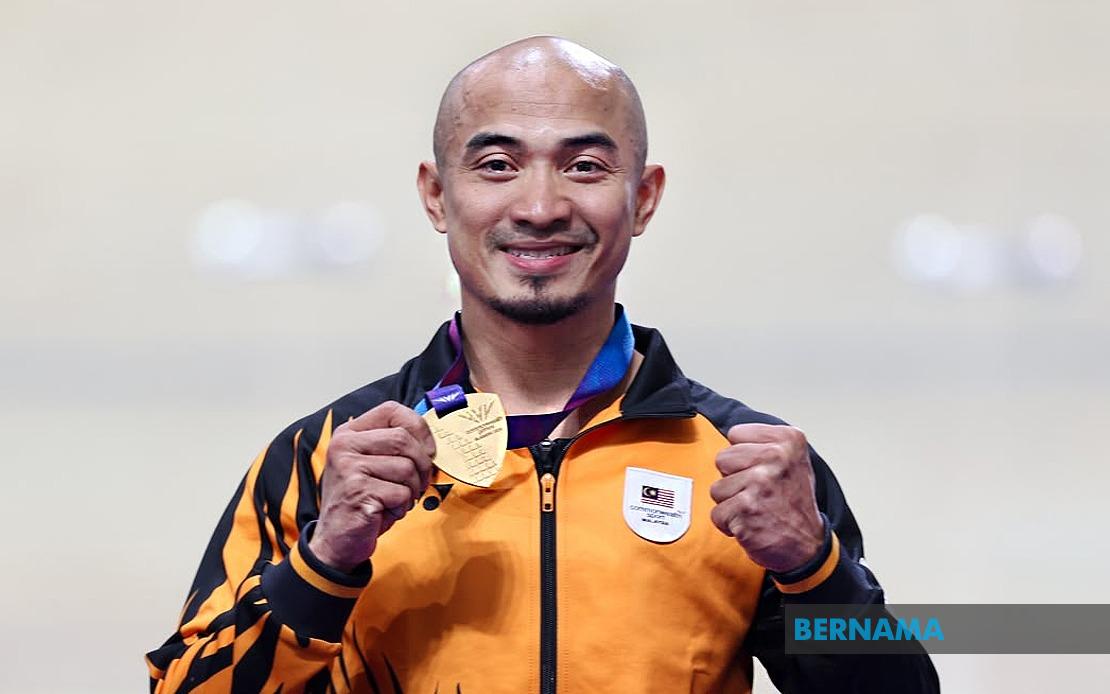
Prime Minister Datuk Seri Anwar Ibrahim has extended his congratulations to national track cycling star Datuk Mohd Azizulhasni Awang following the rider's landmark victory in the men's keirin at the 2026 Commonwealth Games in Glasgow. The achievement represents a watershed moment for Malaysian cycling, delivering the nation's seventh gold medal at this edition of the Games and the track cycling contingent's first precious metal of the competition.
Azizulhasni, affectionately known as "The Pocket Rocketman" in cycling circles, claimed the top step of the podium at the Sir Chris Hoy Velodrome in Glasgow, finally breaking through a 16-year barrier to secure Commonwealth Games gold in the keirin discipline. Anwar took to social media to mark the occasion, describing the victory as a testament to the athlete's unwavering dedication and competitive resolve across his career. The Prime Minister emphasised that the triumph extends beyond individual achievement, representing a source of pride and motivation for the broader Malaysian sporting public.
Finishing ahead of Australia's Leigh Hoffman and England's Harry Ledingham-Horn, Azizulhasni demonstrated the tactical mastery and explosive acceleration that have defined his career at the elite level. His silver medal performance at the Tokyo 2020 Olympics established him as one of the world's premier keirin cyclists, yet Commonwealth Games gold had eluded him despite multiple attempts spanning nearly two decades. This Glasgow triumph therefore carries particular resonance, validating years of commitment to excellence within the discipline and on the global competitive stage.
The Pocket Rocketman's path to gold in Glasgow underscores the importance of sustained athletic development and mental fortitude in professional cycling. Malaysian athletes competing at Commonwealth Games level face considerable pressure and expectation, yet Azizulhasni's consistency across four Games appearances—beginning with his bronze medal finish in the team sprint at New Delhi 2010, followed by another bronze in the keirin at Glasgow 2014—demonstrates the patience required to translate promise into major championship success. His journey illustrates how international competition at the highest tiers demands not merely physical capability but psychological resilience.
Malaysia's cycling programme has progressively strengthened its position within Commonwealth Games competition, and Azizulhasni's gold represents validation of the strategic investments and coaching infrastructure developed over the past decade. The Sir Chris Hoy Velodrome, named after the legendary British track cyclist, provides a world-class facility and the Glasgow Games programme benefits from accumulated experience and technological advancement in cycle design and athlete preparation. For Malaysian cycling, the medal haul continues to grow as the team demonstrates competitive depth across multiple disciplines.
The contribution of supporting cast members such as Muhammad Shah Firdaus Sahrom, who finished seventh in the same keirin event, further illustrates the breadth of talent within Malaysia's track cycling roster. These domestic rivalries and team dynamics foster continuous improvement and create an environment where medal-standard performances can flourish. The competitive environment generated by having multiple athletes capable of performing at international level pushes standards upward across the entire programme.
Azizulhasni's success carries implications for Malaysian sports policy and investment prioritisation going forward. Track cycling has demonstrated measurable return on national investment through consistent medal production at major international competitions. The Glasgow 2026 Games provides a midpoint assessment of Malaysia's Commonwealth Games trajectory, and early performances in track cycling suggest the nation remains on course to achieve competitive targets. Such tangible results provide stakeholders and policymakers with evidence of effective programme management and athlete development systems.
The keirin discipline itself represents an interesting intersection of classical track cycling technique and modern athletic science. Originating in Japan, the keirin format has become a staple of major cycling competitions and provides a platform where explosive power, tactical positioning, and explosive acceleration determine outcomes. Azizulhasni's mastery of these elements reflects not only innate physical gifts but the coaching expertise and strategic preparation that characterises elite Malaysian cycling.
From a regional perspective, Azizulhasni's Glasgow triumph reinforces Southeast Asia's growing prominence in international cycling competition. Malaysian cyclists compete routinely against established track cycling nations and increasingly hold their own in direct competition. The visibility generated by Commonwealth Games success extends beyond traditional cycling audiences and captures broader public attention, potentially inspiring younger athletes to consider track cycling as a career pathway. Such aspirational effects, while difficult to quantify precisely, represent an important multiplier effect from major championship performances.
Looking ahead to subsequent Commonwealth Games competitions and Olympic cycles, Azizulhasni's Glasgow gold establishes a new benchmark for Malaysian track cycling ambition. The athlete remains at a competitive age and his continued participation in forthcoming major championships will influence the trajectory of the national programme. Other Malaysian cyclists will observe his success and the recognition extended by national leadership, understanding that excellence in track events translates into prominence and public acknowledgement at the highest governmental levels.
Anwar's public acknowledgement of Azizulhasni's achievement reflects broader Malaysian governmental commitment to celebrating sporting excellence and recognising the contribution of athletes to national prestige. Such statements from leadership reinforce the narrative that sporting achievement carries intrinsic national value beyond medals themselves. For athletes competing at major championships, knowing that performance will be recognised by the highest levels of government provides both motivation and validation of the sacrifices inherent in pursuing international competitive excellence.

