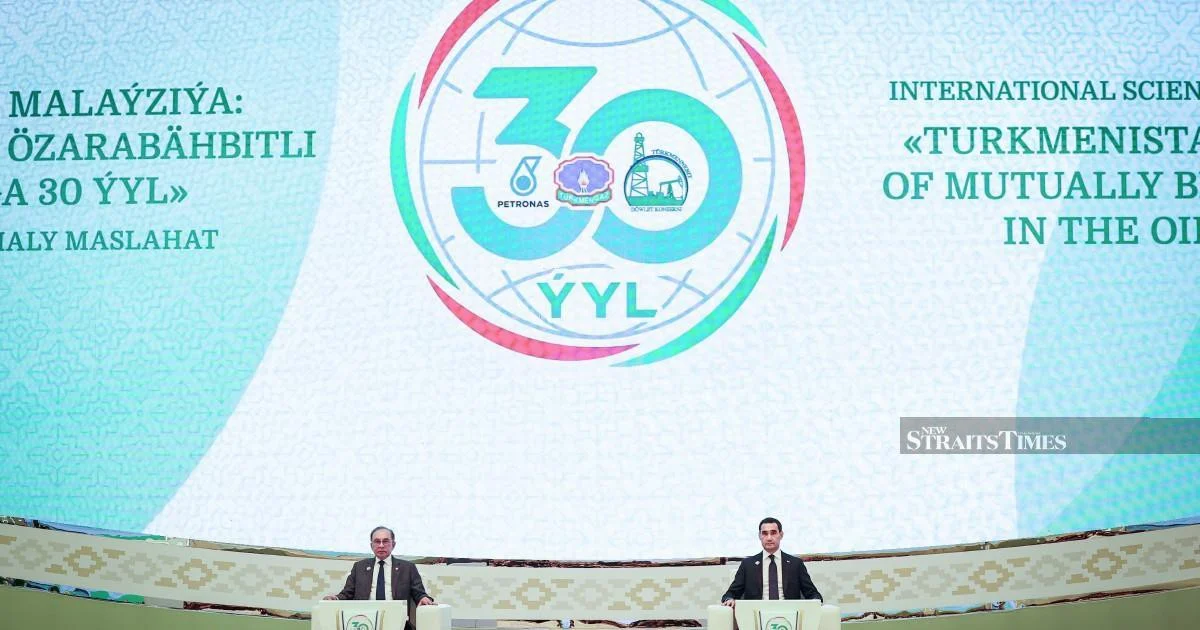
Prime Minister Datuk Seri Anwar Ibrahim's recent visit to Russia and Turkmenistan delivered substantive results in Malaysia's pursuit of energy security through expanded hydrocarbon partnerships, marking a strategic shift in how Kuala Lumpur approaches fuel sourcing in an increasingly multipolar world.
The timing of these engagements carries considerable significance for Southeast Asia's largest economy. Malaysia has long relied on established energy corridors through the Middle East and traditional Western suppliers, yet geopolitical tensions and supply chain vulnerabilities have intensified pressure on policymakers to cultivate alternative relationships. Anwar's direct engagement with energy-rich nations across Eurasia reflects a pragmatic recognition that Malaysia's sustained industrial growth and electricity demands require access to stable, diversified sources of crude oil and liquefied natural gas.
Turkmenistan's positioning as one of the world's largest natural gas reserves holders makes it a particularly attractive partner for Malaysian energy planners. The Central Asian nation sits atop vast fields largely untapped by Southeast Asian interests, offering potential long-term supply agreements that could supplement Malaysia's declining domestic production and reduce dependency on spot market purchases. The negotiations reportedly addressed both immediate procurement needs and framework agreements for future collaboration, suggesting Anwar's team pursued scalable solutions rather than one-off transactions.
Meanwhile, Russia's significance extends beyond mere commodity supply. Despite international sanctions limiting its access to Western markets, Russian energy expertise and established production infrastructure remain globally competitive. For Malaysia, securing engagement with Russian producers creates optionality—the ability to pivot supply sources quickly should disruptions occur elsewhere. Such flexibility grows increasingly valuable in an era where energy markets face recurring shocks from geopolitical events, whether conflicts in producing regions or climate-driven policy shifts in consuming nations.
The diplomatic component of these missions deserves equal attention as the commercial agreements themselves. By visiting Moscow and Ashkhabad, Anwar signaled Malaysia's commitment to constructive engagement across ideological and geopolitical divides. This approach distinguishes Malaysia's foreign policy from more rigid stances taken by some Western-aligned nations, positioning the country as a stable, pragmatic partner willing to pursue mutual benefit across traditional bloc divisions. Such positioning enhances Malaysia's soft power regionally and allows it to maintain productive relationships across competing international systems.
For the broader Southeast Asian context, these developments carry implications beyond Malaysia's borders. As the region's second-largest energy consumer after Indonesia, Malaysia's energy security directly influences regional economic stability and competitiveness. Successful diversification of supply sources allows Malaysia to maintain competitive energy prices for its manufacturing base, supporting the competitiveness of businesses throughout ASEAN that depend on Malaysian logistics hubs and industrial platforms. Additionally, stable energy access strengthens Malaysia's ability to fulfill its commitments to regional infrastructure projects and development initiatives.
The timing also reflects Malaysia's awareness of shifting global energy dynamics. The transition toward renewable energy and electric vehicles, while inevitable, remains gradual in most developing and middle-income economies. Hydrocarbons will remain central to energy portfolios across Southeast Asia throughout the current decade, necessitating strategic foresight in securing reliable supplies at reasonable prices. Anwar's proactive engagement recognizes this reality while simultaneously positioning Malaysia as a sophisticated actor capable of managing multiple relationships and energy pathways.
Investment in Central Asian partnerships addresses another strategic consideration: reducing chokepoint vulnerability. Substantial portions of global energy trade currently flow through straits and passages susceptible to disruption, whether through accident, piracy, or deliberate interference. Diversifying supplier relationships geographically means that supply disruptions in one region carry less systemic impact on Malaysia's energy security. Enhanced Central Asian ties complement existing relationships rather than replacing them, creating resilience through redundancy.
The commercial negotiations themselves likely extended beyond simple purchase agreements. Modern energy partnerships increasingly encompass technology transfer, joint exploration arrangements, training programs, and downstream cooperation in refining and distribution. Malaysian companies may gain opportunities to participate in Turkmen or Russian projects, building expertise that enhances the country's technical capabilities in hydrocarbon management. Such knowledge exchange strengthens Malaysia's longer-term competitiveness in the global energy sector.
Financially, securing stable energy supplies at favorable terms translates directly to improved public finances and reduced inflation pressures. Energy costs ripple through every segment of the economy, from transportation to manufacturing to household utilities. Successful energy diplomacy that yields reliable, competitively priced supplies supports Malaysia's macroeconomic stability and preserves fiscal space for investments in education, health, and infrastructure—priorities equally essential to long-term national development.
These diplomatic successes also strengthen Anwar's position domestically. Tangible improvements in energy security and economic partnerships demonstrate governance effectiveness to both the Malaysian business community and the broader electorate. Such tangible achievements matter considerably for political cohesion and public confidence, particularly in an era when economic pressures and development concerns weigh heavily on citizen sentiment.
Looking forward, the implications of these partnerships will unfold across multiple timeframes. Immediate gains likely include new supply contracts beginning within months, but the deeper value emerges through sustained engagement that positions Malaysia advantageously as energy markets continue evolving. The diplomatic groundwork laid during these visits establishes foundations for deeper cooperation, technology partnerships, and perhaps eventual Malaysian investment in Central Asian energy infrastructure.
The broader lesson resides in demonstrating that sophisticated energy policy combines immediate procurement with strategic positioning, financial acumen with diplomatic skill, and domestic needs with regional responsibilities. Anwar's visits exemplify this multidimensional approach, translating Malaysia's growing economic clout into concrete benefits for energy security while simultaneously enhancing the nation's diplomatic influence across a critical global region.