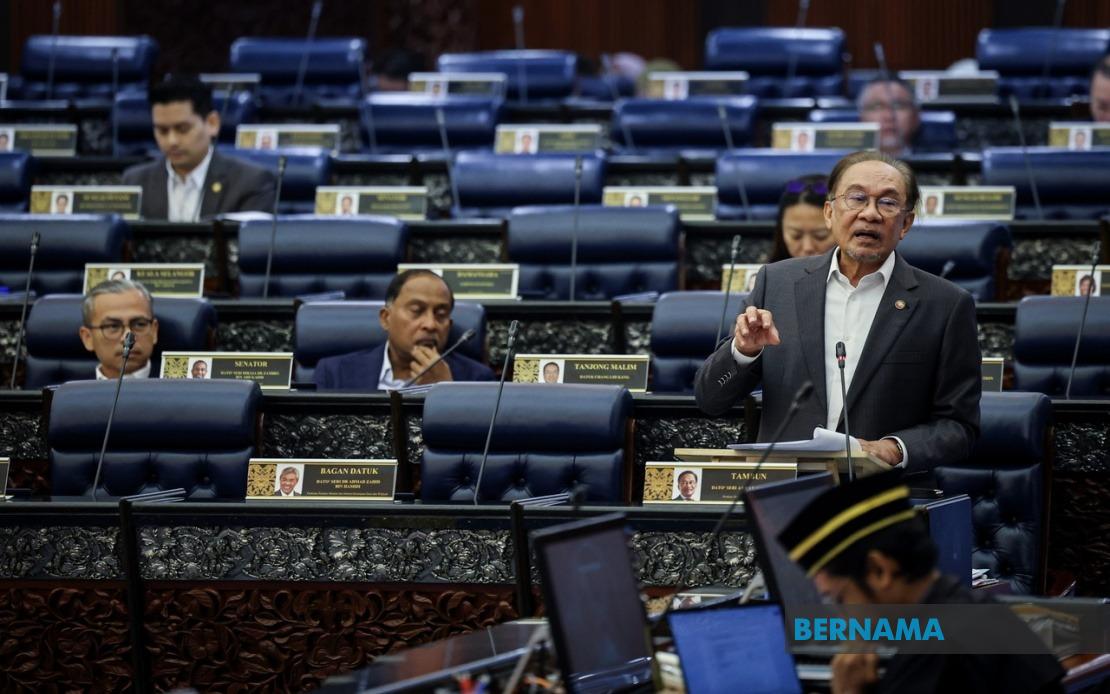
Prime Minister Datuk Seri Anwar Ibrahim moved swiftly to dispel suggestions that his recent remarks regarding polling dates for the Johor state election constituted improper interference in the Election Commission's autonomous operations. Speaking during Minister's Question Time in Parliament on July 7, Anwar emphasised that his observations were grounded in practical considerations affecting Malaysia's cross-border workforce, not in any desire to dictate electoral procedures to an independent body.
The controversy centres on Anwar's preference for Sunday voting rather than the Saturday date that the Election Commission ultimately selected. During campaign events in Johor, the Prime Minister had suggested that a Sunday poll would better accommodate the significant number of Malaysians employed in Singapore, many of whom work extended hours on Saturday mornings. This observation, while well-intentioned, drew scrutiny from opposition parliamentarians who questioned whether such public statements might constitute subtle pressure on the electoral body responsible for setting polling dates.
Anwar's parliamentary clarification sought to distinguish between expressing a personal viewpoint and attempting to influence an institution statutorily required to operate independently. He reaffirmed the Election Commission's exclusive authority to determine when elections occur, acknowledging that while his preference reflected the needs of Malaysian workers abroad, the Commission's decision on Saturday polling would be fully respected and implemented. The Prime Minister's tone throughout his response emphasised respect for institutional boundaries, a particularly sensitive matter given Malaysia's constitutional framework that places electoral management outside the executive branch.
The practical concern underlying Anwar's initial remarks reflects genuine workforce dynamics in the Singapore-Malaysia corridor. Tens of thousands of Malaysians commute daily to Singapore for employment, and many face weekend work schedules that make returning home for Sunday voting more feasible than Saturday voting. This demographic reality particularly affects voters in Johor, which sits directly across the causeway from Singapore's western zones. Recognising such legitimate obstacles to political participation is within a prime minister's remit, even if the Election Commission ultimately decides otherwise based on its own planning considerations.
When pressed on whether Malaysia might formally coordinate with Singapore to facilitate voter returns, Anwar drew a clear distinction between informal facilitation and governmental diplomatic engagement on electoral matters. He confirmed that Malaysian companies operating in Singapore have been quietly encouraged to allow staff time off for voting whenever elections occur, a standard practice that does not require interstate agreements. However, he flatly rejected any notion of directly contacting his Singapore counterpart, Prime Minister Lawrence Wong, to negotiate special voting arrangements, emphasising that Malaysia respects the principle of non-interference in another nation's domestic affairs and extends the same courtesy in return.
This position reflects a delicate balance in Malaysia-Singapore relations. The two countries maintain close economic and security ties, and their leaders maintain cordial personal relationships. Yet both governments jealously guard their electoral sovereignty, recognising that permitting even friendly neighbours to engage in negotiations around voting procedures could create problematic precedents. By explicitly ruling out high-level diplomatic coordination on Johor voting, Anwar signalled commitment to this principle even while acknowledging the practical challenges faced by cross-border commuters.
The supplementary questions raised in Parliament reveal deeper tensions within Malaysia's political landscape regarding electoral administration. Opposition lawmakers from Perikatan Nasional and some government coalition members have grown increasingly critical of Prime Minister's public commentary on electoral matters, viewing such remarks as potentially chilling the Election Commission's independence even when no formal pressure is applied. This sensitivity stems from Malaysia's recent political history, where concerns about electoral integrity and perceptions of political bias have dominated public discourse across multiple administrations.
For Malaysian voters working in Singapore, the practical reality remains challenging regardless of parliamentary clarifications. Whether elections fall on Saturday or Sunday, cross-border workers face genuine logistical hurdles in returning to cast ballots. Some employers prove flexible, others prove rigid, and individual circumstances vary widely. The informal encouragement Anwar mentioned—whereby companies are asked to facilitate voter participation—represents the practical maximum of what the government can achieve without overstepping into territorial violation or creating formal interstate commitments that Singapore might resist.
The Johor state election scheduling dispute also illuminates broader questions about electoral convenience versus administrative logistics within Malaysia itself. The Election Commission must balance numerous considerations beyond the preferences of overseas workers: poll worker availability, venue preparation, security arrangements, administrative staffing capacity, and coordination with state governments. Saturday dates may reflect these operational realities as much as any other factor, making Sunday preferences, however sympathetic to certain voter groups, potentially unrealistic from a resource management perspective.
Anwar's parliamentary intervention successfully reframed the narrative away from accusations of interference toward a more nuanced discussion of legitimate workforce concerns. By explicitly acknowledging the Election Commission's independence while defending the rationality of his original observation, the Prime Minister sought to depoliticise the matter. His consistent emphasis on respect for institutional boundaries, combined with his refusal to pursue diplomatic channels on voting arrangements, projects an image of a leader aware of constitutional propriety even when advancing particular policy preferences.
Moving forward, the Johor election will proceed under the Election Commission's selected Saturday schedule. For Malaysian workers abroad, informal company policies encouraging voter participation will likely remain the primary mechanism for facilitating ballot access. The parliamentary exchange, while seemingly technical, underscores Malaysia's ongoing navigation between democratic responsiveness to citizen needs and institutional independence in electoral administration—a balance that remains crucial to public confidence in Malaysia's democratic systems.

