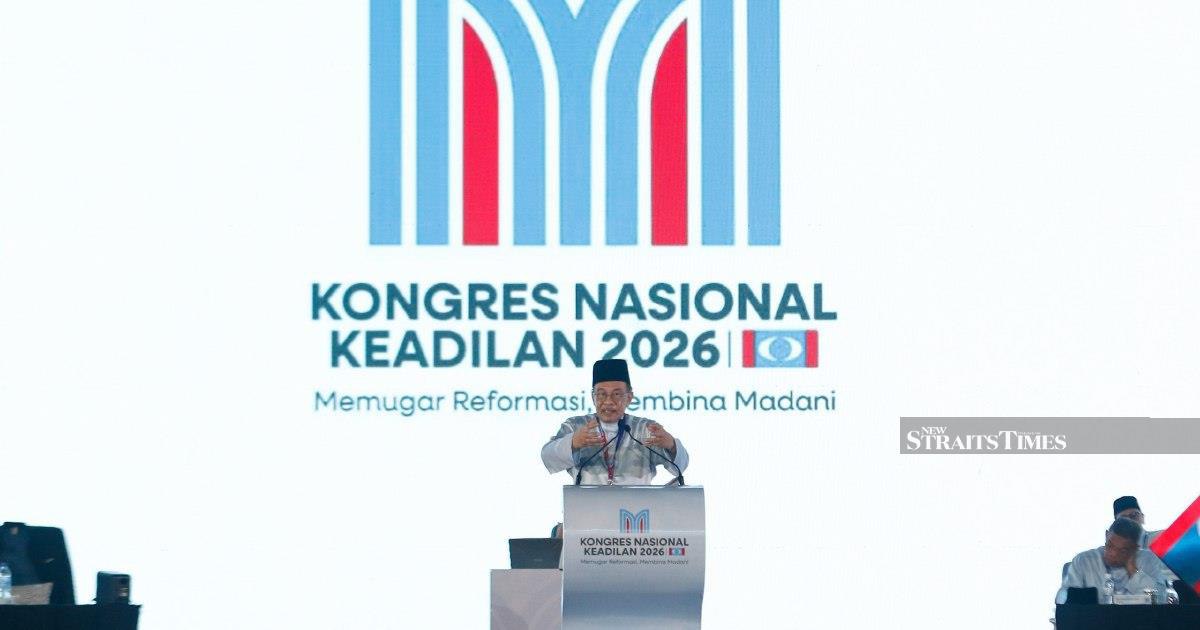
PKR president Datuk Seri Anwar Ibrahim has publicly acknowledged that embezzlement took place within Tabung Haji, drawing on conclusions reached by the Royal Commission of Inquiry established to investigate the troubled pilgrim fund. Speaking at the party's congress in Ayer Keroh, Anwar addressed the long-standing scandal that has dogged Malaysia's premier Islamic pilgrimage fund for years, signalling that political leaders are now willing to confront the institutional failures head-on.
The acknowledgement carries significant weight given Anwar's position as head of the leading opposition coalition and his track record of advocating for transparency in governance. By invoking the RCI's formal investigation, Anwar anchors his statement in an official government-sanctioned inquiry rather than partisan rhetoric, lending credibility to his assertion and suggesting that documented evidence supports claims of financial misconduct at Tabung Haji.
Tabung Haji has faced mounting scrutiny in recent years over its financial health and management practices. The fund, which serves as both a savings mechanism and pilgrimage facilitator for Malaysian Muslims preparing for the annual hajj to Mecca, handles billions of ringgit in deposits from contributors. The scale of operations means that even modest instances of mismanagement or embezzlement can result in substantial losses affecting thousands of account holders.
The Royal Commission of Inquiry represents a formal mechanism through which the government sought to examine the extent and nature of irregularities within Tabung Haji. Such commissions typically involve forensic accounting reviews, witness testimony, and detailed documentation analysis to construct a comprehensive picture of institutional failings. The fact that Anwar is now citing the RCI findings suggests that the inquiry's conclusions regarding embezzlement are sufficiently detailed and substantiated to withstand public scrutiny and political discussion.
For Malaysian pilgrims and savers who have entrusted funds to Tabung Haji, confirmation of embezzlement raises troubling questions about the security of their investments. Many contributors view their Tabung Haji accounts as sacred trusts, combining religious significance with long-term financial planning. The revelation that internal dishonesty has occurred compounds existing concerns about the fund's operational integrity and investment performance.
Anwar's statement at the PKR Congress also reflects broader political discourse surrounding accountability in government institutions. Opposition parties have consistently highlighted governance failures and institutional corruption as central campaign themes. By addressing Tabung Haji specifically, Anwar demonstrates PKR's commitment to holding authorities responsible for fiduciary breaches affecting ordinary Malaysians, particularly those in the religious and financial sectors where public trust is paramount.
The timing of Anwar's remarks suggests that the RCI findings may soon enter the public domain in more detailed form. Government commissions typically produce comprehensive reports that eventually become available for public review, though the pace of publication can vary significantly. Political leaders citing specific conclusions may signal that formal disclosure is imminent, allowing public discourse to shift from speculation to evidence-based analysis.
Tabung Haji's governance challenges extend beyond simple embezzlement to encompass broader questions of investment strategy and administrative oversight. The fund has struggled with declining returns on investments and rising operational costs, factors that compound the impact of any internal theft or misappropriation. Malaysian pilgrims and their families depend on Tabung Haji maintaining competitive returns and secure custodianship of their savings, making institutional reform a matter of genuine national importance.
The institutional culture that permits embezzlement typically involves gaps in internal controls, insufficient audit oversight, and inadequate whistleblower protections. Addressing these vulnerabilities requires not merely punishing individual wrongdoers but implementing systematic reforms to prevent future misconduct. Anwar's public acknowledgement of embezzlement may therefore be a prelude to broader calls for structural reforms within Tabung Haji, including enhanced governance frameworks, independent auditing arrangements, and stronger accountability mechanisms.
For Southeast Asian observers, Malaysia's experience with Tabung Haji carries lessons relevant to Islamic finance institutions across the region. Pilgrimage funds and Islamic banking systems throughout Southeast Asia manage substantial wealth and serve constituencies with deep religious commitments. Malaysia's handling of Tabung Haji governance failures—whether through investigation, prosecution, or reform—may inform how other nations approach similar institutional challenges within their Islamic financial sectors.
The broader implications for Malaysian governance extend to questions about institutional resilience and reform capacity. The existence of a Royal Commission of Inquiry and its willingness to document embezzlement suggests that investigative mechanisms can function despite political pressures. However, the critical test lies in whether findings translate into genuine institutional reform, prosecution of wrongdoers, and restoration of public confidence in an institution that millions of Malaysians depend on for their religious obligations and financial security.

