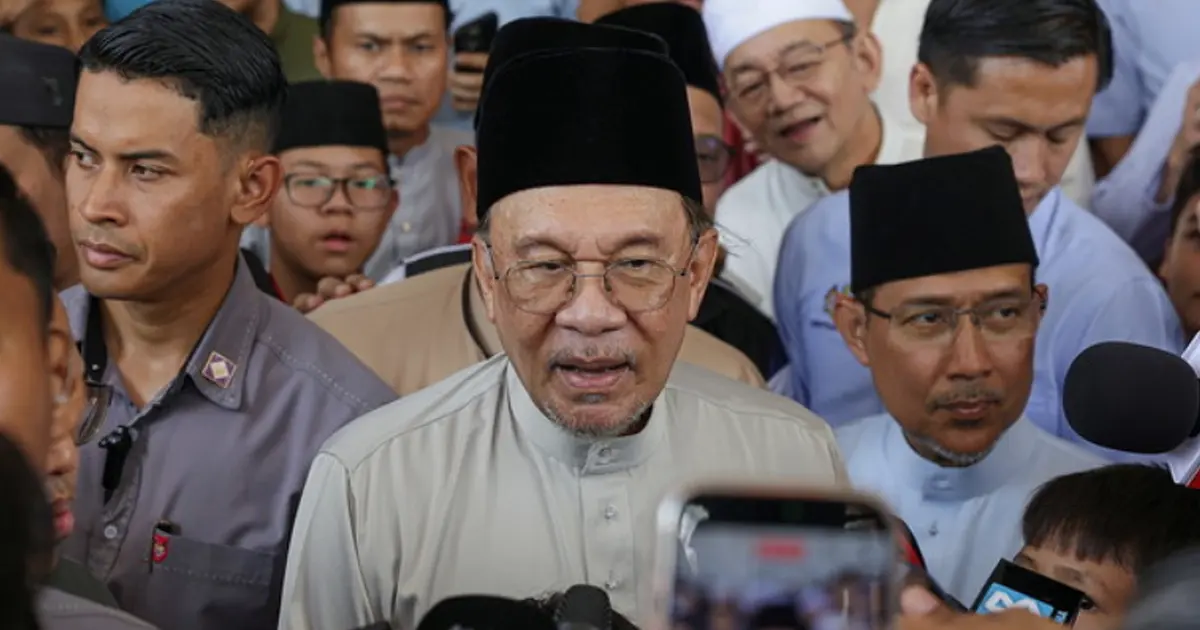
Prime Minister Anwar Ibrahim has moved to settle lingering questions about the transparency of the Royal Commission of Inquiry investigation into Tabung Haji by affirming that the entire report has been made public without modifications. His statement addresses concerns that had circulated regarding whether sensitive or politically sensitive sections might have been redacted before release, a worry that frequently accompanies government inquiries into state institutions.
The RCI into Tabung Haji was established to investigate decades of accumulating concerns about the governance, financial management, and investment practices of Malaysia's pilgrimage fund. The institution, which operates as a savings scheme and investment vehicle for Malaysian Muslims intending to perform the Hajj pilgrimage, had faced mounting criticism over poor investment returns, administrative costs, and questions about how effectively it managed the savings entrusted to it by millions of depositors. The inquiry represented an attempt to forensically examine what went wrong and identify accountability.
Anwar's explicit reassurance that no editorial interference occurred in the publication process carries particular weight in Malaysian political discourse, where concerns about government transparency and institutional independence remain sensitive topics. His statement serves to insulate the inquiry from accusations that the findings were being selectively presented to avoid embarrassing conclusions or protect political allies. This kind of categorical denial of censorship is important for maintaining public confidence in the integrity of state investigations, especially when they touch on financial institutions that affect ordinary Malaysians' retirement and pilgrimage savings.
Tabung Haji has faced sustained scrutiny in recent years as depositors grew increasingly dissatisfied with investment performance, particularly relative to other savings schemes available to them. Questions have persisted about whether the fund's governance structures adequately protected depositor interests or whether management had been captured by political interests. The establishment of the RCI reflected recognition by the government that the institution required external, independent scrutiny rather than internal reform alone.
The nature and scope of findings in the RCI report would likely touch on sensitive matters including leadership decisions spanning multiple administrations, investment strategy choices, and whether institutional failures stemmed from incompetence, inadequate oversight, or potentially misconduct. These are the kinds of conclusions that governments might feel tempted to soften in presentation, making Anwar's explicit confirmation that no such softening occurred strategically valuable for his administration's credibility.
For Malaysian investors and Tabung Haji depositors, the release of an unedited report theoretically provides them with authentic information to assess the severity of the institution's problems and evaluate the credibility of any remedial measures subsequently announced. Understanding the full scope of what the RCI found becomes essential for determining whether proposed reforms address root causes or represent merely cosmetic changes. Transparency in this context directly impacts public confidence in government institutions.
The decision to publish the complete report also reflects broader international expectations regarding government accountability. Malaysia's standing in global governance rankings and international business confidence relies partly on demonstrated willingness to subject state institutions to genuine scrutiny and public disclosure. Anwar's emphasis on the absence of censorship positions Malaysia as responsive to norms of institutional transparency that international observers increasingly expect from regional financial hubs.
Within the Southeast Asian context, questions about governance at state-owned financial institutions resonate across the region. Multiple countries in ASEAN have grappled with similar concerns about whether savings schemes and pilgrimage funds adequately protect beneficiary interests. The Malaysian case and how it is handled contributes to regional conversations about best practices in managing large pooled savings vehicles that combine religious significance with financial complexity.
The publication of the unedited RCI report on Tabung Haji represents a test of Malaysia's commitment to institutional accountability at a moment when the government has emphasized reform and good governance as priorities. Whether the specific findings in the report generate demands for personnel changes, structural reorganization, or tighter regulatory oversight will shape perceptions about whether the inquiry was genuinely independent or merely a procedural exercise. The unedited publication ensures that the public rather than government spokespersons will determine how the findings are interpreted and what implications they carry.
Moving forward, the substantive contents of the RCI report—what it actually says about Tabung Haji's management failures or successes—will matter enormously for the institution's future trajectory and for public willingness to continue entrusting savings to it. Anwar's assurance about the authenticity of what has been published establishes the informational foundation on which subsequent policy decisions and institutional reforms will be judged. The full disclosure also sets an important precedent for how future inquiries into sensitive state institutions will be handled under his administration.

