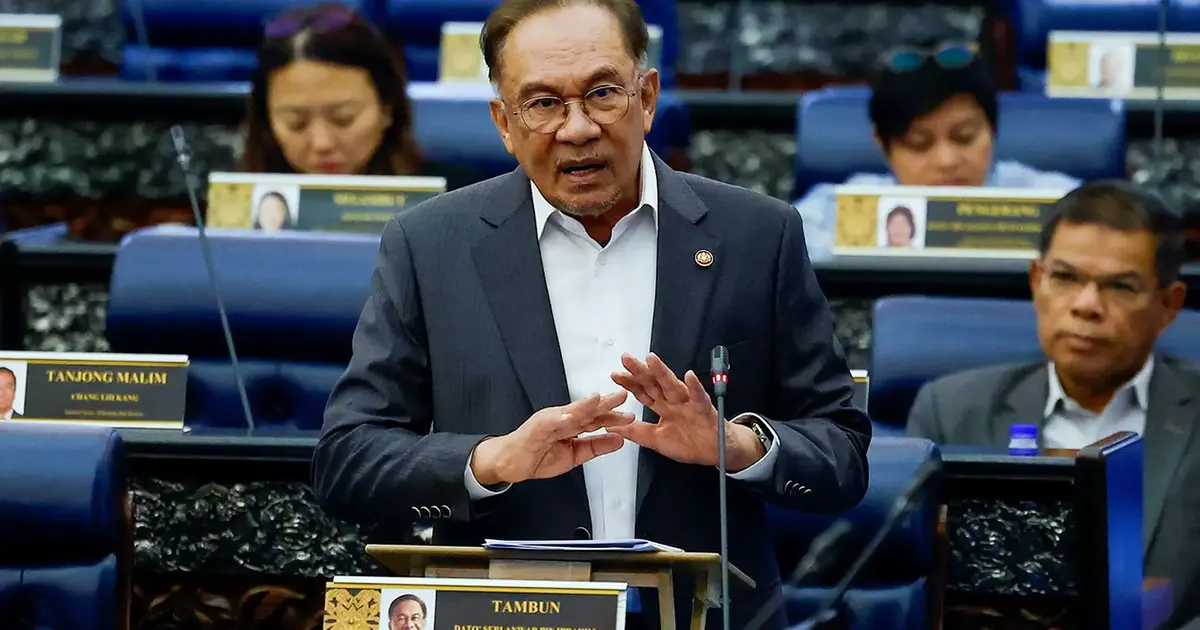
Prime Minister Anwar Ibrahim has confirmed that the previous Warisan-led administration in Sabah had formally agreed to a framework governing special grant rates for the state, clarifying the origins of financial arrangements that have continued under the current political leadership. According to Anwar's statement, the financial commitments reflect decisions made during the tenure of the earlier state government rather than being newly introduced by the current federal administration.
The financial trajectory for these special grants demonstrates significant growth over the past four years. When the arrangement was first established, Sabah received RM53.4 million during the two-year period spanning 2020 and 2021, representing the baseline allocation under the agreed formula. This initial sum has since expanded considerably as the economy and state government operations have evolved, reflecting changing fiscal circumstances and potentially revised assessments of Sabah's developmental needs within the broader Malaysian federation.
By 2024, the annual or relevant period allocation had more than doubled to RM106.8 million, effectively matching the total amount provided during the previous two-year cycle. This escalation underscores the expanding financial support flowing to the resource-rich state, which has historically sought greater fiscal autonomy and enhanced revenue-sharing arrangements with the federal government. The trajectory suggests either population-indexed adjustments, inflation-related increases, or deliberate enhancements to the grant structure negotiated between state and federal authorities.
Anwar's clarification appears designed to address political narratives surrounding the funding formula and to establish that current arrangements carry continuity from previous administrations. In Malaysian federal politics, such demonstrations of policy consistency can be significant, as they suggest broad political consensus on developmental priorities for Sabah and reduce perceptions of partisan favouritism or sudden shifts in financial support based on electoral dynamics or political alignment.
The timing of Anwar's statement comes amid ongoing political discussions in Sabah, where coalitional arrangements have remained fluid in recent years. The state has experienced multiple changes in government leadership and shifting alliances between federal and state-level political actors, making clarifications about long-standing financial commitments particularly relevant to stakeholders assessing the stability and continuity of resource allocation to the state.
Sabah's position within the Malaysian federation has always involved nuanced discussions about fiscal federalism and special provisions. As one of the two eastern Malaysian states that joined the federation under distinct constitutional arrangements, Sabah has historically negotiated for enhanced financial allocations and greater control over certain revenue sources. The special grants arrangement represents part of a broader framework acknowledging the state's unique constitutional status and developmental aspirations.
The grant increases from RM53.4 million to RM106.8 million also reflect the federal government's commitment to addressing infrastructure deficits and development gaps that persist in various districts across Sabah. These funds typically support initiatives ranging from rural electrification and road construction to education and healthcare infrastructure, areas where Sabah has consistently required substantial federal investment to match development standards across other Malaysian states.
Understanding the historical approval of these grant rates by the Warisan administration provides important context for budget planning and development project implementation at the state level. When state governments can rely on predictable, endorsed financial commitments extending across multiple electoral cycles, they possess greater capacity for long-term strategic planning and can undertake multi-year infrastructure projects with confidence in funding continuity.
The federal-state funding relationship in Sabah extends beyond these special grants to encompass revenue-sharing arrangements for petroleum resources, infrastructure development funds, and other allocations specified in the Malaysian Constitution and subsequent agreements. The special grants, while substantial, represent one component of the comprehensive fiscal relationship between Kuala Lumpur and Kota Kinabalu.
For Malaysian observers monitoring federal-state relations, Anwar's statement carries implications for understanding how different administrations approach inherited policy commitments. The acknowledgement that previous governments, regardless of their political complexion, had agreed to specific financial arrangements suggests a commitment to honouring prior consensus on matters affecting state development and stability.
Moving forward, these special grants will likely remain a focal point in Sabah's discussions with the federal government, particularly as the state pursues ambitious development plans and continues negotiating for enhanced resources. The doubling of allocations over four years sets expectations for future growth rates and demonstrates that financial support for Sabah remains a federal priority, albeit one requiring ongoing negotiation and political dialogue.
The confirmation from Malaysia's Prime Minister that these arrangements originated from mutual agreement rather than unilateral federal action also reinforces principles of collaborative federalism, where major policy and financial decisions affecting state governments are presented as products of consultation and consensus-building rather than top-down imposition from the federal level.

