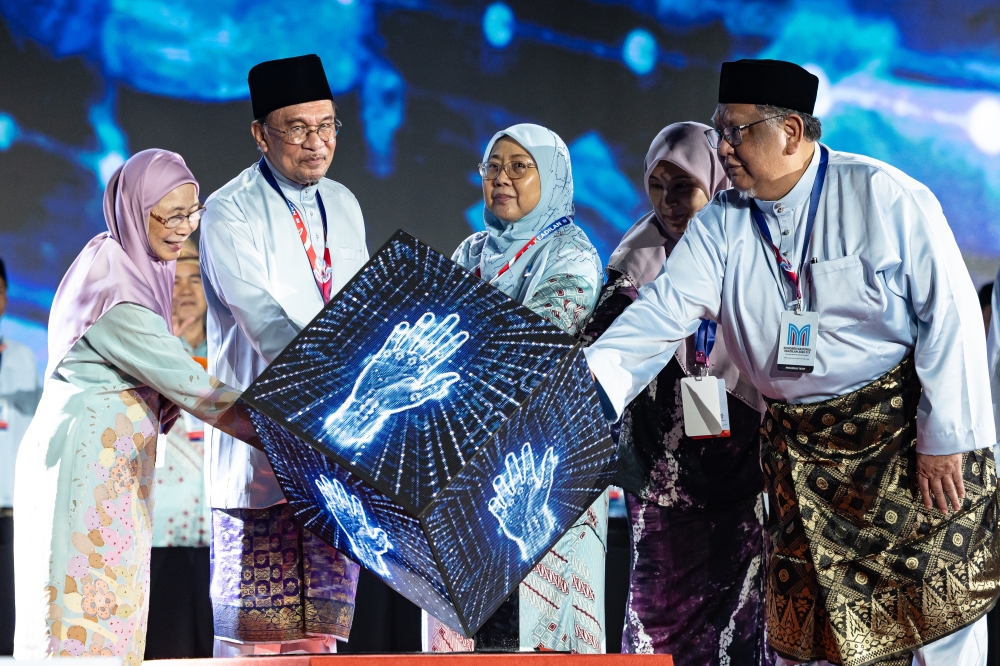
Prime Minister Datuk Seri Anwar Ibrahim has rejected suggestions that his administration practises discriminatory budget allocation, emphasizing instead that states governed by opposition parties have received enhanced federal funding under the Madani framework. Speaking in Melaka on Thursday, the Premier sought to counter a narrative that has gained traction in certain political circles, particularly among leaders from states not represented by the governing coalition.
The Madani government, which took office following the 2022 general elections, has positioned equitable resource distribution as a cornerstone of its policy platform. Anwar's remarks represent a direct response to persistent questioning about whether opposition-controlled territories, particularly Sabah and Sarawak in East Malaysia alongside Kedah and Kelantan on the peninsula, receive proportional federal support compared to coalition-governed states. This remains a sensitive political flashpoint, given that these four states collectively represent substantial parliamentary representation and electoral significance within Malaysia's federal system.
The Prime Minister's intervention signals the administration's determination to neutralize what critics view as a growing perception that financial allocations reflect partisan considerations rather than developmental needs. Such accusations have historically undermined government credibility and fuelled opposition claims of institutional bias. By publicly committing to transparent, needs-based distribution, Anwar appears to be attempting to establish a counternarrative before these grievances harden into conventional political wisdom ahead of potential future electoral contests.
Sabah and Sarawak, as the nation's two largest states by landmass and among the most resource-rich, occupy a unique constitutional position within Malaysia's federalism. Both states retain significant autonomy over certain fiscal matters and have historically advocated vigorously for their share of federal resources. Kedah, traditionally positioned as a peripheral state economically, and Kelantan, governed by the Islamist opposition party, frequently raise concerns about resource allocation fairness. When these grievances arise simultaneously from geographically and politically diverse territories, they carry considerable rhetorical weight within national discourse.
The timing of Anwar's statement carries implications beyond its immediate fiscal content. Southeast Asian governance increasingly faces scrutiny regarding institutional impartiality, particularly in federal or decentralized systems where regional competition for resources shapes political dynamics. Malaysia's experience will likely influence how other regional democracies navigate similar challenges between central and subnational governments, especially where power-sharing arrangements create incentive structures that could theoretically advantage certain territories over others.
Increased allocations to opposition-controlled regions, if substantiated, would represent a departure from historical patterns in several developing democracies where ruling coalitions have sometimes leveraged fiscal authority for political advantage. Malaysia's commitment to reversing such practices, assuming it materializes, could establish important institutional precedents. However, the effectiveness of such measures depends entirely on rigorous documentation and transparent methodologies that allow independent verification by civil society organizations, media outlets, and academic institutions.
The specific mention of Sabah alongside Kelantan, Kedah, and Sarawak reflects important asymmetries within Malaysia's political geography. Sabah's federal allocation decisions carry weight due to the state's petroleum revenues, constitutional status, and electoral significance. The state has periodically threatened constitutional brinkmanship when dissatisfied with federal arrangements, making its financial settlement a matter of high political stakes. Sarawak similarly maintains substantial bargaining power stemming from hydroelectric capacity and resource wealth. Kelantan and Kedah, though less resource-endowed, possess sufficient parliamentary seats to affect national coalition mathematics, particularly in closely contested elections.
Understanding these dynamics requires recognizing that Malaysian federalism functions not as a purely administrative framework but as a negotiated settlement among distinct political and geographic constituencies. Federal budget allocations therefore serve purposes extending beyond economic efficiency—they represent implicit recognition of these constituencies' political weight and legitimacy within the national framework. When Prime Ministers publicly defend allocations to opposition-held territories, they implicitly acknowledge that federal resources carry political meaning transcending their ostensible developmental purpose.
Anwar's statement also emerges within broader conversations about Malaysia's economic recovery and regional competitiveness. As Southeast Asia competes for investment and talent, perceptions of institutional fairness and transparent governance become economically consequential. States that believe themselves systematically disadvantaged may invest less in education, infrastructure, and business development, potentially constraining national growth trajectories. Conversely, visible commitments to equitable federalism can strengthen institutional legitimacy and encourage long-term regional engagement with national development frameworks.
The government's defensiveness on this issue suggests that despite genuine efforts toward equitable allocation, perception gaps remain significant among opposition-controlled regions. This raises important questions about communication strategies and accountability mechanisms. Merely increasing allocations may prove insufficient if recipients perceive the increases as inadequate relative to needs or as political gestures rather than institutionalized commitments. Establishing independent auditing procedures and public dashboards tracking federal disbursements could address these perception problems while simultaneously demonstrating substantive commitment to fairness principles.
Moving forward, the Madani government faces pressure to translate rhetorical commitments into demonstrable institutional changes that opposition leaders and civil society observers can verify independently. The credibility of Malaysian federalism depends partly on whether citizens across all states perceive budget processes as fundamentally fair, regardless of electoral outcomes. Anwar's Melaka statement represents an initial positioning, but sustained institutional reform will ultimately determine whether these reassurances translate into genuine transformation of federal-state resource relationships.

