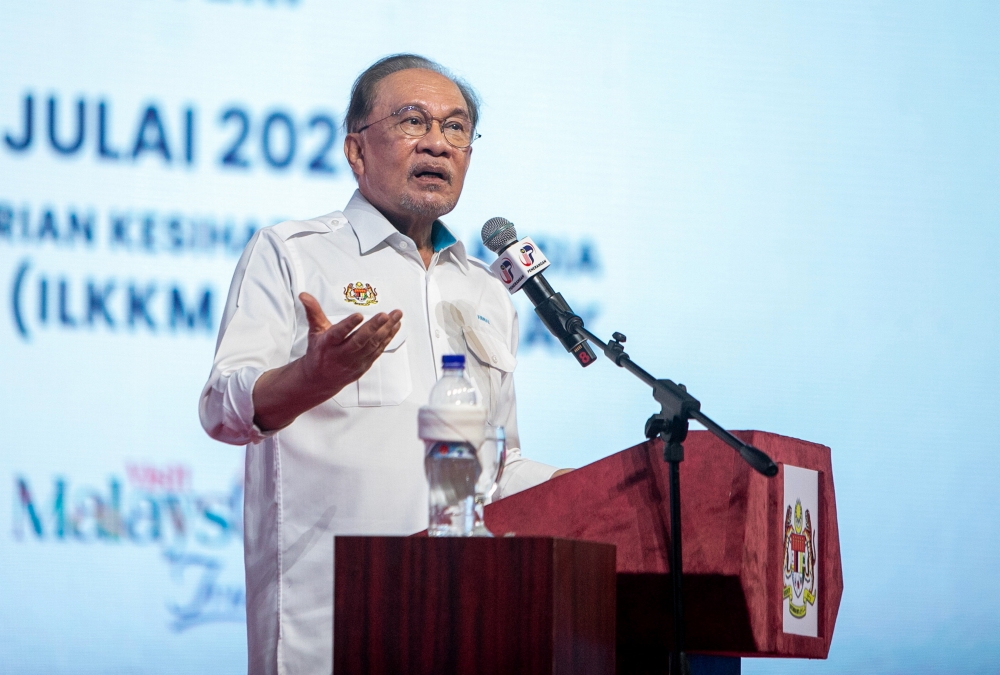
Prime Minister Datuk Seri Anwar Ibrahim has stepped into the ongoing debate surrounding Malaysia's fuel pricing arrangements, articulating the government's rationale for maintaining current subsidy mechanisms while simultaneously flagging the dangers of unchecked borrowing. Speaking in Kajang, the premier sought to address mounting public scrutiny over fuel costs and their bearing on household finances, framing the administration's position as one balancing immediate consumer relief against longer-term economic stability.
The fuel subsidy question has emerged as a recurring flashpoint in Malaysian political discourse, pitting the desire to shield motorists and industries from volatile international commodity prices against the substantial fiscal commitments required to maintain such programmes. Anwar's intervention signals that the cabinet remains internally divided on the optimal approach, with some ministers advocating for gradual subsidy rationalisation while others resist price increases that could inflame voter discontent. The prime minister's public comments suggest an attempt to forge consensus around a middle path that acknowledges both supply-side constraints and electoral sensibilities.
Central to Anwar's defence is an implicit acknowledgement of a fundamental tension: fuel subsidies, while politically popular, divert enormous sums that might otherwise finance education, healthcare, or infrastructure development. The Malaysian government's petrol and diesel price controls have historically consumed between 1 and 2 per cent of total government revenue in recent years, representing one of Southeast Asia's most generous consumer energy support systems. By juxtaposing the question "who will pay for it?" against the broader fiscal landscape, Anwar appeared to be directing public attention toward trade-offs inherent in policy choices.
The prime minister's caution regarding debt accumulation addresses a legitimate economic concern. Malaysia's federal government debt has expanded markedly over the past decade, reaching levels that constrain future fiscal manoeuvre and place upward pressure on borrowing costs. Rating agencies have noted the vulnerability of the nation's fiscal position to external shocks, particularly given heavy reliance on commodity revenues and the potential for credit downgrades should deficits persist. Anwar's framing suggests recognition that perpetually subsidised fuel, if left unchecked, could accelerate the debt trajectory to unsustainable levels within a decade.
From a regional perspective, Malaysia's fuel subsidy dilemma mirrors challenges confronting several developing economies across Southeast Asia and the broader Global South. Thailand, Indonesia, and the Philippines have all grappled with similar questions about whether temporary price support genuinely benefits the poorest households or simply masks structural inefficiencies. The International Monetary Fund and World Bank have consistently advocated for subsidy rationalisation coupled with targeted cash transfers to vulnerable populations, arguing that universal price controls impose dead-weight losses while failing to concentrate assistance where it is most needed.
Domestic pressures complicate any move toward subsidy reduction. Malaysia's transport sector, particularly public vehicle operators and logistics companies, has lobbied fiercely against price liberalisation, warning that immediate removal of protections would precipitate fare increases that could ripple through the broader economy. Small and medium enterprises reliant on fuel-intensive operations similarly resist change, viewing current arrangements as essential to their competitive viability. These constituencies possess disproportionate political influence, making gradual or targeted reform practically difficult for any administration intent on avoiding social unrest.
Anwar's framing invites consideration of what sustainable fuel policy architecture might entail. Some economists propose phased subsidy reduction paired with expanded cash transfers to lower-income households, allowing market prices to prevail while maintaining social support through the tax system. Others advocate for sectoral differentiation, withdrawing support for private vehicles whilst retaining it for essential services. Each approach carries distinct distributional consequences and administrative complexities that require careful calibration.
The timing of Anwar's remarks carries significance given Malaysia's medium-term fiscal consolidation agenda. The government has committed to narrowing the budget deficit toward sustainable levels, and fuel subsidies represent one of the few expenditure categories substantial enough to materially affect headline outcomes. Controllers at the Finance Ministry have privately expressed frustration with the political constraints surrounding subsidy reform, recognising that meaningful deficit reduction may prove elusive without addressing this sector directly.
International oil market dynamics further complicate the calculus. Should crude prices remain elevated, the cost of maintaining current subsidy levels will correspondingly increase, potentially forcing the government's hand regardless of political preference. Conversely, a sustained period of lower energy prices might afford policymakers breathing room to pursue gradual transition strategies without triggering acute public backlash. The volatility inherent in global energy markets means that fuel policy cannot be divorced from macroeconomic forecasting and contingency planning.
Anwar's intervention ultimately reflects an administration navigating genuine policy dilemmas without easy solutions. The prime minister's emphasis on fiscal sustainability and debt containment suggests acknowledgement that the status quo is genuinely unsustainable, yet political economy constraints render aggressive reform hazardous. Whether the government can construct a credible, phased pathway toward subsidy rationalisation while maintaining public confidence remains an open question, one with implications extending well beyond energy economics into the broader domain of fiscal credibility and social cohesion.

