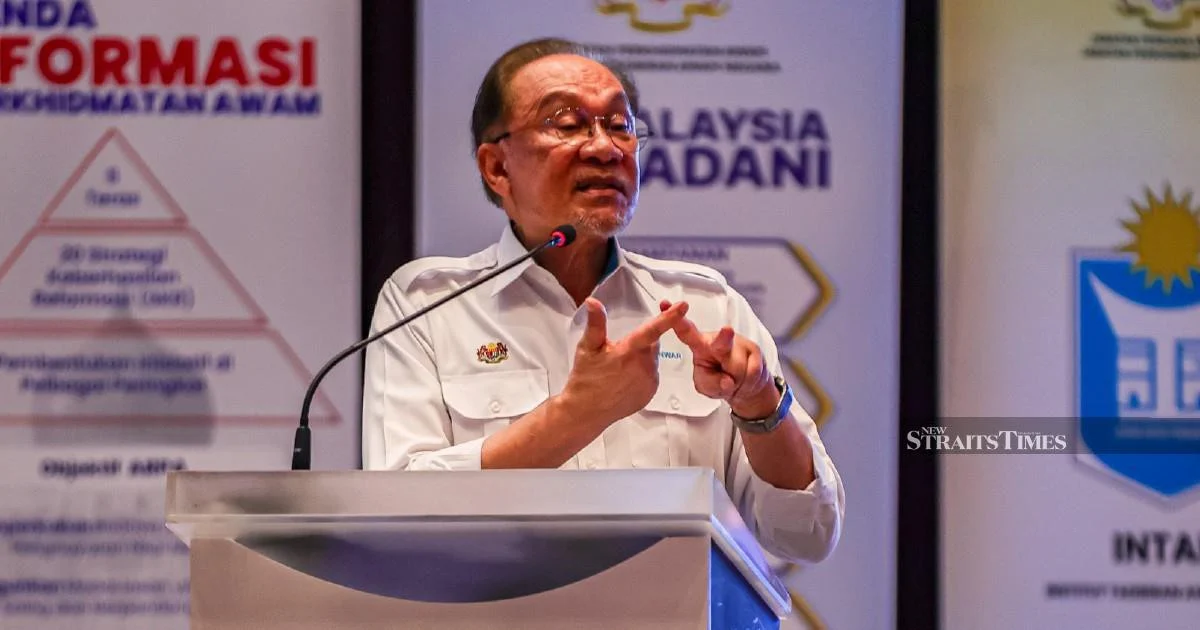
Prime Minister Datuk Seri Anwar Ibrahim has stepped in to ease mounting friction within his coalition, insisting that Amanah president Datuk Seri Mohamad Sabu's comments during Friday's Pakatan Harapan candidate announcement in Tangkak were not intended as a slight against any partner party. The intervention underscores the delicate political balance required to maintain cohesion among Pakatan Harapan's diverse membership as Malaysia approaches critical electoral contests.
Anwar's statement in Alor Gajah represents a significant olive branch, suggesting that whatever remarks drew criticism were being misinterpreted or taken out of context. By publicly defending Mohamad Sabu, the Prime Minister is signalling that internal disputes will not be permitted to destabilise the coalition at a critical juncture. This protective stance reveals the fragility of relationships between coalition partners, each with distinct organisational interests and bases of support.
The Tangkak event, where Pakatan Harapan unveiled its slate of candidates, had evidently sparked disagreements among alliance members over the tone or substance of remarks made during proceedings. Such tensions are not unusual within multi-party coalitions, where different organisations compete for relevance and voter attention while nominally working toward shared objectives. The fact that Anwar felt compelled to address the matter publicly demonstrates how swiftly minor incidents can escalate into broader concerns about coalition unity.
Amanah's position within Pakatan Harapan carries particular significance for the coalition's appeal to Malay-Muslim voters, a constituency that has shown considerable volatility in recent electoral cycles. Any perception that the party is being sidelined or disrespected by larger coalition partners could potentially weaken its standing and, by extension, affect the alliance's overall electoral performance. Anwar's intervention thus serves not merely to protect Mohamad Sabu but to affirm Amanah's continued importance to the broader coalition strategy.
The call for calm from the Prime Minister reflects a broader pattern of coalition management, where leaders must navigate competing egos, organisational pride, and substantive policy differences while maintaining a united public face. Malaysian coalition politics has historically been vulnerable to dramatic collapses triggered by accumulated grievances, wounded pride, and perceptions of unequal treatment. Anwar's swift action appears designed to prevent such a cascade from beginning.
For Malaysian observers, the incident illustrates the perpetual challenge facing multi-party alliances in a diverse political landscape. Pakatan Harapan encompasses organisations with different ideological foundations, grassroots structures, and constituencies. Maintaining harmony requires constant negotiation and mutual reassurance, particularly when partner parties feel their contributions or positions are being questioned or minimised. The timing, coming during candidate announcement processes, suggests that disputes may also involve the allocation of winnable seats, a perennially contentious issue within coalitions.
The episode also carries implications for the broader political environment in Southeast Asia, where coalition-building remains essential for governments and opposition blocs alike. The stability of such arrangements often determines whether administrations can implement coherent agendas or whether they become consumed by internal management. In Malaysia's case, the viability of Pakatan Harapan as a governing force depends significantly on the ability of leaders like Anwar to manage relationships with partners like Amanah, DAP, and PKR.
Anwar's emphasis on seeking calm rather than investigating or adjudicating the substance of the dispute suggests a preference for diplomatic de-escalation over formal complaint resolution. This approach minimises reputational damage to any party while signalling that all members remain valued components of the coalition. However, such strategies can also create ambiguity about what actually transpired and whether underlying concerns have genuinely been addressed or merely deferred.
Looking forward, the incident serves as a reminder that Pakatan Harapan's cohesion cannot be taken for granted, even under the current leadership. Voter confidence in the coalition partly depends on perceptions of stability and demonstrated ability to work collaboratively. Each public disagreement, regardless of how quickly it is smoothed over, carries the potential to reinforce narratives of internal division and unreliability. Anwar's defence of Mohamad Sabu thus represents not only protection for an ally but also an investment in maintaining the broader brand credibility of the coalition itself.