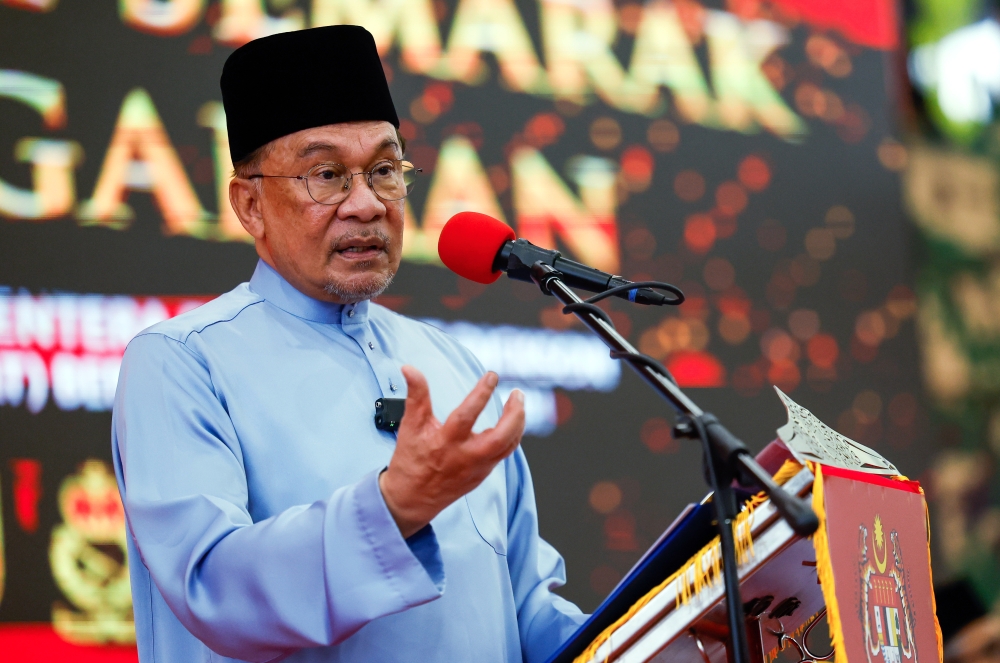
Prime Minister Anwar Ibrahim has provided his rationale for keeping the Royal Commission of Inquiry findings on Lembaga Tabung Haji under wraps, stating that public disclosure could trigger alarm among depositors and lead to destabilising mass withdrawals from the hajj savings institution. Speaking in Port Dickson on July 24, Anwar framed the decision as a measured approach to protecting the financial stability of TH, which holds savings from millions of Malaysian Muslims who have entrusted funds for their pilgrimage journeys.
The Tabung Haji RCI was established to investigate serious governance failures and financial irregularities at the institution, which has faced mounting scrutiny over its investment decisions, management practices, and the adequacy of safeguards for depositor funds. The inquiry's findings have become one of the most closely guarded government documents in recent years, with previous ministers and officials offering limited explanations for the continued secrecy surrounding the report's contents and recommendations.
Anwar's position reflects a broader tension in public sector accountability. While transparency in government investigations is generally viewed as essential to restoring public confidence, the Prime Minister's argument centres on the practical risks that immediate disclosure might pose to the financial institution itself. This calculus—balancing the public's right to information against systemic stability concerns—has become increasingly contentious among civil society groups, opposition politicians, and transparency advocates who argue that citizens deserve to know what went wrong at TH.
The hajj savings scheme, which operates as both a financial institution and a religious trust, occupies a unique position in Malaysia's economy. With deposits from approximately 10 million account holders representing billions in ringgit, any loss of confidence could create a cascading problem if large numbers of Malaysians simultaneously attempt to withdraw their savings. Anwar's concern about triggering a run on the institution is not purely hypothetical—similar scenarios in other financial sectors have demonstrated how disclosure of negative findings can accelerate rather than prevent institutional damage.
However, the approach raises important questions about information asymmetry and public trust. By restricting access to the RCI report, the government maintains a monopoly over what can be revealed about TH's problems and their severity. This means Anwar's administration controls the narrative about what occurred, when problems are addressed, and how the institution's future is shaped—all without public scrutiny of the actual evidence and findings that led the inquiry to its conclusions.
The PM's explanation also touches on the broader challenge of managing investor confidence in Islamic financial institutions across Southeast Asia. Tabung Haji operates within a special legislative and cultural framework, with religious dimensions that make it different from conventional banks. Many depositors view their TH accounts not merely as financial investments but as commitments tied to their religious obligations. Any perception of mismanagement or fraud carries emotional and spiritual weight beyond typical financial concerns, potentially amplifying panic responses if negative details emerge without proper context and remediation measures.
Going forward, the real test of Anwar's approach will be whether the government can implement meaningful reforms at TH while maintaining public confidence without ever fully disclosing what went wrong. This requires demonstrable operational improvements, enhanced governance structures, stronger regulatory oversight, and a credible timeline for addressing the issues the RCI identified. Simply keeping the report sealed indefinitely risks a different kind of institutional damage—one based on suspicion, rumour, and erosion of the social contract between depositors and the institution managing their funds.
The situation also has implications for how Malaysia handles future high-profile inquiries into other government agencies and institutions. If the precedent holds that damaging reports can be concealed in perpetuity under the guise of stability concerns, it may discourage the establishment of RCIs altogether or render them less useful as accountability mechanisms. Civil society groups have already noted that without transparency about TH's failures and the RCI's findings, there is little assurance that similar problems will not recur elsewhere in Malaysia's institutional landscape.
From a Southeast Asian perspective, Malaysia's handling of the Tabung Haji situation is being watched by other Muslim-majority nations with comparable hajj savings schemes or Islamic financial institutions. How Anwar's government ultimately resolves the tension between stability and transparency could influence whether other regional governments embrace similar secrecy or move toward greater disclosure. The region's financial institutions already face challenges around governance and investor protection; the Tabung Haji case offers an opportunity to establish best practices, or conversely, to reinforce patterns of institutional opacity.
Anwar's position suggests that the RCI report will likely remain classified for an extended period, with the government potentially releasing selective findings or general assurances about reforms without exposing the full scope of problems uncovered by the inquiry. This approach may preserve short-term stability, but it leaves unresolved the fundamental democratic question of whether citizens funding such institutions deserve comprehensive transparency about how their money is managed and protected.

