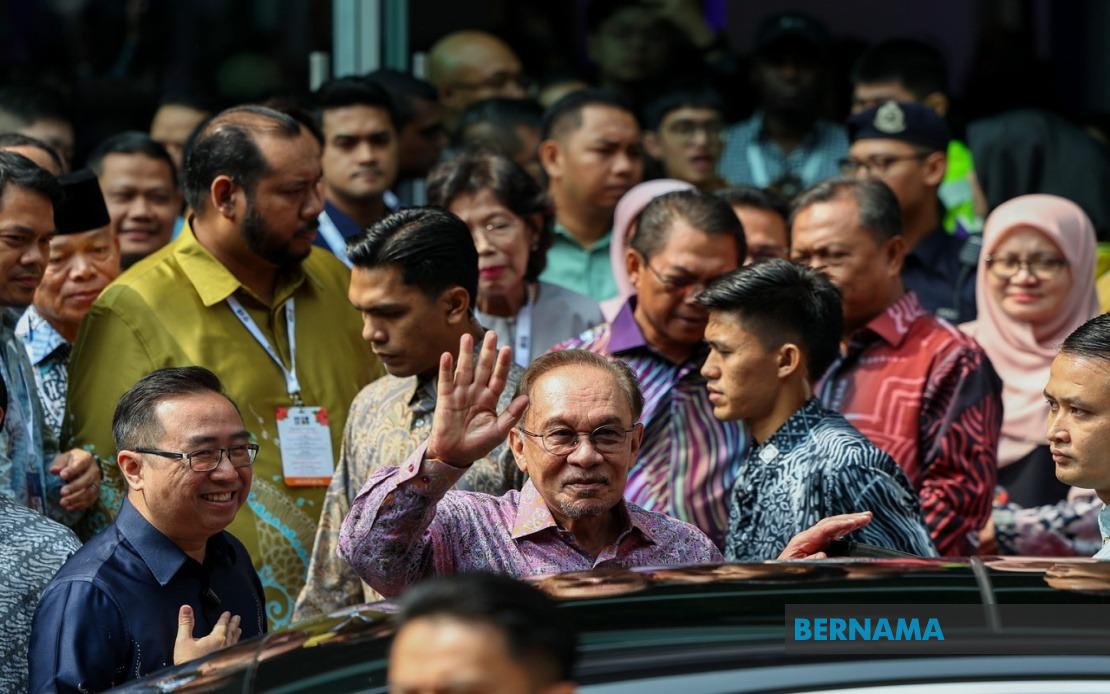
Prime Minister Datuk Seri Anwar Ibrahim has distanced himself from reports that Datuk Seri Mohamed Azmin Ali was invited back into the People's Justice Party (PKR), stating plainly on Tuesday that he had received no such notification. Speaking at the opening of the National Innovation and Commercialisation Expo (NICE) 2026 at the Kuala Lumpur Convention Centre, Anwar gave a characteristically terse response when pressed about the matter, questioning whether any formal invitation had actually been extended and reiterating his lack of awareness about the situation.
The denial comes just a day after Azmin, now serving as secretary-general of Parti Pribumi Bersatu Malaysia (Bersatu), publicly rebuffed suggestions that he would return to PKR despite what he claimed were invitations aimed at former party members. Azmin's statement represented a firm closing of the door on any prospect of reconciliation with his former party, signalling that his transition to Bersatu remains permanent. The exchange highlights the ongoing fluid politics within Malaysia's coalition landscape, where political figures continue to navigate competing loyalties and party alignments.
What makes Anwar's position particularly significant is the broader context of PKR's apparent recruitment drive among defectors and former members. The party appears to be actively courting those who left in previous political upheavals, suggesting a strategic effort to rebuild its parliamentary representation and strengthen its position within the ruling coalition. This initiative would typically involve coordination at the highest levels of party leadership, making Anwar's claimed ignorance either genuine oversight or a deliberate distancing from a recruitment initiative that may have become politically awkward.
The party has reportedly made overtures to Datuk Kamarudin Jaffar, former MP for Bandar Tun Razak, and Datuk Mansor Othman, who previously represented Nibong Tebal. Both individuals have been identified as potential returnees to PKR, suggesting that the party leadership has identified specific personalities whose return would provide political benefit. The targeting of former MPs is strategically logical, as these individuals bring legislative experience, established constituencies, and networks that could strengthen PKR's hand in Parliament and state assemblies.
Among those confirming their return to PKR is Datuk Dr Xavier Jayakumar, a former party vice-president, whose decision to come back appears to have proceeded with greater clarity and coordination. Jayakumar's confirmed return stands in contrast to the murkier situation surrounding Azmin, suggesting that different prospective returnees may be navigating different conditions or expectations. The varying levels of formality and confirmation in these various cases indicate that PKR's reintegration process may lack uniform governance or clear communication channels.
Azmin's trajectory since leaving PKR has been notable in Malaysian political circles. His move to Bersatu represented a significant defection during a period of considerable political turbulence, and his current role as secretary-general places him in a senior position within Muhyiddin Yassin's party. By publicly rejecting the possibility of returning to PKR, Azmin is reinforcing his commitment to his current political home and suggesting that his departure from PKR was not merely a temporary tactical repositioning but rather a substantive shift in political allegiance. This positioning may also reflect broader calculations about which coalition offers him better prospects for ministerial advancement or political influence.
The timing of Anwar's statement is noteworthy as it occurs amid broader discussions about coalition stability and party positioning ahead of potential electoral cycles. The fact that PKR is actively recruiting former members suggests some anxiety about parliamentary numbers or regional representation, while the presence of multiple defectors considering return indicates that party switching remains an endemic feature of Malaysian politics. For Malaysian voters accustomed to such fluidity, the movement of politicians between parties is almost routine, yet it raises questions about the strength of party institutions and the consistency of political commitments.
The situation also illuminates the distinction between formal party processes and informal political messaging. Anwar's claim that he was unaware of invitations to Azmin potentially reflects the reality that such recruitment may have been conducted by party machinery at lower levels, without explicit briefing to the party president. Alternatively, it could represent a strategic distancing from an initiative that encountered unexpected resistance or public relations complications. Either interpretation suggests some degree of organisational slack or compartmentalisation within PKR's operations.
For the broader Malaysian political ecosystem, particularly in Southeast Asia where coalition politics remain fluid, the constant reshuffling of party membership underscores the ongoing importance of personality politics over programmatic party identities. PKR, as a party with Anwar as its figurehead, remains dependent on its leader's personal authority and appeal, yet events like these suggest that institutional processes and party discipline may not always align seamlessly with leadership intentions or awareness. The disconnect between Anwar's claimed ignorance and ongoing recruitment efforts raises important questions about governance structures within one of the nation's major political parties.

