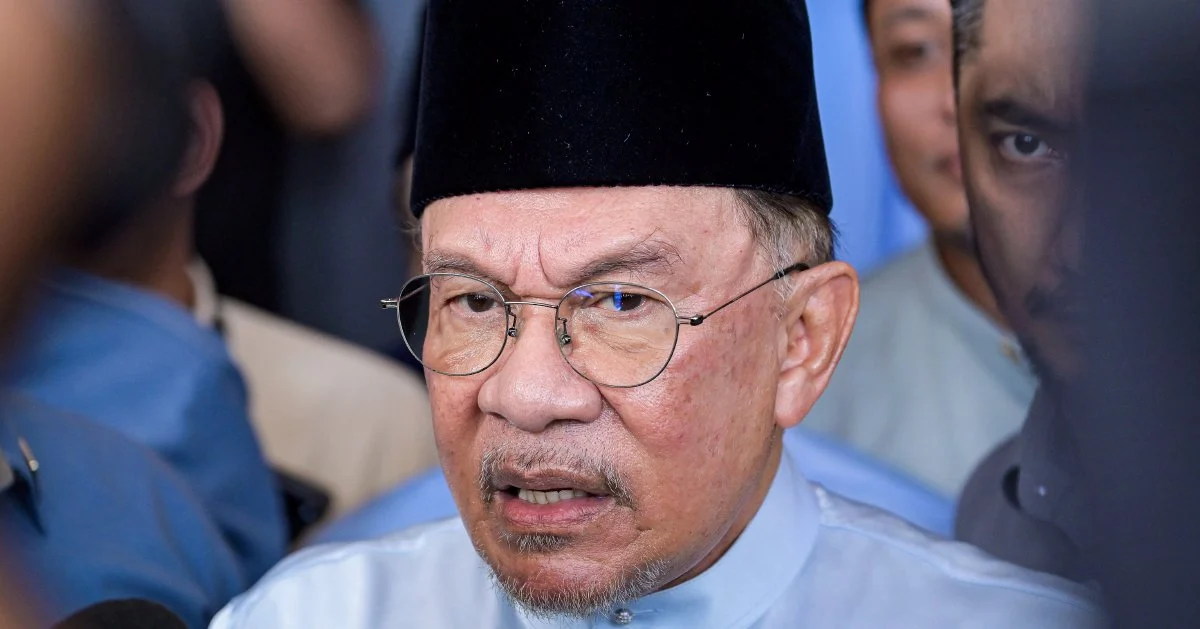
Prime Minister Datuk Seri Anwar Ibrahim has moved to quash mounting speculation about a reported incident at Felda settlements, publicly refuting suggestions that an order was issued to prevent caretaker Johor Menteri Besar Datuk Onn Hafiz Ghazi from gaining access to the agricultural communities.
The denial, made in Dengkil, represents the federal leadership's attempt to downplay friction between different political factions vying for influence in Johor ahead of forthcoming electoral contests. Such public clarifications from the Prime Minister's office underscore the sensitivity of the matter within ruling coalition dynamics, where perceptions of favoritism or institutional exclusion could inflame tensions among alliance partners.
Onn Hafiz, who continues as Johor Menteri Besar in a caretaker capacity, occupies a pivotal position in the state's political landscape. His status as caretaker leader reflects the fluid political situation in Johor, where multiple parties maintain significant influence. Any suggestion that he faced administrative obstruction would carry implications for inter-party relations and coalition stability at both state and federal levels.
Felda settlements represent crucial constituencies for electoral mobilization. These organized agricultural communities, populated by smallholder farmers and their families, constitute an important voting bloc that no political formation can afford to alienate. Control over access to these communities for political engagement therefore carries practical significance beyond mere symbolic value. The settlements' economic dependency on government support structures also makes them sensitive to perceptions of unequal treatment among political leaders.
The controversy reflects broader positioning dynamics as political parties prepare for upcoming electoral contests. Regional leaders constantly engage in calibrating their public presence and accessibility to key voter constituencies. Allegations of being excluded from community spaces can undermine a politician's grassroots standing and narrative of viability, making swift official denials strategically important regardless of the incident's actual circumstances.
Anwar's intervention at the national level suggests that subordinate political actors may have created complications requiring top-level management. When federal Prime Ministers must personally address local political grievances, it typically indicates that the matter has attracted sufficient attention or generated sufficient inter-party concern to warrant executive attention. The public nature of the denial, rather than quiet backroom resolution, indicates a decision to depoliticize the matter through transparency.
The incident highlights fragilities within multi-party coalition governance in Malaysian states. Johor's political environment has historically witnessed competitive positioning between major federal coalition partners, each maintaining substantial organizational capacity and electoral support. When friction emerges over resource allocation, event access, or institutional privileges, such disputes can metastasize into broader confidence questions about coalition partnership quality.
For Malaysian readers particularly in Johor and other states where similar coalition arrangements exist, this episode illustrates how even procedural administrative matters—who attends which events—acquire political significance in competitive electoral environments. The farming communities of Felda settlements face impacts from such political friction, as instability in leadership relationships can translate into uncertainty about development priorities and resource flows to these communities.
The matter also reveals something about information management in contemporary Malaysian politics. Whatever actually occurred at the Felda event, the emergence of allegations suggesting institutional exclusion indicates that someone believed such claims merited public airing. This choice to publicize rather than contain the narrative forced the Prime Minister's office to issue corrections, suggesting that managing political narratives has become increasingly complex as competing political factions utilize multiple communication channels.
Onn Hafiz's caretaker status adds another dimension to the dispute. Unlike an elected Menteri Besar with a clear democratic mandate, caretaker leaders operate under heightened scrutiny regarding their access to government resources and institutional platforms. Their temporary nature can invite questioning about whether they retain full legitimacy to engage in political activities or represent state interests. This ambiguous status may have contributed to the incident, whether through deliberate exclusion or administrative confusion.
Looking forward, Anwar's public denial should temporarily ease tensions, but underlying questions about resource allocation, institutional access, and coalition harmony in Johor remain unresolved. The efficiency with which federal leadership addressed the matter demonstrates organizational responsiveness, yet the incident's emergence at all indicates continuing friction within Johor's political establishment. Such friction, if unresolved, could impact the coalition's electoral prospects when Johor voters next go to the polls.
For the broader Malaysian political landscape, the episode serves as a reminder that even seemingly minor procedural disputes can rapidly acquire significance when multiple parties compete for influence within shared institutional spaces. Managing such competition transparently while maintaining coalition cohesion remains a central challenge for federal leadership coordinating multiple state-level actors with their own political calculations and ambitions.

