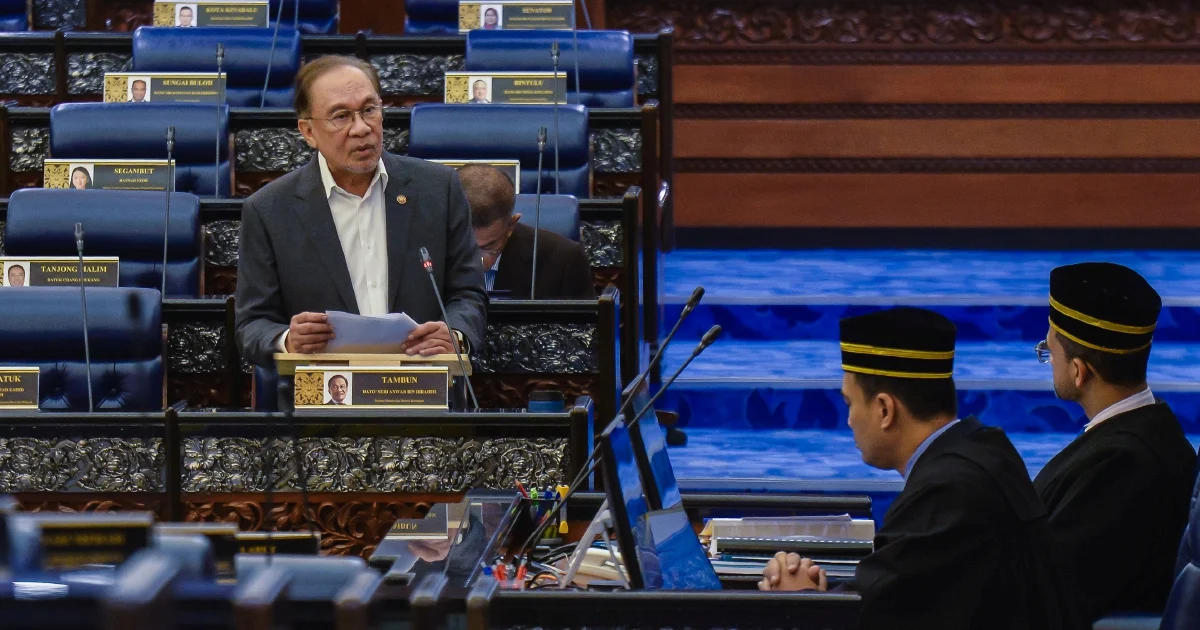
Prime Minister Datuk Seri Anwar Ibrahim has publicly refuted claims circulating earlier this month that he personally issued instructions to call off the 2026 Johor Felda Settlers' Day celebration planned for Kluang. The denial comes as the federal land development scheme grapples with questions about event planning and the involvement of senior government figures in operational decisions.
The assertion that Anwar had directed the cancellation gained traction after reports of the event's postponement triggered speculation about ministerial interference. However, the Premier has clarified that he made no such directive, seeking to distance himself from the controversy and restore confidence in the government's management of public commemorations that carry significant meaning for rural constituents and farming communities across the nation.
Felda settlers hold considerable symbolic and electoral importance in Malaysian politics, particularly in rural Johor where agricultural communities represent a substantial voter base. The Felda Settlers' Day celebrations serve as occasions to recognize the contributions of farmers who have participated in the Federal Land Development Authority's schemes since the organization's establishment decades ago. Any disruption to such events can generate concern among stakeholders about government commitment to rural constituencies.
The timing of the alleged cancellation and subsequent denial raises broader questions about communication protocols within federal agencies responsible for coordinating national celebrations and commemorative events. When decisions affecting community-centered programs lack clarity regarding their origin or rationale, public confusion and speculation often follow. This incident underscores the importance of transparent, well-documented decision-making processes within government structures.
For Malaysian audiences following domestic political developments, the episode also reflects the complex dynamics between federal leadership and state-level initiatives. Johor, as one of Malaysia's most significant states economically and politically, frequently hosts major national and regional events. When uncertainty surrounds high-profile activities in the state, questions naturally arise about whether federal or state authorities hold ultimate responsibility for such decisions.
The Felda institution has undergone various transformations and restructuring efforts over recent years as policymakers seek to address challenges in land development and agricultural productivity. Against this backdrop of organizational change, maintaining clear communication about planned celebrations becomes crucial for demonstrating institutional stability and commitment to the farming populations Felda was created to serve.
Anwar's clarification may also reflect sensitivity to perceptions that his administration could be downplaying rural development issues or distancing itself from farmers' communities. Since assuming office, the Prime Minister has positioned himself as focused on addressing the needs of Malaysians across all sectors, including agriculture and rural communities who depend on initiatives like Felda for economic opportunity and social support.
The 2026 celebration in Kluang carried particular importance as an opportunity to reaffirm government backing for Felda activities in a state where such programs remain economically and socially significant. Allowing uncertainty to persist about the event's status risks undermining confidence in institutional stability, a factor that matters considerably for rural voters evaluating government performance.
Moving forward, this incident suggests that federal departments coordinating major events should establish clearer protocols for communicating decisions to the public, especially when those decisions involve cultural or commemorative occasions that carry weight within specific communities. Whether the event ultimately proceeds, is rescheduled, or undergoes modifications, transparent explanation of the rationale would help prevent misunderstandings that fuel speculation about government motives or competence.
The denial itself demonstrates the political significance attached to how rural and agricultural communities perceive government support for their interests. For policymakers navigating the complexities of rural-urban divides in Malaysian politics, maintaining credibility with farming constituencies through consistent commitment to recognition and celebration of their contributions remains strategically important. This episode, while seemingly administrative in nature, reflects broader considerations about how central government manages relationships with communities that form the backbone of Malaysia's agricultural sector and contribute meaningfully to national economic resilience and food security objectives.

