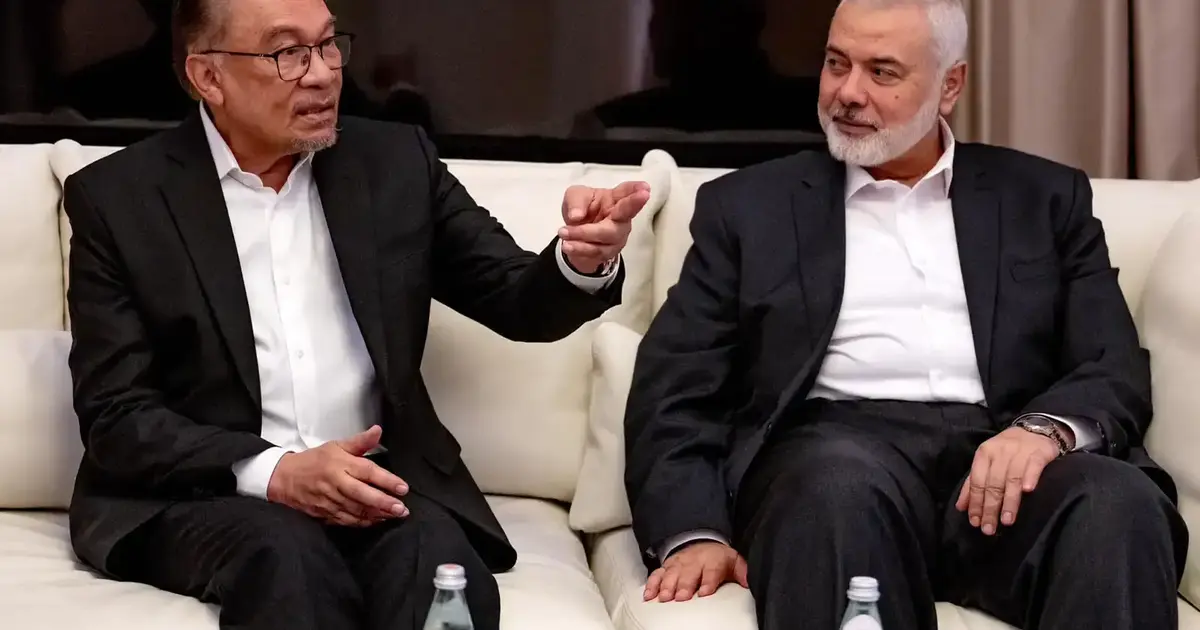
Prime Minister Anwar Ibrahim has dismissed allegations that members of the Palestinian militant group Hamas conducted military training operations within Malaysian territory, characterising the claims as baseless and lacking substantive evidence. The denial comes as part of broader discussions surrounding Malaysia's diplomatic relationships and security concerns in the Middle East, a region where Malaysia maintains complex and multifaceted connections through various Islamic organisations and geopolitical partnerships.
During recent interactions with international counterparts, Anwar chose to proactively address his historical connections to Hamas leadership. Specifically, he informed US President Donald Trump about a meeting he had previously held with a senior Hamas official, a move that underscores Anwar's strategy of maintaining transparency with key American officials regarding Malaysia's international engagements. This disclosure reflects an effort to manage perceptions and prevent potential misunderstandings between Kuala Lumpur and Washington, particularly given the United States' robust opposition to Hamas and its designation of the organisation as a terrorist entity.
The prime minister's response addresses a sensitive topic that intersects Malaysia's complex position within the Muslim world, its commitment to counterterrorism frameworks aligned with international partners, and its historical support for Palestinian causes. Malaysia has long maintained a vocal stance on the Israeli-Palestinian conflict, with successive governments expressing solidarity with the Palestinian people. However, this traditional position must be balanced against Malaysia's security obligations and its partnership with Western nations, including the United States, in countering terrorism and extremism.
Anwar's explicit rejection of the Hamas training allegations carries particular weight given his position as the nation's chief executive and his responsibility for internal security matters. The categorical denial suggests that Malaysian security and intelligence agencies have found no credible evidence to support such claims, and that any reports circulating about such activities lack the substantiation required to warrant serious consideration. This stance also affirms Malaysia's commitment to preventing its territory from being utilised for military preparations or training by designated terrorist organisations.
The matter gains additional significance when considered alongside Malaysia's efforts to strengthen security cooperation with the United States and other Western democracies. The administration in Washington has increasingly emphasised counterterrorism partnerships in Southeast Asia, viewing the region as strategically important for regional stability and the prevention of extremist activities. By firmly denying these allegations and simultaneously engaging transparently with the Trump administration about his past Hamas contact, Anwar appears to be attempting to position Malaysia as a cooperative and reliable partner in these security initiatives.
Historically, Anwar himself has encountered scrutiny regarding his connections to various Islamic movements and leaders throughout his career in politics. His rise from youth activist to deputy prime minister to opposition leader and finally to prime minister has been marked by shifting political alignments and evolving positions on religious and international affairs. His willingness to discuss past meetings with Hamas leadership with Trump, rather than deflecting or denying them entirely, suggests a calculated approach to managing his complex political biography while emphasising present policy positions and commitment to mainstream international security frameworks.
The timing of these clarifications is noteworthy, arriving at a moment when Malaysia seeks to deepen bilateral relationships with the incoming Trump administration. Previous dealings between Malaysian governments and the Trump administration have ranged from cordial to strained, with trade issues and regional strategic competition occasionally creating friction. By addressing potential security concerns preemptively, Anwar may be attempting to establish a foundation of trust and transparency that could facilitate smoother diplomatic and economic engagement going forward.
The allegations themselves, while dismissed by the prime minister, reflect broader international scrutiny of militant group activities across Southeast Asia. Intelligence agencies and security analysts in various countries regularly monitor potential terrorist infrastructure and training operations throughout the region. Malaysia, with its substantial Muslim population, significant Palestinian diaspora community, and history of Islamic activism, remains a focus of such monitoring efforts despite the government's firm counterterrorism policies and enforcement mechanisms.
From a Malaysian perspective, the issue touches on sensitive questions about national identity, religious expression, and international relations. The nation has consistently attempted to position itself as a moderate Muslim-majority country that respects international law and security norms while also maintaining authentic connections to Islamic causes and communities. Balancing these competing interests requires careful diplomatic navigation, particularly when addressing concerns raised by powerful international partners like the United States.
The prime minister's response also carries implications for Malaysia's broader foreign policy approach under his current administration. By publicly clarifying his past interactions with Hamas leadership and rejecting allegations about military training operations, Anwar is essentially reassuring both domestic audiences and international partners about the government's security posture and ideological orientation. This strategy suggests an administration focused on maintaining stability, upholding international legal frameworks regarding terrorism designations, and protecting Malaysia's interests through transparent engagement with key global powers.
Moving forward, these clarifications may serve to reduce potential friction points in Malaysia-US relations while simultaneously reinforcing the government's counterterrorism credentials within international security frameworks. The explicit denial of Hamas training camps and the voluntary disclosure of past Hamas contacts represent a dual approach designed to address concerns from multiple stakeholders simultaneously. For Malaysian readers and observers, the statements underscore the ongoing tensions between historical solidarity with Palestinian struggles and contemporary security imperatives in an increasingly complex geopolitical landscape.

