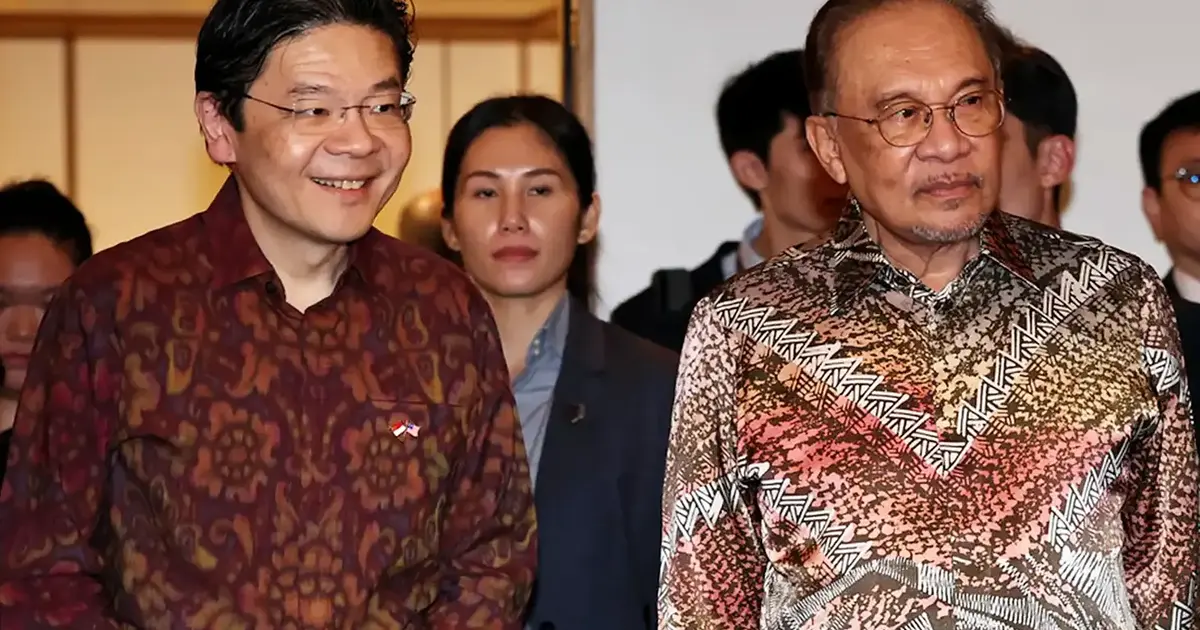
Prime Minister Anwar Ibrahim has firmly denied initiating any diplomatic overture to Singapore's government concerning the upcoming Johor state election, addressing public speculation about whether he might request special arrangements allowing Malaysian workers in the city-state to return home for voting purposes. The clarification emerged when journalists pressed Anwar on whether he intended to engage his Singaporean counterpart on the matter, a question that reflects broader concerns within Malaysia about voter participation levels in upcoming polls.
The issue touches on a persistent challenge for Malaysian electoral processes: the mobility of the electorate across borders within Southeast Asia. With tens of thousands of Malaysians employed in Singapore—spanning sectors from finance and manufacturing to domestic work and construction—questions naturally arise about how such large-scale migration affects voter turnout in state and federal elections. Johor, being geographically proximate to Singapore, hosts particularly significant numbers of workers commuting between the two jurisdictions or maintaining long-term employment arrangements in the republic.
Anwar's response indicates that the government has not pursued formal diplomatic channels to facilitate voting arrangements, suggesting that Malaysian officials view this as either a matter to be addressed through existing channels or simply an accepted reality of modern electoral participation. This stance contrasts with how some other democracies manage overseas voters and transnational workforces, where special voting mechanisms or extended polling periods sometimes accommodate citizens unable to be physically present on election day.
The question itself carries political weight. In Malaysian electoral mathematics, turnout differentials can significantly influence outcomes, particularly in closely contested state-level contests. If certain constituencies experience lower voter participation due to residents working across the border, this could theoretically disadvantage parties whose support bases include substantial migrant worker populations. Conversely, parties benefiting from stronger turnout in less-mobile constituencies might gain relative advantage.
Singapore-Malaysia relations, while generally cordial on official levels, occasionally surface disagreements over bilateral issues ranging from water supply agreements to airspace matters. Framing an election-related request within diplomatic channels could potentially complicate negotiations on other fronts, providing context for why Malaysian authorities might prefer not to raise such matters formally. Additionally, Singapore's government traditionally maintains strict neutrality regarding Malaysia's internal political processes, making such requests potentially awkward for both governments.
The practical logistics of international voting from Singapore would present considerable challenges. Establishing temporary polling stations in a foreign country requires host-nation permission and creates administrative complexities. Malaysia does operate postal voting systems for some overseas citizens, though eligibility criteria and application procedures typically limit accessibility, particularly for workers abroad temporarily. Expanding such mechanisms to accommodate Singaporean-based voters would require legislative changes and administrative infrastructure upgrades.
From a broader Southeast Asian perspective, this situation reflects tensions inherent in the region's increasingly mobile workforce. As economic integration deepens and labour migration expands across ASEAN member states, questions about voting rights, civic participation, and democratic representation become increasingly pertinent. Malaysia is not unique in confronting these questions; Thailand, Indonesia, and the Philippines similarly grapple with how migration patterns affect electoral participation and representation.
Anwar's dismissal of the suggestion may also reflect calculation about optics. Requesting special concessions from Singapore for voting purposes could invite political criticism domestically, with opponents potentially framing such requests as weakness in bilateral relations or inappropriate dependency on neighbouring governments. By clarifying that no such request exists, Anwar insulates himself from such criticism while reinforcing an image of Malaysian independence.
The underlying tension reveals assumptions about electoral citizenship that many democracies have yet to fully resolve. Should voting be tied to physical presence, residential registration, or citizenship alone? How should nations balance inclusive participation with administrative feasibility? These questions become acute in small, densely populated regions like Southeast Asia, where cross-border movement is routine and borders increasingly porous in economic terms even while remaining politically significant.
For Malaysian policymakers, the Johor electoral cycle presents an opportunity to reconsider how the country facilitates voting among its transnational populations. Options range from expanding postal voting eligibility to establishing voting centres in major employment hubs like Singapore, though each approach involves administrative costs and potential controversy. Anwar's current position leaves such reforms unresolved, focusing instead on managing expectations about what the government will pursue diplomatically.
The episode ultimately illustrates how modern governance increasingly confronts the complexities of mobile populations within a framework designed for territorially bounded citizens. As Malaysia continues developing economically and its citizens become more geographically dispersed across the region, questions about electoral participation and political representation will likely become more prominent in national discourse, potentially prompting future governments to revisit Anwar's current position.

