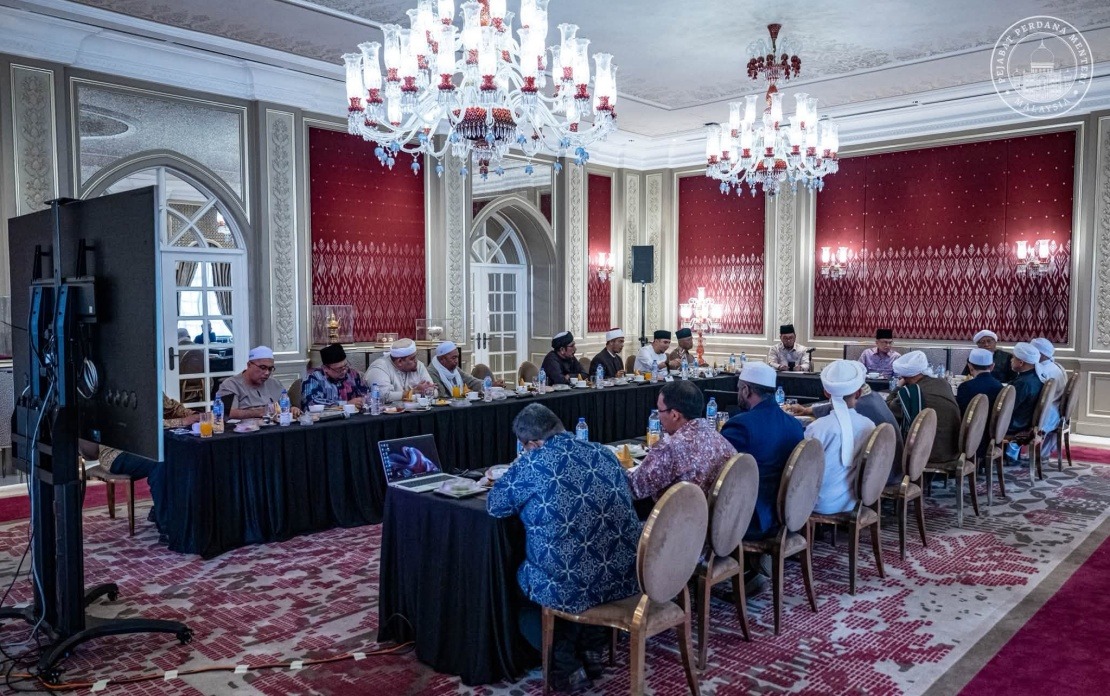
Prime Minister Datuk Seri Anwar Ibrahim has reiterated his administration's commitment to drawing on the expertise and wisdom of Malaysia's Islamic scholarly community when formulating and refining government policies. During a series of discussions held in observance of Maulidur Rasul, Anwar underscored that engagement with religious leaders transcends ceremonial meetings, positioning such interactions instead as occasions for critical reflection that ensures policy decisions rest on substantive knowledge and responsive to the evolving requirements of Muslim communities nationwide.
Anwar's remarks came as he received Sheikh Dr Muhyiddin Awwamah, who attended as a representative of Darul Hadis al-Awwamiyyah. The Prime Minister characterised the structured dialogue as part of a deliberate strategy to solicit expert counsel, extract scholarly insight, and understand the perspectives of knowledgeable voices on matters concerning Islam's institutional development and long-term trajectory within Malaysia's multicultural framework.
The visiting scholar carries considerable intellectual pedigree through his family background. Sheikh Dr Muhyiddin is the son of Al-'Allamah Sheikh Muhammad bin Awwamah, a globally recognised authority in hadith studies whose contributions to Islamic jurisprudence have earned him prominence across Muslim intellectual circles. This familial connection to Islamic scholarship spans generations, embodying the continuity of scholarly tradition that Anwar referenced in his public statement regarding the encounter.
Anwar took the occasion to acknowledge the intellectual contributions of Sheikh Muhammad bin Awwamah, expressing particular appreciation for several authored works. The Prime Minister characterised these publications not as mere compilations of text, but rather as vessels of intellectual heritage that maintain unbroken links between successive generations of Islamic scholars. This framing reflects a philosophical approach to knowledge transmission within Islamic tradition, where written works serve to perpetuate established chains of scholarly authority and methodological rigour.
The concept of muzakarah, traditionally understood as scholarly consultation and collective deliberation on religious matters, provides the structural framework for such engagements. By explicitly connecting the meeting to Maulidur Rasul observances, the government positions religious consultation as integral to the spiritual calendar and institutional practice rather than as ad hoc consultation. This suggests an attempt to institutionalise the role of scholarly voices in governance, moving beyond occasional meetings toward systematic integration of religious expertise into policy development cycles.
For Malaysian policymakers, particularly within a federal system where Islam holds constitutional prominence, cultivating relationships with established Islamic scholars serves multiple practical functions. It generates legitimacy for government decisions among constituencies that vest significant authority in religious learning. It also creates channels through which concerns within Muslim communities can be communicated directly to executive leadership, potentially preventing policy formulation that diverges from grassroots sentiment or scholarly consensus on matters of religious significance.
The specific inclusion of a scholar from Darul Hadis al-Awwamiyyah, an institution historically focused on hadith authentication and Islamic jurisprudential methodology, suggests governmental interest in engaging with institutions known for rigorous scholarly standards. Hadith studies constitute a foundational discipline within Islamic learning, and scholars specialising in this field occupy positions of considerable intellectual authority, particularly regarding questions of authenticity and proper interpretation of Islamic sources.
Anwar's rhetorical emphasis on knowledge guiding government action reflects a particular vision of governance where technical expertise and specialised knowledge assume prominent roles in decision-making. By positioning religious scholars as sources of wisdom whose counsel refines policy outcomes, the Prime Minister invokes a governing philosophy that contrasts with purely electoral or technocratic approaches. This frames religious consultation not as capitulation to sectarian pressure but as the rational incorporation of expert perspectives into governance.
The timing of such meetings, coinciding with Islamic observances and religious commemorations, carries symbolic weight within Malaysia's political landscape. By conducting these discussions during Maulidur Rasul celebrations, the government associates policy refinement with spiritual reflection and religious reverence. This positioning may serve to elevate the perceived legitimacy of government decisions among religious constituencies whilst signalling to secular audiences that religious engagement occurs within structured, purposeful frameworks rather than through unguided influence.
For regional observers, Malaysia's approach to integrating religious scholarship into governance represents one model for managing the relationship between faith-based perspectives and state administration. Unlike systems that rigidly separate religious authority from state function, or conversely those where religious doctrine directly determines policy, Malaysia's consultative approach attempts negotiation between these poles. The effectiveness of such consultation in producing decisions that satisfy both secular administrative requirements and religious community expectations remains subject to ongoing evaluation.
Anwar's public articulation of this consultative philosophy suggests recognition that sustainable governance in Malaysia requires periodic renewal of consensus around the role Islam plays within the constitutional and political system. By actively demonstrating engagement with respected scholars and publicly valuing their contributions, the Prime Minister attempts to signal continuity with Islamic tradition whilst maintaining state autonomy in policy determination. The reception of such gestures among both scholarly communities and the broader Muslim public will likely influence the government's capacity to maintain legitimacy across Malaysia's religiously diverse society.

