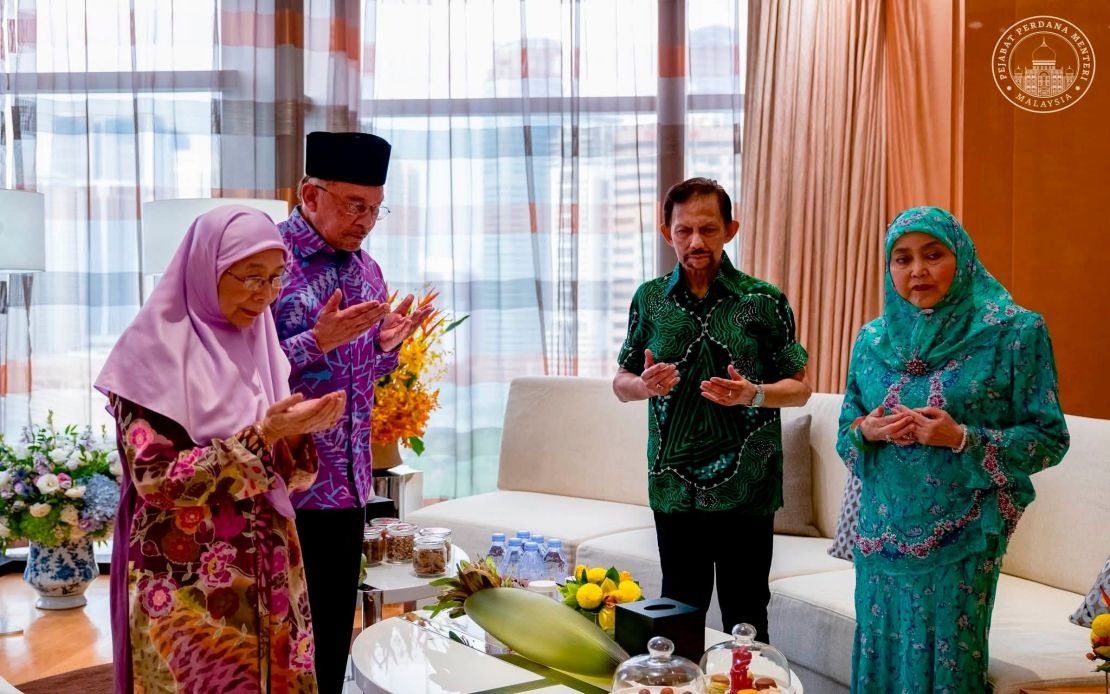
Prime Minister Datuk Seri Anwar Ibrahim marked the milestone birthday of Brunei's reigning monarch on July 15, extending official felicitations to Sultan Hassanal Bolkiah as the sultanate's leader turned 80. The Malaysian premier conveyed his regards publicly through a Facebook statement, delivering his messages on behalf of both the government and Malaysian citizens.
Anwar's message centered on continuity and partnership, emphasizing hopes that the Sultan would persist in steering the oil-rich nation with the measured judgment and care that have characterized his lengthy reign. The gesture reflects the protocol customarily observed between Southeast Asian nations sharing deep historical and cultural bonds, with Brunei and Malaysia maintaining particularly close ties through regular diplomatic exchanges and shared regional interests.
The Sultan was born on July 15, 1946, in what was then known as Bandar Brunei, the capital settlement that has since been renamed Bandar Seri Begawan. He ascended to the throne as the 29th Sultan of Brunei in 1967, a position he has held uninterrupted for more than five decades. His tenure has spanned transformative periods in Southeast Asian history, from the region's early post-independence years through contemporary globalization and digital advancement.
Sultan Hassanal Bolkiah's claim to a unique distinction in global monarchical circles came following the September 2022 death of Queen Elizabeth II of the United Kingdom. With Elizabeth's passing, Brunei's sultan inherited the status of the world's longest-serving reigning monarch currently on a throne. This recognition underscores both his personal longevity and his nation's political stability during an era marked by considerable geopolitical shifts across Asia and beyond.
The symbolic weight of such milestone birthdays in Southeast Asian diplomacy extends beyond mere social courtesy. Royal celebrations serve as inflection points for countries to reaffirm shared values and strategic objectives. Malaysia, as Brunei's immediate neighbor and a key regional partner, uses such occasions to reinforce the multilayered relationship between the two nations—encompassing trade, security cooperation, and cultural exchange.
Anwar's specific invocation of strengthened ties and mutual benefit reflects contemporary Malaysian foreign policy priorities under his administration. The reference to continued cooperation carries practical implications for bilateral arrangements spanning border management, joint maritime patrols, and economic partnerships that benefit both populations. For Malaysian readers, such statements signal the government's commitment to maintaining stability and constructive relations with a key neighbor, particularly important given Brunei's strategic location on Borneo Island and its significant energy resources.
The phrasing employed by Anwar—invoking Islamic terminology through "Insya-Allah" (God willing)—also acknowledges the predominantly Muslim character of both nations and demonstrates cultural sensitivity appropriate to diplomatic engagement. This linguistic choice reinforces shared Islamic heritage while affirming that bilateral cooperation remains grounded in mutual respect for each nation's constitutional and religious frameworks.
Sultan Hassanal Bolkiah's eight decades encompass the entire modern history of the Bruneian state. His reign witnessed the sultanate's transformation from a British protectorate to full independence in 1984, followed by its emergence as a significant oil and liquefied natural gas exporter. His longevity on the throne has provided consistent leadership during periods when many neighboring nations experienced multiple leadership transitions, lending Brunei a degree of political continuity uncommon in the region.
For Malaysia, maintaining robust relations with Brunei carries strategic value beyond ceremonial exchange. The two nations share maritime boundaries in waters rich with hydrocarbons and fisheries resources, necessitating ongoing dialogue and cooperation frameworks. Educational and cultural programs linking the nations' youth populations also receive regular emphasis in official communications, supporting people-to-people connections that underpin state relationships.
The timing of public congratulations from Malaysia's premier, communicated through social media platforms accessible to ordinary citizens alongside official channels, reflects how contemporary diplomacy increasingly operates in hybrid spaces. Such messages serve multiple audiences simultaneously—the recipient nation and its leadership, domestic Malaysian constituencies interested in foreign relations, and the broader regional community monitoring bilateral dynamics. The public nature of the gesture amplifies its symbolic significance beyond what private diplomatic correspondence would achieve.
Looking forward, Malaysia's emphasis on cooperation with Brunei aligns with broader regional integration efforts. Both nations participate in multilateral forums including the Association of Southeast Asian Nations (ASEAN), where coordinated positions on regional security, trade, and governance issues carry considerable weight. Strong bilateral foundations enable these nations to work more effectively within such frameworks, advancing shared interests in maritime security, economic development, and stability across Southeast Asia.
The Sultan's achievement in reaching 80 years while maintaining active governance responsibilities stands as testament to personal resilience and institutional strength within the sultanate. For the broader region, his continued leadership offers stability during periods of potential uncertainty, while his milestone provides opportunity for neighboring states like Malaysia to reinforce partnership commitments and shared aspirations for regional prosperity and peace.

