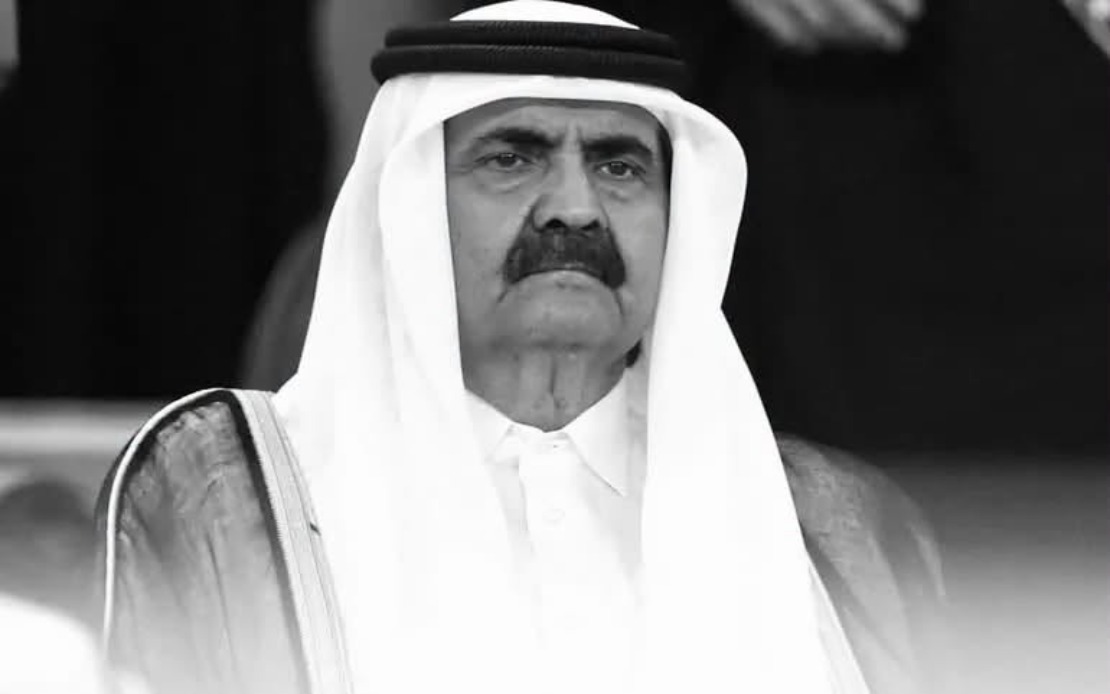
Prime Minister Datuk Seri Anwar Ibrahim has conveyed Malaysia's deepest sympathies to Qatar's Amir Sheikh Tamim bin Hamad Al Thani, the Qatari royal household, and the nation of Qatar following the passing of Sheikh Hamad bin Khalifa Al Thani, the Father Amir, who died on Sunday at the age of 74. The condolence message, shared through a Facebook statement, underscored the historical bonds between Malaysia and Qatar during a period of significant transition for the Gulf state.
Sheikh Hamad's 18-year tenure as Amir, spanning from 1995 to 2013, fundamentally reshaped Qatar's standing in global affairs. Under his stewardship, the nation underwent a comprehensive economic transformation that positioned it among the world's most prosperous economies. Anwar paid tribute to this legacy, acknowledging how Qatar achieved substantial financial progress and evolved into a nation of considerable international consequence during Sheikh Hamad's leadership period. The former Amir's modernisation agenda established infrastructure, diversified economic foundations, and elevated Qatar's diplomatic profile across multiple continents.
A particularly noteworthy dimension of Sheikh Hamad's leadership was his decision in 2013 to relinquish power to his son, Sheikh Tamim bin Hamad Al Thani. Anwar characterised this succession as a remarkable demonstration of political wisdom and statesmanship, emphasising that few leaders in the region voluntarily transfer authority to a new generation. This peaceful handover of power marked a departure from dynastic patterns in the Middle East and reflected Sheikh Hamad's commitment to institutional stability and orderly governance. The transition was widely viewed as ensuring continuity while enabling fresh perspectives in Qatar's governance framework.
Beyond economic metrics and political achievements, Anwar highlighted Sheikh Hamad's personal significance to Malaysia and his broader influence throughout the Islamic world. The former Amir was characterised as a steadfast friend to Malaysia, reflecting decades of bilateral cooperation spanning commerce, culture, and diplomatic spheres. His respected standing within Muslim communities extended far beyond Qatar's borders, making him a figure of considerable symbolic importance to Islamic nations globally. This dimension underscores how individual leaders can transcend their national boundaries to become custodians of broader regional and civilisational values.
The timing of Sheikh Hamad's passing carries particular resonance for Malaysia, a nation that has cultivated strategic partnerships across the Gulf region. Qatar, under both Sheikh Hamad's leadership and the current administration of Sheikh Tamim, represents an important economic and diplomatic partner for Southeast Asia. The country's substantial wealth, driven largely by natural gas reserves, has enabled significant regional investment initiatives and cultural exchanges that have benefited Malaysia's development trajectory. The leadership transition that occurred in 2013 built upon the foundations established during Sheikh Hamad's reign, ensuring continuity in Qatar's engagement with nations like Malaysia.
In his statement, Anwar offered prayers for the repose of Sheikh Hamad's soul and requested divine strength and solace for the Qatari royal family and broader population during their period of mourning. The use of Islamic invocations, including Al-Fatihah, reflected the spiritual dimension of Malaysia's response and the shared religious heritage that binds Islamic nations across geographical distances. Such expressions serve not merely as diplomatic protocol but as meaningful affirmations of solidarity between Muslim-majority nations during significant moments of transition.
Sheikh Hamad's departure marks the end of an era in modern Gulf history. His leadership coincided with transformative global events, including Qatar's emergence as a major financial player, the nation's hosting of regional diplomatic initiatives, and its positioning as a bridge between various international actors. The stability and prosperity achieved during his tenure provided the platform upon which Sheikh Tamim has continued to advance Qatar's interests in subsequent years. The relationship between mentor and successor reflected careful planning for institutional continuity rather than disruptive change.
For Malaysia, this moment of mourning in Qatar carries implications beyond ceremonial acknowledgement. The Gulf states remain crucial partners for ASEAN nations in terms of trade, investment, and security cooperation. Strengthening ties with Qatar during this transitional period may offer opportunities for Malaysian interests to be advanced within broader regional frameworks. The diplomatic gestures extended by Malaysian leadership during significant events serve to reinforce bilateral relationships that span multiple dimensions of national interest.
The passing of Sheikh Hamad also invites broader reflection on regional leadership and governance in the Muslim world. His willingness to step aside from power voluntarily challenged perceptions about authoritarianism in the Middle East and demonstrated alternative models of succession planning. For nations like Malaysia, observing such transitions provides valuable lessons about institutional development and the importance of preparing successor generations for leadership responsibilities.

