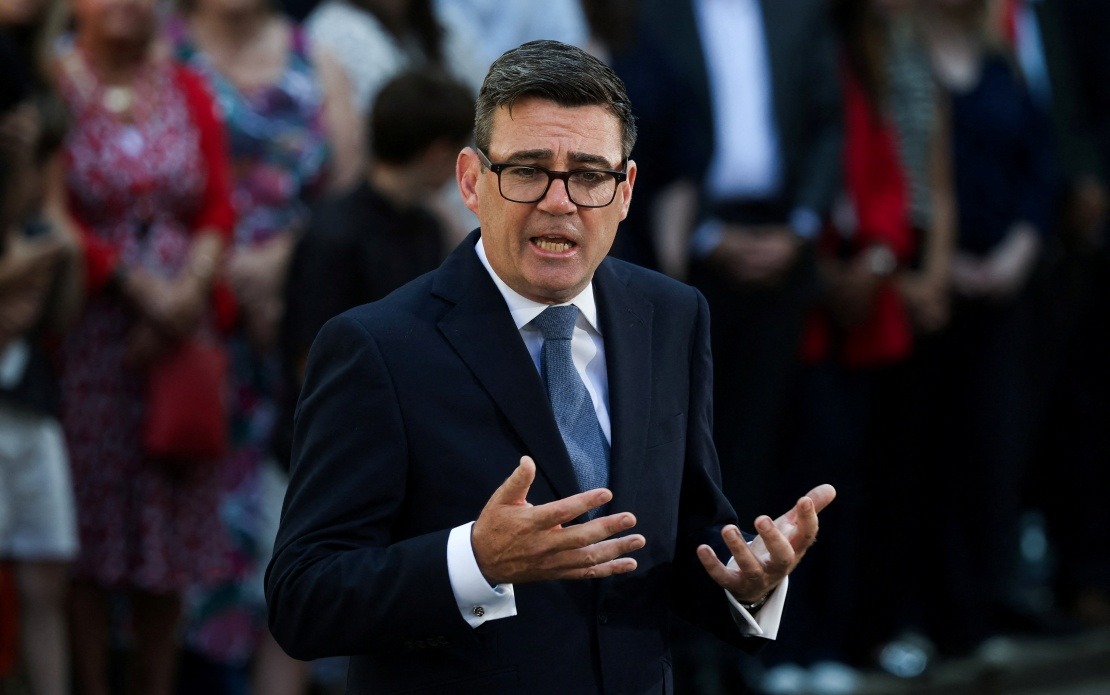
Prime Minister Datuk Seri Anwar Ibrahim has welcomed Andy Burnham's elevation to the office of British Prime Minister, signalling Malaysia's readiness to deepen its engagement with the United Kingdom under the new Labour leadership. In a statement posted on social media, Anwar expressed his enthusiasm for working alongside Burnham to expand the scope of bilateral cooperation across multiple sectors, reflecting both nations' commitment to their longstanding relationship in an era of shifting global dynamics.
The Malaysian leader outlined several areas where Kuala Lumpur and London could advance their partnership, notably including the completion of a Digital Trade Agreement—a significant development that would streamline commercial transactions and digital commerce between the two countries. Beyond trade mechanics, Anwar highlighted the potential for enhanced collaboration in artificial intelligence and digitalisation, sectors where both nations view technological advancement as central to their economic strategies and competitiveness in an increasingly connected world.
Clean energy and defence also featured prominently in Anwar's agenda, reflecting the broader geopolitical context in Southeast Asia where energy security and regional stability remain pressing concerns. These sectors represent areas where British expertise and Malaysian regional influence could combine to address challenges spanning climate transition and Indo-Pacific security, matters of acute importance to Malaysia given its strategic location and economic dependence on global trade flows through regional waterways.
Anwar's remarks on Gaza represent a notable diplomatic angle. He specifically commended Burnham for acknowledging that Britain's initial response to the humanitarian crisis fell short of necessary standards, and for renewing calls for intensified pressure against Israeli actions. This statement carries significance for Malaysia, where public sentiment on Palestinian issues remains strong and where government positions on Middle Eastern conflicts carry domestic political weight. By highlighting Burnham's moral clarity on the matter, Anwar appears to be signalling that Malaysia's new British counterpart shares sensibilities on human rights concerns that resonate across the Muslim-majority region.
"At a time when many in the West have struggled to show the moral clarity this crisis demands, that recognition is a welcome and important first step," Anwar stated, underscoring his view that principled positions on international humanitarian matters should accompany commercial and strategic partnerships. This framing suggests that Malaysia's approach to bilateral relations extends beyond transactional interests to include alignment on values-based foreign policy questions.
The timing of this outreach carries additional significance, as 2025 will commemorate the 70th anniversary of Malaysia-UK diplomatic relations—a milestone that Anwar identified as an opportune moment to reinvigorate both nations' commitment to their historical partnership. The 70-year bond represents one of Malaysia's most enduring international relationships, rooted in Commonwealth ties and shaped by shared institutional frameworks spanning trade, defence, and education. Marking this anniversary offers both countries a platform to reassess their strategic relevance to one another and chart directions that reflect contemporary challenges and opportunities.
Anwar's message also extended recognition to Burnham's predecessor, Keir Starmer, whom he credited with contributions to strengthening Malaysia-UK relations during his tenure as Prime Minister. This diplomatic courtesy reflects standard protocol but also acknowledges the groundwork laid by the previous administration, suggesting continuity in bilateral engagement despite the change in British leadership. Such acknowledgement signals Malaysia's interest in maintaining momentum across multiple government transitions.
Burnham's assumption of office occurred on Monday following his election as Labour Party leader on Friday, making him Britain's seventh Prime Minister in a decade—a statistic that underscores the turbulence and instability characterising recent British politics. For Malaysia, this rapid succession of leadership presents both challenges and opportunities; while frequent changes can disrupt relationship-building, they also offer periodic openings to reset agendas and pursue priorities that may have languished under previous administrations.
The Malaysian Prime Minister's proactive engagement reflects Anwar's broader strategy of maintaining Malaysia's international relevance through high-level diplomatic outreach and the pursuit of mutually beneficial partnerships. As Malaysia navigates complex regional dynamics involving great power competition and economic transitions, deepening ties with established democracies like the United Kingdom offers avenues for accessing technology, investment, and expertise while maintaining Malaysia's own strategic autonomy and regional influence. The emphasis on digital trade and emerging technologies suggests both nations recognise that 21st-century partnerships must be grounded in innovation and technological capability rather than solely on historical precedent.
For Malaysian businesses and policymakers, the renewed commitment to closer Malaysia-UK ties carries practical implications across sectors ranging from financial services and digital commerce to defence procurement and educational exchange. The proposed Digital Trade Agreement could significantly facilitate cross-border transactions and reduce barriers for Malaysian companies seeking to access British and European markets, while collaboration in artificial intelligence positions both nations to benefit from the technological revolution reshaping global commerce and governance.

