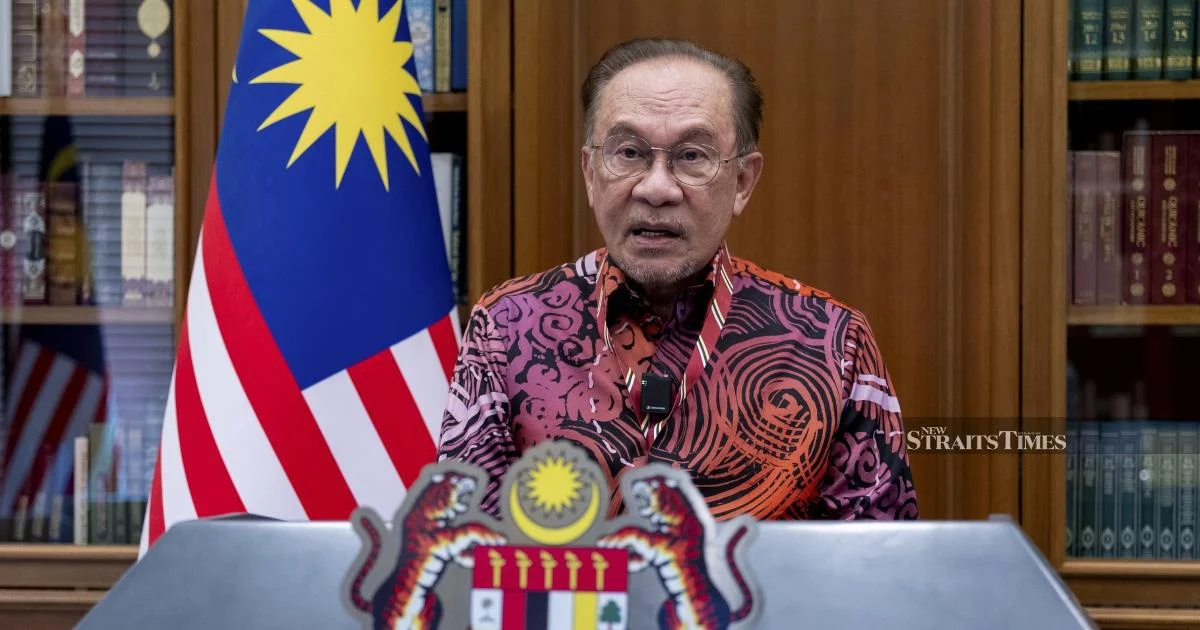
Prime Minister Datuk Seri Anwar Ibrahim has sent formal congratulations to the Chinese government on the occasion of the 105th anniversary of the Chinese Communist Party, an acknowledgment that underscores Malaysia's enduring commitment to maintaining close relations with one of the region's foremost powers. The gesture represents a continuation of diplomatic protocols that have long characterised the relationship between Kuala Lumpur and Beijing, particularly as Malaysia navigates an increasingly complex geopolitical landscape in Southeast Asia.
The anniversary commemoration holds particular significance given China's growing role in regional economic development and infrastructure projects. The Chinese Communist Party, which came to power in 1949 following the Chinese Civil War, has since overseen the nation's transformation into a global economic powerhouse. For Malaysia, this relationship extends beyond ceremonial acknowledgments, encompassing substantial commercial partnerships, investment flows, and people-to-people exchanges that have accumulated over decades of interaction.
Malaysia's diplomatic outreach to China reflects broader strategic considerations within the region. As Southeast Asian nations calibrate their international positioning amid great power competition, maintaining cordial ties with Beijing remains a priority for Malaysian policymakers. The prime minister's congratulations serve as a reaffirmation of this approach, signalling continuity in Malaysia's foreign policy orientation toward one of its most significant trading partners and regional actors.
The timing of such diplomatic gestures often carries weight beyond their surface courtesy. By extending formal recognition of China's national milestone, Anwar demonstrates Malaysia's respect for Chinese sovereignty and internal affairs while simultaneously reinforcing the bilateral relationship. This is particularly relevant given Malaysia's historical ties to China through cultural, commercial, and diaspora communities that have deep roots extending back centuries.
From an economic perspective, China's influence on Malaysia extends to critical sectors including manufacturing, finance, and energy. Chinese investors have substantially contributed to Malaysian infrastructure development, including telecommunications networks and transportation projects. The relationship has also facilitated Malaysia's integration into broader Chinese economic initiatives, ensuring Malaysian participation in opportunities that span the Asia-Pacific region and beyond.
The diplomatic courtesy also reflects the pragmatic nature of contemporary international relations in Southeast Asia. Nations in the region, including Malaysia, have learned to balance multiple partnerships without unnecessarily alienating any major power. By maintaining consistent engagement with China through such symbolic gestures, Malaysia preserves its leverage and ensures continued access to investment, technology transfer, and market opportunities that Chinese economic dynamism provides.
For Malaysian readers, understanding such diplomatic exchanges illuminates how policymakers navigate the complexities of regional affairs. China's economic trajectory and technological advancement have direct implications for Malaysian competitiveness and prosperity. Through mechanisms like the Belt and Road Initiative and regional trade frameworks, Chinese development continues shaping opportunities and challenges that Malaysian businesses and workers encounter. Therefore, the cultivation of stable diplomatic relations with Beijing carries practical consequences for ordinary Malaysians seeking employment, business partnerships, or access to consumer goods affected by China-Malaysia trade dynamics.
The acknowledgment also occurs within the context of ASEAN's collective approach to major powers. Malaysia, as an ASEAN member, participates in efforts to maintain the association's strategic autonomy while managing relationships with all significant external actors. By individually engaging with China while maintaining ASEAN unity, Malaysia demonstrates how member states can exercise diplomatic agency within the broader framework of regional organisation.
Additionally, the prime minister's greeting acknowledges the substantial population of Malaysian citizens with ethnic Chinese heritage whose cultural and familial connections to China remain significant. For these communities, Malaysia's warm diplomatic relations with China facilitate easier travel, business relations, and cultural exchange. The gesture thus carries domestic relevance for Malaysian communities with historical ties to the Chinese mainland.
Looking forward, Malaysia will likely continue such diplomatic courtesies as part of its established foreign policy framework. The consistency of these exchanges contributes to predictability and stability in bilateral relations, factors that both nations benefit from in an era of global uncertainty. For Malaysia, maintaining this relationship while preserving its independent voice in regional and international affairs remains a strategic balancing act that requires ongoing diplomatic skill and careful management of competing interests.

