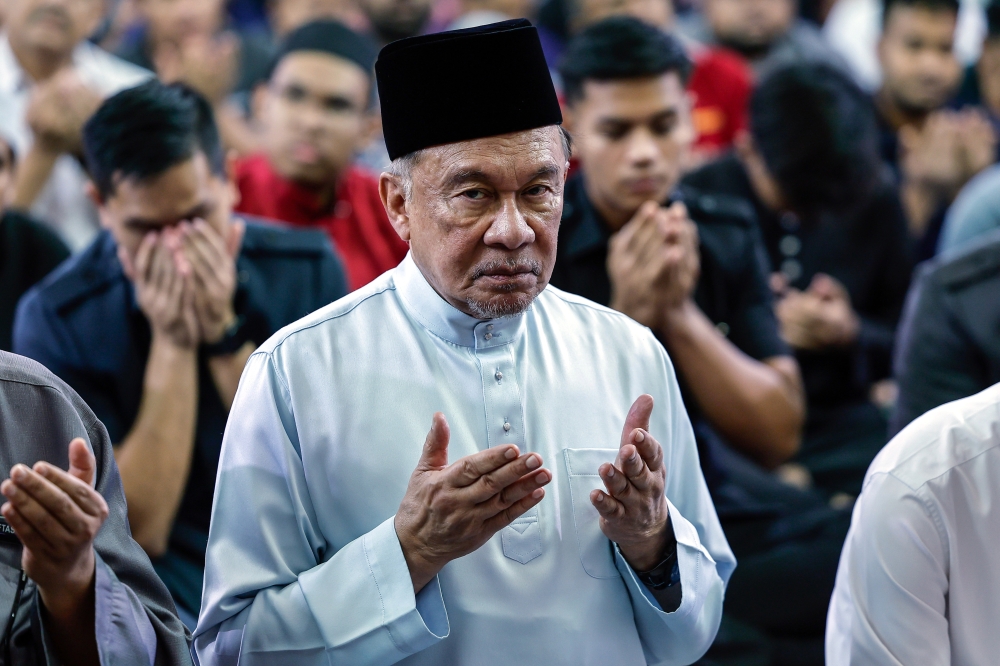
Prime Minister Datuk Seri Anwar Ibrahim has conveyed his prayers and hopes for a speedy recovery for His Majesty Sultan Ibrahim as the Yang di-Pertuan Agong prepares to undergo medical treatment. The gesture underscores the traditionally respectful relationship maintained between Malaysia's chief executive and the constitutional monarch, whose roles represent the nation's dual power structures.
The Prime Minister's expression of goodwill comes at a time when the nation's institutional leadership continues to navigate complex governance challenges. The timing and nature of such public expressions carry significance in Malaysia's constitutional monarchy, where the sovereign holds symbolic authority over the realm while executive power rests with the elected government. These moments of formal courtesy help reinforce the collaborative spirit expected between these two pillars of state authority.
Malaysia's system of governance has long depended on the delicate balance between monarchical and democratic institutions. The Yang di-Pertuan Agong, drawn from the sultans of the nine constitutional states through a rotating arrangement, serves a five-year term and holds considerable ceremonial and discretionary powers. The institution commands deep respect across Malaysian society, transcending political divides. Any matter affecting the health or capacity of the reigning monarch therefore becomes a matter of national concern.
Prime ministerial statements regarding the Sultan's health take on particular weight given the constitutional role the sovereign plays in government formation and legislative assent. Under Malaysia's Federal Constitution, the Yang di-Pertuan Agong must give royal assent to bills passed by Parliament, making the office integral to the legislative process. Should any health concerns arise, succession protocols and regency arrangements become matters of administrative importance, even if only as contingency measures.
The public nature of Anwar's gesture signals confidence in the stability of the nation's institutional frameworks. Rather than treating the Sultan's medical appointment as a private matter, the Prime Minister's public acknowledgment demonstrates that the government views such procedures as national events worthy of formal recognition. This transparency helps reassure citizens and markets about the continuity of governance and constitutional order.
Historically, the relationship between Malaysia's prime ministers and reigning sultans has varied in warmth and cooperation. Instances of tension or disagreement have occasionally made headlines, reflecting the real limits and boundaries that exist between executive and sovereign powers. However, in times of personal or health-related matters, Malaysian political culture typically transcends partisan lines. The Prime Minister's comments exemplify this custom of setting aside ordinary political considerations in favour of institutional solidarity.
Sultan Ibrahim's tenure as Yang di-Pertuan Agong comes at a period marked by considerable political transitions and adjustments to Malaysia's governance landscape. His appointment followed earlier developments within the sultanate system and reflects the carefully orchestrated rotation that has governed the monarchy since independence. The incumbent has brought his own perspective to the role, working with successive administrations to fulfil the constitutional expectations of the office.
Malaysia's constitutional framework vests significant residual powers in the Yang di-Pertuan Agong, including the appointment of the Prime Minister in circumstances where no clear majority emerges from general elections, the granting of royal pardons, and the power to dissolve Parliament on the advice of the Prime Minister. These prerogatives mean that the health and wellbeing of whoever holds this office carries implications extending well beyond ceremonial concerns. A fully engaged and available sovereign strengthens the institutional architecture upon which Malaysia's democratic system rests.
The formal expression of goodwill also serves a diplomatic purpose, communicating to international observers that Malaysia's institutions remain stable and coordinated. In an era where political commentary often focuses on disagreements and tensions between government branches, these moments of visible harmony carry reassuring messages about institutional maturity and the resilience of established constitutional norms. This matters particularly for Malaysia's economic standing and investor confidence.
Public health matters involving high-ranking officials always generate speculation and concern, particularly in societies where misinformation can spread rapidly through digital channels. The Prime Minister's straightforward and respectful communication about Sultan Ibrahim's upcoming treatment helps set an accurate tone for public discourse, discouraging rumour-mongering and encouraging citizens to view the matter with appropriate gravity and decorum.
The episode also illustrates how Malaysian governance succeeds through the maintenance of institutional protocols and mutual respect between holders of different constitutional offices. While the Prime Minister exercises executive authority and the Sultan serves primarily in a ceremonial capacity, both positions command profound respect within Malaysian society. The willingness of democratically-elected leaders to acknowledge and honour the sovereign's position demonstrates the health of Malaysia's unique constitutional settlement.
Looking ahead, Sultan Ibrahim's smooth recovery and return to full official duties would affirm the stability of the nation's institutional foundations. The nation's system of governance depends on all its key offices being filled by individuals capable of fulfilling their constitutional responsibilities. Prime Minister Anwar's public expression of confidence and goodwill reflects the broader stakeholder investment in ensuring that Malaysia's institutions continue to function effectively and harmoniously in service of the nation's development and wellbeing.

