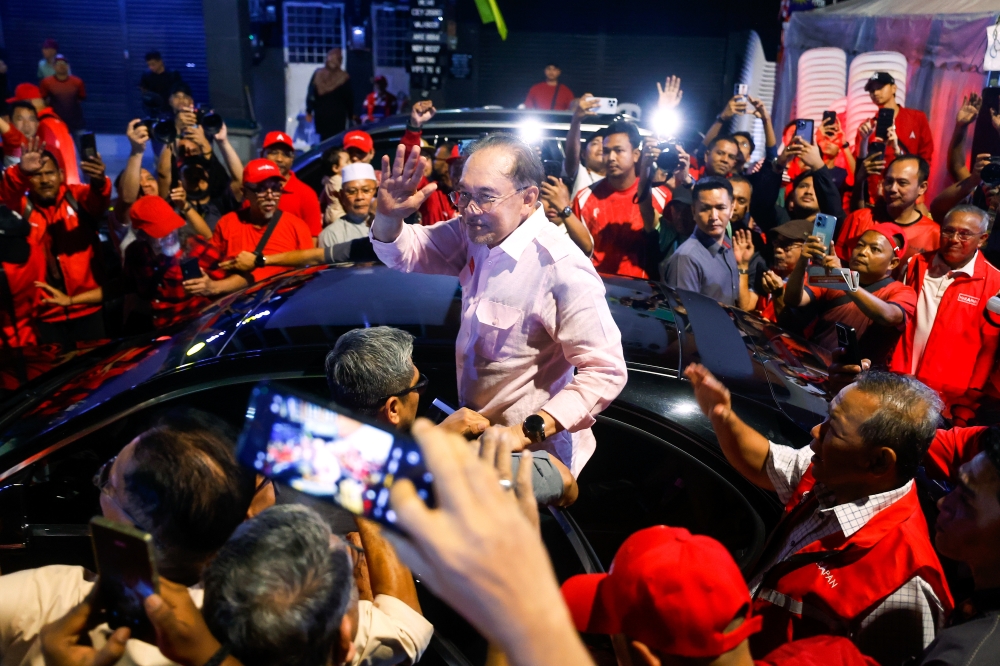
Prime Minister Datuk Seri Anwar Ibrahim used a public engagement in Seremban to reaffirm the stability of Malaysia's federal unity government and counter concerns about the coalition's durability following a series of high-profile political challenges in recent months. His remarks come at a juncture when the government faces mounting scrutiny over its ability to maintain inter-party consensus while simultaneously managing inflationary pressures and moderating growth expectations across the region.
The Prime Minister's assertion about the government's underlying strength reflects a deliberate attempt to project confidence to both domestic and international audiences. Since the unity coalition assumed power, it has weathered multiple tests to its cohesion, including tensions between component parties over ministerial portfolios, development funding allocations, and policy divergences on sensitive issues. By publicly reiterating the coalition's resilience, Anwar signals to market participants and international observers that Malaysia's political framework remains capable of delivering effective governance despite the inherent complexities of managing a broad-based coalition.
Economically, Anwar's insistence that Malaysia stands on solid ground addresses persistent concerns about the nation's medium-term growth prospects. The assertion arrives as Southeast Asia navigates a period of moderating expansion, with inflation concerns and elevated interest rates constraining consumer spending and business investment. For Malaysian policymakers, maintaining economic credibility has become essential, particularly as foreign direct investment flows have become increasingly sensitive to perceptions of political stability and institutional competence.
The unity government's economic positioning reflects the administration's efforts to balance multiple competing objectives. On one hand, the coalition must demonstrate sufficient fiscal orthodoxy to maintain investor confidence and preserve Malaysia's credit rating outlook. On the other, it confronts pressure to deliver tangible improvements in living standards for ordinary Malaysians, particularly in urban centres where cost-of-living pressures have intensified. This balancing act has become more complex as regional competitors vie for the same pool of investment capital.
Anwar's comments also carry significance for the coalition's internal dynamics. The unity government encompasses parties with distinct electoral bases and policy preferences, from the urban-oriented Democratic Action Party to the rural-focused Barisan Nasional component parties. Public affirmations of government stability serve to reassure all partners that the arrangement remains viable and worth maintaining, thereby reducing incentives for individual parties to pursue breakaway strategies or calculate alternative political configurations.
The political context underlying these remarks deserves careful examination. Malaysia's transition to unity government principles represented a significant departure from the bipolar political competition that had dominated the previous decade. This shift necessitated developing new protocols for managing disagreement and building consensus across historically opposed parties. The success of this arrangement carries implications beyond Malaysia's borders, as other Southeast Asian democracies observe how governments can function when traditional opposition-government binaries dissolve.
From an economic perspective, the government's claim of solid footing requires scrutiny against actual performance metrics. Inflation rates, employment figures, wage growth trajectories, and poverty reduction outcomes will ultimately determine whether the unity government's economic narrative aligns with lived experience. The Malaysian middle class, in particular, remains sensitive to evidence that their earning power is being eroded by price pressures faster than nominal wage growth can compensate.
The timing of Anwar's statements reflects a broader pattern of government messaging aimed at preventing narrative deterioration. In the current media environment, where concerns about governance challenges circulate rapidly across social platforms, political leaders increasingly view public reassurance as an essential tool for forestalling loss of confidence. Yet such affirmations carry diminishing marginal utility if they become disconnected from demonstrable improvements in public service delivery or economic outcomes.
Looking forward, the sustainability of Malaysia's unity government arrangement will depend substantially on the coalition's capacity to deliver shared victories that reinforce all partners' commitment to collaboration. This might include major infrastructure projects that benefit diverse geographical constituencies, education reforms that appeal across ideological lines, or anti-corruption initiatives that strengthen institutional confidence. Without such substantive achievements, rhetorical commitments to stability risk appearing hollow.
The international dimension also warrants consideration. Regional investors and strategic partners attach considerable importance to Malaysia's political stability as they make decisions about resource allocation within Southeast Asia. Anwar's public confidence-building exercises therefore serve functions beyond domestic political management, helping to position Malaysia as a reliable venue for long-term investment and partnership within the broader Asian economic architecture.
Ultimately, the true test of the unity government's viability will emerge not from leadership pronouncements but from whether the coalition can navigate the inevitable disagreements and competing pressures that characterise multi-party governance. The next critical juncture may arrive when major policy decisions require choosing between the preferences of different coalition components, demanding that all partners prioritise collective stability over narrow sectional advantage.

