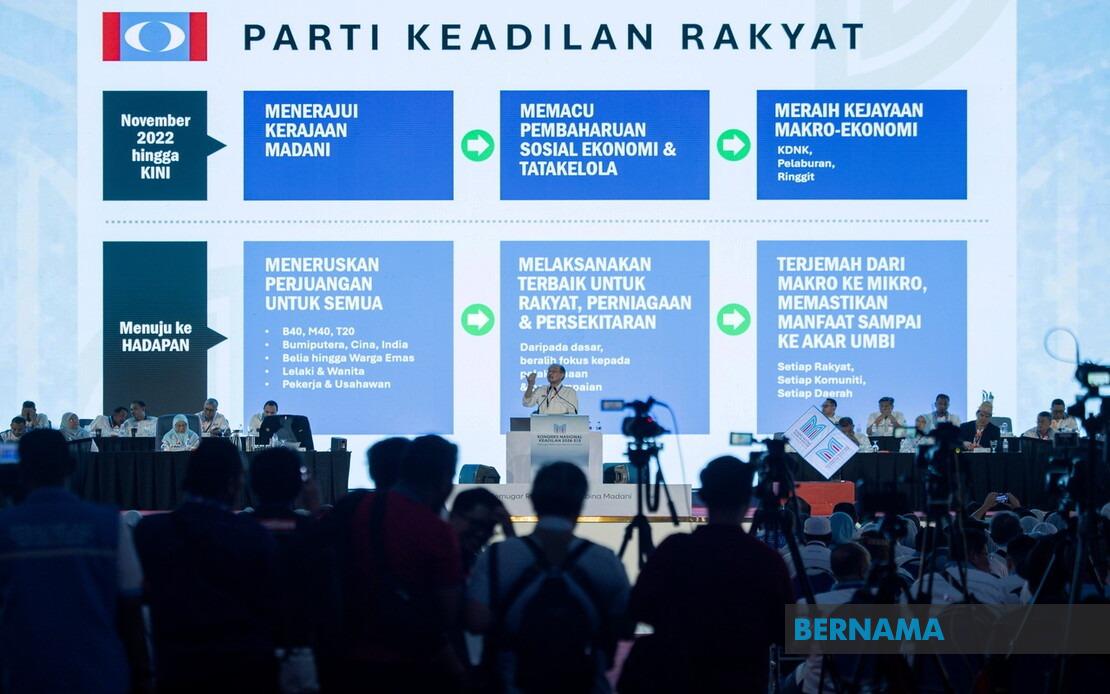
PKR president Datuk Seri Anwar Ibrahim has formally empowered vice-president Datuk Seri Saifuddin Nasution Ismail to exercise the full authority of deputy president, stepping in during the temporary absence of Nurul Izzah Anwar. The announcement, made during Anwar's closing remarks at the PKR National Congress 2026 held in Melaka on August 16, underscores a significant realignment within the party's upper echelon at a time when the coalition faces mounting electoral challenges.
While acknowledging that the assignment represents additional responsibility for the Home Minister, Anwar framed Saifuddin Nasution's appointment as a natural extension of his existing role within the party hierarchy. The PKR president emphasised the depth of his personal relationship with Saifuddin Nasution, highlighting decades of familiarity and ideological alignment as the foundation for this trust. This move addresses an administrative gap created by Nurul Izzah's decision to step back temporarily, a measure that requires the organisational machinery to maintain continuity in senior-level decision making.
The Central Leadership Council had endorsed this interim arrangement on August 6, as confirmed by PKR Information Chief Datuk Seri Fahmi Fadzil. By formalising Saifuddin Nasution's expanded mandate at the national congress, Anwar sought to signal stability and clear succession pathways within PKR's command structure. The explicit call for party members to grant Saifuddin Nasution their complete cooperation and loyalty reflects Anwar's concern that any ambiguity surrounding leadership authority could undermine party discipline at a vulnerable juncture.
Simultaneously, Anwar unveiled a broader organisational shuffle intended to optimise resource deployment across the party and government apparatus. Datuk Seri Amirudin Shari, the other vice-president, has been appointed election director—a role of considerable importance as PKR and its coalition partners prepare for upcoming electoral contests. Tengku Datuk Seri Zafrul Tengku Abdul Aziz, meanwhile, takes the position of Prime Minister's Office coordinator, effectively anchoring party interests within the prime ministerial establishment.
The restructuring carries particular significance for Negeri Sembilan, where PKR experienced electoral setback in state elections held on August 1. Anwar explicitly directed Datuk Seri Aminuddin Harun, serving as vice-president, to concentrate his energies on party cadre development and member training. Recognising Aminuddin's experience as former Menteri Besar, Anwar positioned this focus on grassroots capacity-building as essential to rebuilding the party's foundation across multiple organisational levels. This reorientation suggests Anwar views institutional strengthening as the pathway to reversing recent electoral losses.
Yet the Negeri Sembilan situation reveals underlying tensions within PKR's state machinery. Six divisional chiefs had submitted demands calling for scrutiny of Aminuddin's stewardship of the State Leadership Council, seemingly attributing the August 1 defeat to his leadership. Rather than removing Aminuddin entirely, Anwar chose to retain him while redefining his portfolio—a middle course that preserves the vice-president's standing while deflecting internal criticism.
Anwar's response to Negeri Sembilan demonstrates his inclination toward collective accountability rather than individual culpability. He explicitly cautioned against ascribing the state election loss solely to Aminuddin, instead framing electoral reversal as a shared responsibility warranting system-wide correction. This philosophy reflects Anwar's understanding that excessive internal purges can create breeding grounds for factionalism and destabilise coalition cohesion. By distributing blame and responsibility, he aims to foster a culture of continuous improvement without scapegoating individuals.
The strategic implications for Malaysian politics merit close examination. PKR remains the dominant force within the federal coalition, yet recent setbacks—including the Negeri Sembilan loss—have intensified speculation about internal stability and electoral viability. By securing visible commitment from senior figures like Saifuddin Nasution and Amirudin Shari to expanded responsibilities, Anwar projects an image of controlled succession and institutional depth. These appointments signal that the party possesses capable operators ready to manage complex portfolios, whether in party administration or governmental coordination.
For Saifuddin Nasution specifically, the interim deputy president role represents both elevation and complication. As Home Minister overseeing internal security, he already commands substantial authority and visibility. Adding formal party deputy leadership duties could amplify his influence within PKR and enhance his standing as a potential successor to Anwar, though it equally creates vulnerabilities should party fortunes deteriorate further. The dual burden demands exceptional time management and political acuity.
The broader context involves PKR's struggle to maintain momentum as the coalition anchor amid intense scrutiny from opposition forces and internal coalition partners. Other component parties—particularly PAS and related groupings—possess their own ambitions within the federal government. PKR's ability to demonstrate strong organisation, clear leadership succession, and electoral competence becomes increasingly vital to sustaining its preeminence within the ruling coalition structure.
Anwar's insistence on party loyalty toward Saifuddin Nasution carries implicit warning against any attempt to undermine the interim arrangement or mobilise counter-candidates. By invoking solidarity and framing the decision as essential to party functionality, Anwar seeks to inoculate the appointment against factional challenge. How effectively he manages this centralisation of authority while accommodating legitimate concerns from state-level operatives will significantly influence PKR's internal stability in coming months.
The restructuring ultimately reflects a party seeking to navigate twin challenges: addressing electoral vulnerability while maintaining hierarchical discipline. Whether these leadership adjustments translate into concrete improvements in PKR's electoral appeal and organisational effectiveness remains to be tested in future contests. The next significant opportunity will come as the party prepares for federal elections, where these enhanced responsibilities will determine whether restructuring yields tangible political dividends.

