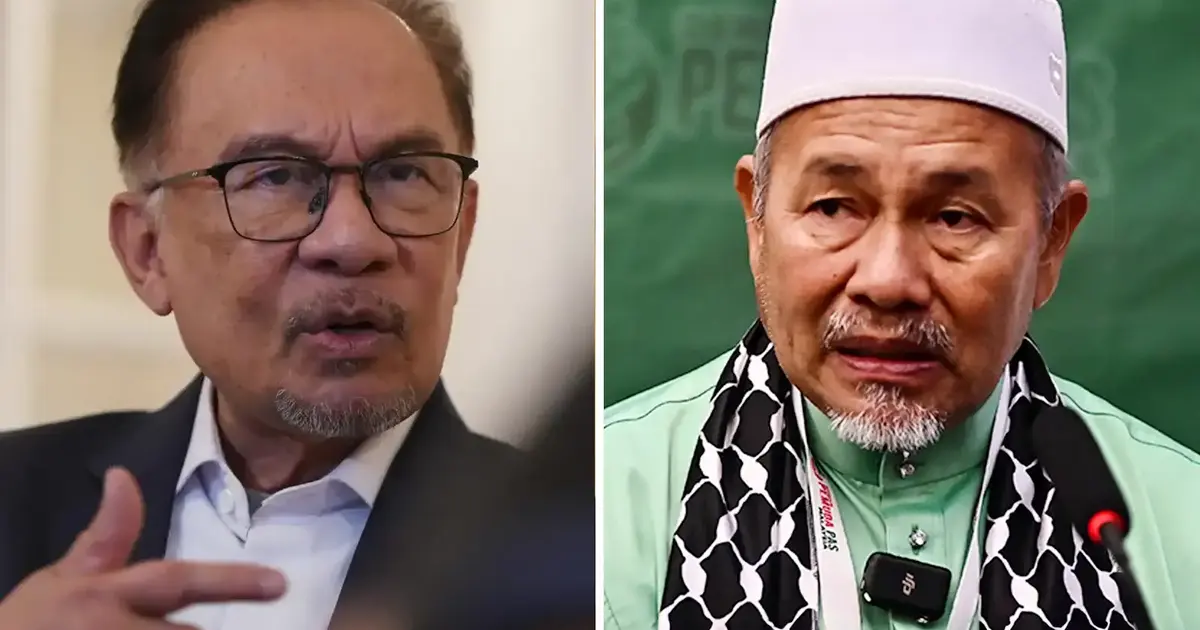
Prime Minister Anwar Ibrahim has initiated legal proceedings against PAS deputy president Tuan Ibrahim Samsudin over statements delivered during a public ceramah, marking an escalation in tensions between Malaysia's ruling coalition and the opposition Islamic party. The lawsuit centres on remarks alleged to have impugned Anwar's integrity concerning his involvement in police investigations and interactions with royal institutions in Negeri Sembilan.
The defamation action represents a significant development in the ongoing political dynamics between the federal government and PAS, which has strengthened its position as the primary opposition force following the last general election. Such legal confrontations often reflect deeper ideological and political divisions within Malaysia's competitive electoral landscape, particularly given the contentious nature of accusations touching upon law enforcement independence and royal prerogatives.
Tuan Ibrahim's ceramah remarks reportedly contained allegations that Anwar had improperly influenced police investigations. These claims carry particular weight in Malaysia's political environment, where questions about institutional independence and executive overreach frequently dominate public discourse. The assertion that any premier might meddle in police operations strikes at fundamental governance principles and constitutional protections designed to maintain investigative integrity.
The suit also encompasses allegations relating to the royal institution in Negeri Sembilan, a state where constitutional monarchy remains a constitutionally entrenched concept with significant cultural resonance. Comments touching upon Anwar's alleged dealings with state royalty carry resonance beyond conventional political criticism, given Malaysia's constitutional framework that elevates the institution of the rulers to protected status. This dimension may considerably complicate both the legal arguments and the broader political implications of the case.
For Malaysian readers, this litigation underscores the tension between political speech and legal accountability. While electoral competition necessitates robust public discourse, defamation law establishes boundaries around statements deemed reckless or demonstrably false. Courts must navigate determining whether Tuan Ibrahim's remarks constitute protected political commentary or actionable misrepresentation, a distinction that fundamentally affects the landscape of acceptable political communication.
The timing of this action occurs against a backdrop of intensifying competition between Anwar's governing coalition and the increasingly dominant PAS-led opposition bloc. Regional observers have noted that PAS has consolidated significant electoral support in crucial voting constituencies, particularly in the northern states and parts of the east coast. This lawsuit may therefore signal both the government's readiness to employ judicial mechanisms against political adversaries and the opposition's willingness to deploy provocative rhetoric despite legal exposure.
From a Southeast Asian perspective, Malaysia's approach to political defamation reflects broader regional patterns where sitting governments occasionally pursue legal action against critics. Comparisons to similar cases in neighbouring jurisdictions reveal varying judicial approaches to balancing free political expression against reputational protection for public office holders. Malaysian courts have historically demonstrated nuance in these matters, often considering the public interest in political debate when evaluating defamation claims.
The substance of the allegations—police interference and royal involvement—addresses domains where Malaysia's constitutional architecture establishes particular protections. The Federal Constitution explicitly safeguards the independence of law enforcement agencies while simultaneously according special status to the institution of the monarchy. When political claims touch upon both simultaneously, they potentially implicate fundamental constitutional principles that courts take seriously.
Both Anwar and Tuan Ibrahim represent significant figures within their respective political movements. Anwar's position as premier places particular responsibility upon him to demonstrate governance above partisan contestation, while Tuan Ibrahim's role as deputy to PAS president Abdul Hadi Awang positions him as a key articulator of the party's opposition narrative. Their legal confrontation thus carries implications for how Malaysia's political elite conducts itself during intensely competitive periods.
The suit's ultimate resolution will likely establish precedent regarding the boundaries of acceptable political speech directed at senior government officials. Malaysian legal observers will scrutinise whether courts apply heightened scrutiny to claims affecting public institutions and constitutional principles, or whether they treat such cases similarly to defamation actions involving purely private disputes. This distinction carries profound implications for political discourse and the relationship between judicial power and democratic expression.
For the broader political landscape, this action demonstrates how electoral competition increasingly employs legal mechanisms alongside traditional campaigning. While defamation suits represent legitimate avenues for addressing reputational harm, their deployment by sitting governments against opposition figures generates ongoing debate about whether such actions serve legitimate interests or function as tools of political pressure. This case will likely intensify that discussion within Malaysian political circles and civil society organisations monitoring democratic governance.
The defamation suit also reflects deeper anxieties within Anwar's government regarding institutional credibility and public confidence in governance. By pursuing judicial remedies, the administration signals that it takes seriously allegations questioning police independence and royal proprieties. However, critics may contend that robust defence of institutional integrity requires primarily substantive policy and transparency measures rather than legal action against political opponents, a tension that will likely persist throughout this litigation.

