%22%2F%3E%3C%2Fpattern%3E%3C%2Fdefs%3E%3Crect%20width%3D%22100%25%22%20height%3D%22100%25%22%20fill%3D%22url(%23ph25xh8g)%22%2F%3E%3Crect%20width%3D%22100%25%22%20height%3D%22100%25%22%20fill%3D%22url(%23ph25xh8p)%22%2F%3E%3Ctext%20x%3D%2250%25%22%20y%3D%2250%25%22%20text-anchor%3D%22middle%22%20dominant-baseline%3D%22central%22%20fill%3D%22rgba(255%2C255%2C255%2C0.95)%22%20font-family%3D%22Georgia%2C%20'Times%20New%20Roman'%2C%20serif%22%20font-weight%3D%22700%22%20font-size%3D%22272%22%20letter-spacing%3D%22-0.02em%22%3EAnwar%3C%2Ftext%3E%3C%2Fsvg%3E)
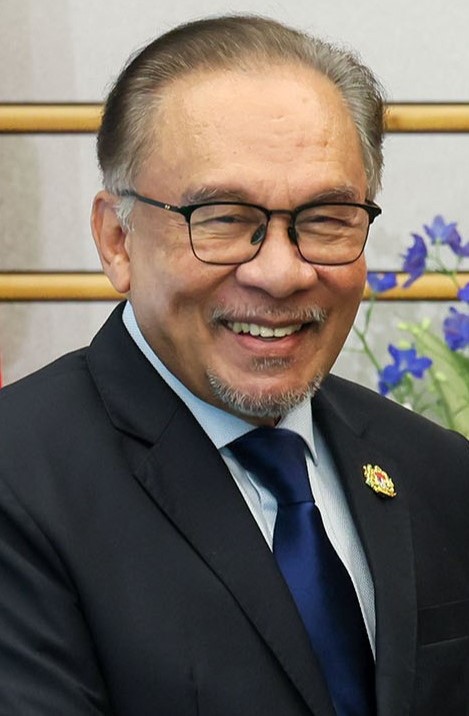
Pakatan Harapan used a major campaign rally to formally introduce its candidates across all state constituencies in Johor, with Prime Minister Anwar Ibrahim presiding over the 22 June gathering as the centerpiece of the coalition's push for the 16th Johor State Election. The high-profile event at Padang Bukit Gambir Extreme Park marked a significant moment for the ruling coalition as it sought to consolidate support in a state that has witnessed considerable political realignment over the past decade. By unveiling the complete candidate list at a single, high-visibility occasion rather than through piecemeal announcements, PH signalled unified strategic intent and organisational readiness to contest the election across all seats simultaneously.
Anwar's personal leadership of the event underscored the national importance the federal government attaches to the Johor result. As prime minister, his presence carries symbolic weight beyond typical campaign activity—it frames the state election not merely as a local contest but as a referendum on the Malaysia Madani governance agenda that his administration has championed since taking office. His direct involvement also reflects the bloc's understanding that Johor, as the nation's second-most populous state and a traditional political battleground, remains strategically vital to PH's broader trajectory. The timing of the announcement, scheduled for 8:00 PM on a Saturday evening, appeared designed to maximise media coverage and public visibility.
The messaging framework deployed throughout the event centred on four interconnected pillars: unity, integrity, compassion, and progress. These themes represented PH's attempt to position itself as fundamentally different from alternative political arrangements, emphasising principled governance rooted in serving constituents rather than pursuing narrow factional interests. Anwar's articulation of this platform stressed that authentic politics must function as a servant mechanism for ordinary Johoreans—strengthening the community fabric, generating genuine economic opportunities for young people, sustaining business vitality, and tangibly improving household living standards across the state. This formulation attempted to reclaim the moral high ground in political discourse by defining PH's raison d'être around substantive public welfare rather than merely securing electoral advantage.
The invocation of Malaysia Madani as the overarching vision connecting state-level campaigns to federal policy direction established a coherent narrative linking the Johor election to the government's broader reform programme. This framework allows PH candidates to campaign not as isolated local figures but as representatives of a comprehensive national transformation agenda. For Malaysian voters, particularly those in Johor, this positioning attempts to clarify why state elections matter: they determine whether local administrations can effectively implement and reinforce policies designed at the federal level. By contrast, it implicitly argues that opposition-led state governments would obstruct or contradict federal initiatives, creating governance friction and reducing policy effectiveness.
The candidate announcement itself—revealing the full slate for all Johor state seats—represented a logistical and political undertaking of considerable magnitude. State elections typically feature dozens of constituencies, and publicly committing specific individuals to these seats creates multiple vulnerabilities: individual candidates may face unexpected controversies, shifting electoral demographics could render particular selections suboptimal, and early public commitment reduces flexibility to respond to late-breaking developments. PH's decision to proceed nonetheless suggested confidence in its candidate vetting processes and strategic positioning. It also created psychological momentum by presenting a complete team rather than trickling announcements across weeks, potentially generating media narrative cohesion and supporter enthusiasm.
For Johor specifically, PH's renewed electoral push carries stakes extending beyond state-level governance. The state has experienced significant political volatility, with control alternating between different coalitions and independent powerbrokers playing decisive roles during certain periods. A strong PH performance would validate its claim to represent a stable, institutionalised alternative to fragmented opposition arrangements. Conversely, a disappointing result would embolden rival political forces and potentially complicate the ruling coalition's grip on federal power by demonstrating erosion of support in a crucial state. The election thus functions as a barometer of PH's political health and voter confidence in Anwar's administration.
Anwar's specific framing of political purpose—emphasising service, community strengthening, youth opportunity creation, and business support—addressed several persistent Malaysian voter concerns. Economic anxiety, particularly regarding youth unemployment and business sustainability, has dominated voter sentiment in recent years. By explicitly centering these issues, Anwar attempted to demonstrate that PH understands everyday Johorean preoccupations and possesses specific commitments to address them. This messaging strategy differs markedly from opposition rhetoric that often focuses on systemic grievance and opposition to existing arrangements, instead proposing affirmative visions of state-directed improvement.
The geographical choice of Padang Bukit Gambir Extreme Park as the venue carried subtle significance. Extreme parks represent youth-oriented recreational infrastructure, an implicit reference to PH's emphasis on youth opportunity and engagement. By selecting this location rather than a conventional political rally site, organisers created physical and symbolic association between their campaign and youth dynamism. This location choice complemented the messaging about creating opportunities for younger Malaysians and signalled that PH considers itself the coalition of progress and forward momentum rather than custodian of established interests.
The conclusion of Anwar's remarks—calling supporters to advance guided by principles of unity, integrity, compassion, and progress—functioned as both summary and rallying cry. By returning to these four values after elaborating on specific policy commitments, the messaging maintained focus on ethical foundations underlying PH's campaign rather than descending into personalised attacks or negativity toward opponents. This rhetorical strategy attempts to occupy the moral centre ground in Malaysian politics, presenting PH as motivated by principle rather than mere power acquisition.
The broader significance of this candidate announcement extends beyond immediate Johor campaign mechanics. It represents a critical test of whether Anwar's federal administration can translate governance legitimacy into state-level electoral strength. Many international observers have noted that controlling the federal centre does not automatically guarantee state-level dominance in federal systems; voter behaviour often differs dramatically between national and local elections. PH's success or failure in Johor will therefore influence calculations throughout Southeast Asia regarding the stability of Malaysia's political trajectory and whether reform-oriented coalitions can consolidate power across multiple governance levels.