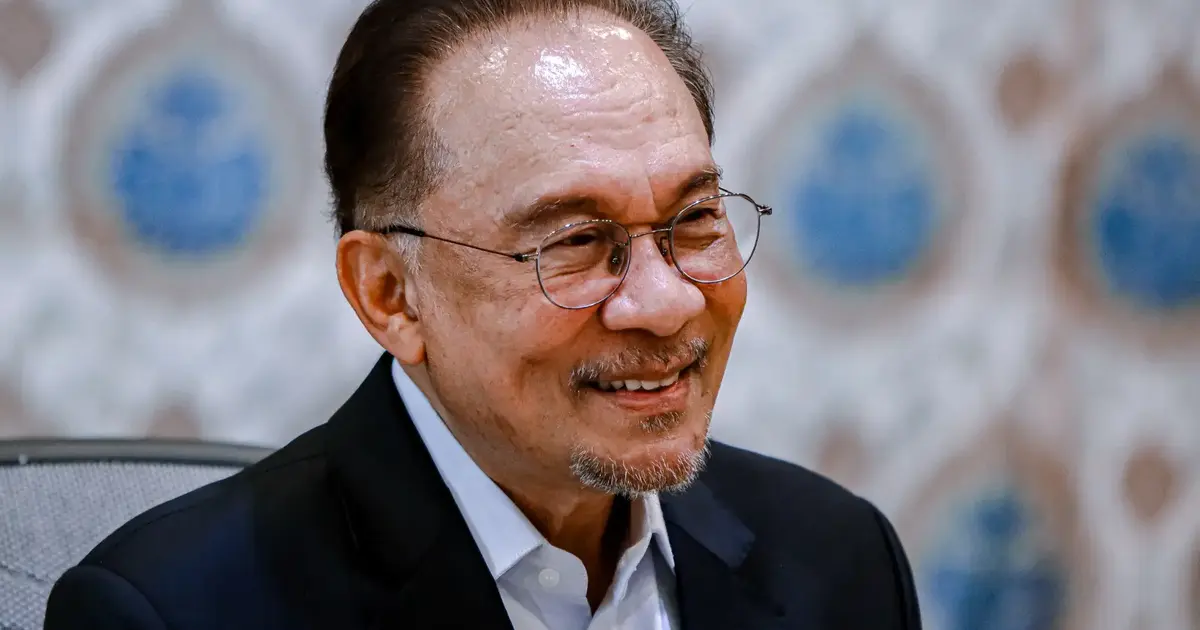
Prime Minister Anwar Ibrahim has consolidated his standing as the nation's most approved political figure, according to the latest Merdeka Center polling data, securing a 52% approval rating that places him ahead of all major opposition and coalition competitors. The survey results underscore Anwar's continued capacity to maintain public confidence despite navigating the complex political dynamics of Malaysia's multi-party coalition government.
The approval gap separating Anwar from rival contenders reflects broader patterns in Malaysian political sentiment. Former Umno Youth chief Khairy Jamaluddin, who has positioned himself as a centrist voice within the opposition, trails the prime minister in the rankings. Similarly, Bersatu president Muhyiddin Yassin, who previously served as prime minister before his coalition collapsed in 2021, registers lower approval metrics than the incumbent. Former minister Rafizi Ramli, who chairs the PKR party faction in Parliament and has emerged as a vocal critic of government policies, also records approval levels beneath Anwar's standing.
The 52% figure carries particular significance given the volatile nature of Malaysian political opinion in recent years. The nation has witnessed five prime ministers in seven years prior to Anwar's December 2022 appointment, generating public fatigue with frequent government transitions. The relatively substantial approval rating suggests that Anwar has succeeded in projecting an image of stability and competence, even as his administration manages competing demands from coalition partners within the unity government framework.
Anwar's political coalition, which brings together the Pakatan Harapan bloc with Barisan Nasional and other partners, represents an unprecedented power-sharing arrangement in Malaysia's contemporary politics. Maintaining public approval while balancing the interests of such diverse coalition members presents constant tactical challenges. The Merdeka Center data indicates that Anwar's approach to coalition management has not substantially eroded his personal approval among the broader electorate.
Khairy Jamaluddin's position in the approval rankings reflects his efforts to establish himself as a moderate alternative voice within the opposition landscape. As one of Umno's more internationally-engaged and liberal-leaning figures, Khairy has attempted to appeal to urban and younger voters, yet his approval metrics remain subordinate to the incumbent prime minister. His performance in the survey suggests that repositioning as a reformist opposition voice has proven insufficient to substantially challenge Anwar's approval advantage.
Muhyiddin Yassin's lower ranking underscores the political consequences of Bersatu's fractious history and the resentment surrounding the 2021 Sheraton Move, when his coalition withdrew from the then-ruling Pakatan Harapan alliance. Although Muhyiddin has worked to rehabilitate his political standing through various manoeuvres, the Merdeka Center results indicate that Malaysian voters have not fully rehabilitated their assessment of his leadership credentials. His position as a kingmaker without direct executive power further limits his capacity to influence public perception.
Rafizi Ramli's standing in the approval hierarchy reflects the particular challenges faced by figures positioned as intra-coalition critics. Although he commands loyalty among PKR base supporters, his willingness to publicly challenge government decisions and voice dissent against Anwar's administration may constrain his broader appeal. The survey results suggest that Malaysian voters may continue to distinguish between loyal coalition members and those who adopt more combative stances toward the government.
The timing of the Merdeka Center survey occurs amid ongoing deliberations over Malaysia's economic direction, international relations strategy, and approaches to communal sensitivities. Anwar's approval rating during this period indicates public patience with his administration's policy trajectory, even as the government confronts criticism from multiple directions. The prime minister's ability to maintain a 52% approval rating suggests that his government has successfully framed its performance narrative in terms acceptable to a slim majority of the surveyed population.
For Malaysian political analysts, the approval hierarchy revealed by Merdeka Center reflects deeper patterns in voter preference. The substantial gap between Anwar and his nearest rivals suggests that no single opposition figure has yet emerged with sufficient popular resonance to credibly challenge the incumbent prime minister. This dynamic may influence coalition calculations ahead of future electoral contests and shape the strategic behaviour of both government and opposition blocs in parliamentary debates.
The approval data holds implications extending beyond immediate domestic political calculations. Southeast Asia has observed Malaysia's complex power-sharing arrangements with considerable interest, viewing the unity government as a potential model for managing political fragmentation. Anwar's sustained approval rating lends credibility to the proposition that such arrangements, while administratively unwieldy, can function effectively if the incumbent leader maintains sufficient public confidence. This consideration becomes particularly relevant as other regional democracies grapple with comparable coalition-building challenges and search for templates addressing political polarisation.
Looking forward, the Merdeka Center findings establish a baseline against which future approval trajectories will be measured. Malaysian political observers will monitor whether Anwar's 52% rating can be sustained as the government tackles inflation pressures, navigates ongoing fiscal challenges, and manages the complex demands of managing diverse coalition partners. The survey results provide a snapshot of current sentiment, yet the durability of these approval levels will depend substantially on the government's capacity to deliver tangible improvements in ordinary Malaysians' economic circumstances and quality of life.

