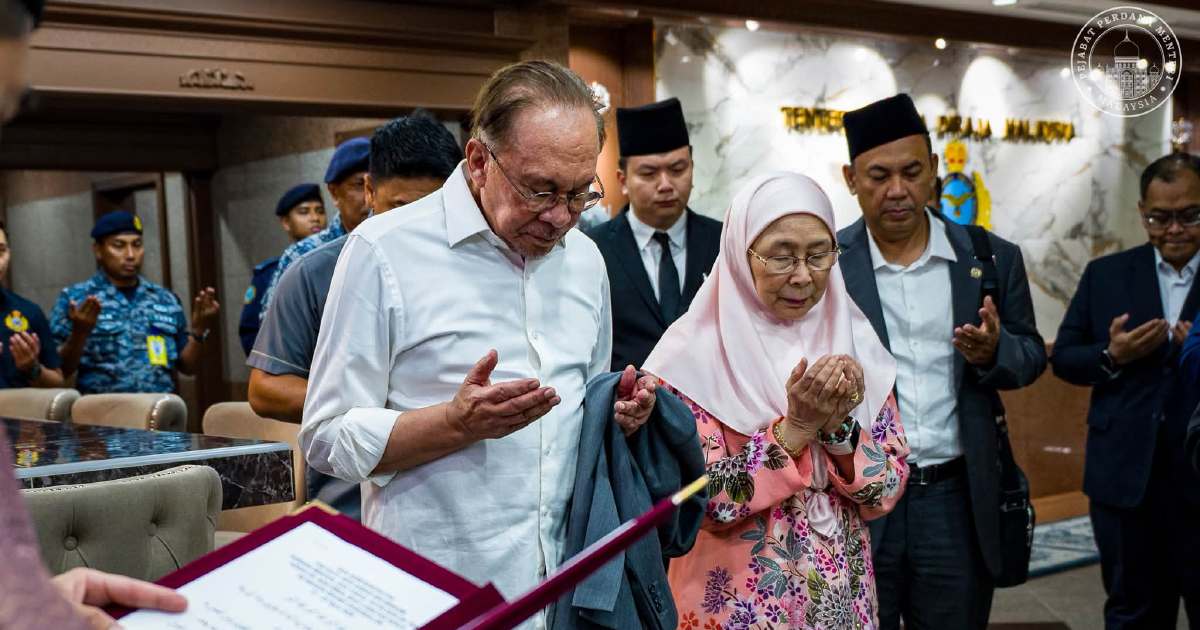
Prime Minister Datuk Seri Anwar Ibrahim touched down in Bandar Seri Begawan today to commence a two-day working visit centred on the 27th Annual Leaders' Consultation (ALC-27), an established diplomatic platform that has served as the primary mechanism for high-level engagement between Malaysia and Brunei since its inception. This periodic consultation represents one of the most significant bilateral forums in the region, bringing together the leadership of both nations to discuss matters of mutual interest and regional significance.
The Annual Leaders' Consultation stands as a cornerstone of the Malaysia-Brunei relationship, providing a structured environment for the two governments to address transnational issues, coordinate regional positions, and strengthen ties that extend across multiple sectors. The meeting format allows for candid discussions at the highest levels, enabling both leaders to chart the direction of bilateral cooperation for the ensuing period and to respond to evolving challenges within Southeast Asia.
Malaysia and Brunei share considerable common ground as neighbouring ASEAN members, with interconnected economies, shared security concerns, and deeply rooted cultural and religious ties. The relationship has historically transcended typical bilateral commerce, encompassing defence cooperation, maritime coordination, and joint approaches to regional diplomacy. The selection of Bandar Seri Begawan as this year's venue underscores Brunei's commitment to maintaining regular engagement with its closest regional partners.
The 27th iteration of this consultation series indicates the consistency and durability of institutional dialogue between the two nations. Such longevity in bilateral forums reflects a mutual commitment to managing relations proactively rather than allowing them to be shaped by external pressures or episodic crises. For Malaysian policymakers and the broader Southeast Asian community, the regularity of these meetings signals stability and predictability in regional affairs, qualities increasingly valued in a geopolitical climate marked by shifting alignments and competing strategic interests.
During the working visit, Datuk Seri Anwar Ibrahim will engage with Brunei's leadership on issues likely spanning economic cooperation, security collaboration, maritime boundaries, and regional diplomatic coordination. The timing of such visits often reflects current regional developments and bilateral priorities, with each consultation potentially addressing newly emergent challenges or accelerating existing collaborative programmes.
Brunei's position as a small but strategically situated state on the island of Borneo places it at the intersection of major regional maritime routes and geopolitical considerations. Its relationship with Malaysia carries particular weight given shared territorial waters, cross-border populations, and interlocking economic interests. The consultation format allows both governments to navigate these complexities within a framework of institutional understanding and established protocols.
For Malaysia, such bilateral engagements serve multiple purposes beyond immediate bilateral matters. They provide opportunities to coordinate positions ahead of broader ASEAN forums, to explore collaborative approaches to regional security challenges, and to demonstrate commitment to Southeast Asian solidarity. The consistency with which Malaysia's leadership maintains these consultations reflects recognition that smaller neighbouring states merit the same diplomatic attention as larger or more economically dominant regional players.
The two-day format typically permits substantive discussions rather than ceremonial exchanges, suggesting that both delegations anticipate covering considerable ground. Such visits usually result in joint statements or communiqués outlining agreements reached and areas identified for future cooperation. These documents serve as public commitments that inform both domestic stakeholders and the broader regional audience about the state and direction of the bilateral relationship.
From a Malaysian perspective, maintaining robust ties with Brunei contributes to the broader architecture of regional stability. As ASEAN continues to navigate challenges ranging from South China Sea disputes to transnational security threats, the strength of bilateral relationships between member states becomes increasingly significant. The consistency of Malaysia-Brunei engagement demonstrates how institutional mechanisms can sustain diplomatic relationships and provide forums for addressing challenges before they escalate.
The consultation series also reflects the evolution of Malaysia-Brunei relations over decades. What began as periodic high-level meetings has matured into a structured, predictable engagement format that encompasses multiple levels of government and technical specialists. This institutional deepening parallels the broader maturation of ASEAN as an organisation, with member states increasingly relying on established protocols and regular forums to manage interstate relations.
Beyond bilateral considerations, the visit contributes to ASEAN's internal cohesion at a time when the bloc faces external pressures and internal disparities in development levels and strategic priorities. Regular leadership consultation between members, regardless of their relative sizes or economic positions, reinforces the principle of sovereign equality and constructive regional engagement that underpins ASEAN's foundational philosophy. Such meetings also provide venues for candid discussion that might prove difficult in broader multilateral forums where positions become more formal and constrained.
The outcome of ALC-27 will likely be monitored not only by Malaysian and Bruneian stakeholders but also by other regional actors seeking to understand the strength and direction of bilateral partnerships within ASEAN. The consultation format has proven sufficiently flexible to accommodate changing circumstances while maintaining institutional continuity, a balance that contributes to its enduring utility for both nations.

