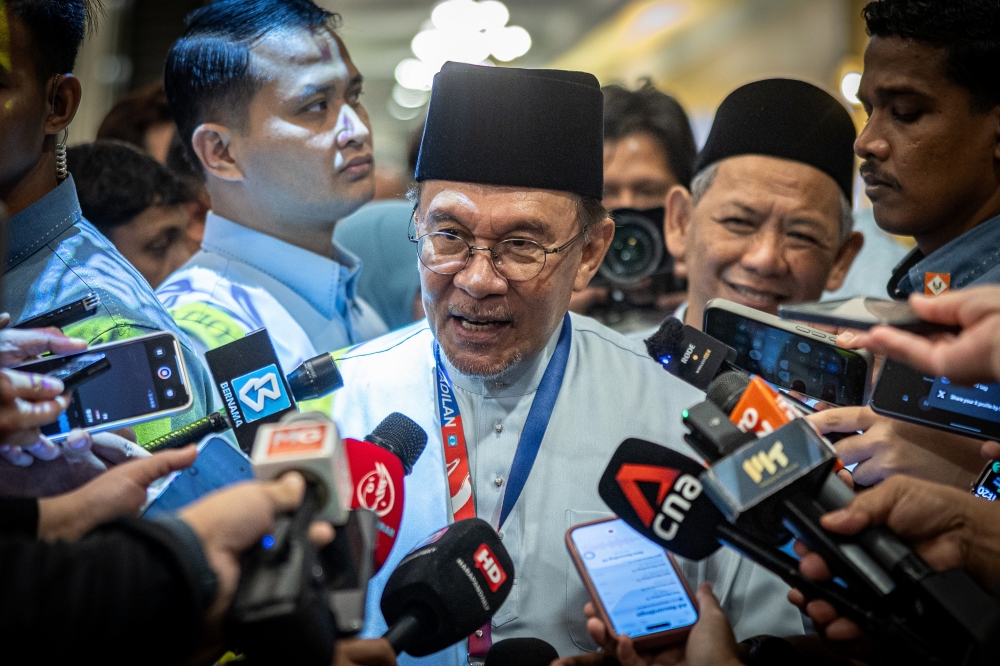
Prime Minister Datuk Seri Anwar Ibrahim moved swiftly to quash speculation about a deepening rift within Malaysia's ruling coalition on Friday, declaring that his working relationship with Deputy Prime Minister Datuk Seri Zahid Hamidi continues on firm footing. Speaking in Melaka during a public engagement, Anwar adopted a measured tone while rejecting recent claims made by Khairy Jamaluddin, signalling that the administration intends to project an image of cohesion even as underlying tensions between coalition members periodically surface.
The Prime Minister's comments came in direct response to suggestions that divisions had emerged between his faction and Zahid's within the Perikatan Nasional-Barisan Nasional administration. Rather than engaging in a point-by-point rebuttal of Khairy's allegations, Anwar framed his position around the government's commitment to constructive dialogue and inclusive decision-making, emphasising that disagreements among coalition partners are managed through established channels rather than public confrontation.
Anwar's characterisation of his preferred approach as the "peaceful path" reflects the political reality facing Malaysia's governing structure. The coalition bringing together multiple parties and competing interests requires careful management to maintain parliamentary stability, particularly given the relatively slender margins that support the current government. Any public rupture between the Prime Minister and his Deputy could potentially trigger wider instability, making the leadership's emphasis on unity both strategically necessary and politically expedient.
Khairy's intervention added a complicating dimension to coalition dynamics. As a prominent voice within the United Malays National Organisation, his decision to air concerns about leadership tensions indicated that dissatisfaction exists within party structures. His characterisation of friction between Anwar and Zahid appeared designed to highlight what he views as incompatible leadership philosophies or strategic priorities within the administration.
The Deputy Prime Minister's position carries particular significance in Malaysian governance. Zahid commands support within his own party structures and brings distinct constituencies to the coalition. Any genuine deterioration in his relationship with Anwar would carry substantial implications for cabinet decision-making and legislative coordination. Anwar's public reassurance thus serves multiple audiences—coalition partners, backbenchers, and the broader business and investment community that closely monitors political stability.
The broader context reveals ongoing challenges within the Perikatan Nasional-Barisan Nasional arrangement. The coalition represents a complex amalgamation of historically competing interests, forcing compromises that not all members embrace wholeheartedly. Anwar's government must simultaneously pursue reform agendas while accommodating traditional power centres, a balancing act that frequently generates internal friction even when formal relationships remain cordial.
Anwar's explicit reference to pursuing peaceful resolution of differences carries historical resonance in Malaysian politics. The country's experience with political instability, coalition collapse, and constitutional crises has created strong institutional and public preference for orderly governance. The Prime Minister's invocation of the "peaceful path" thus positions the government as a stabilising force committed to procedural legitimacy rather than confrontational politics.
For Malaysian observers and regional commentators monitoring political developments, the exchange between Anwar and Khairy illustrates how coalition governments necessarily operate with embedded tensions. Unlike single-party administrations, multiparty coalitions require continuous negotiation and compromise, with public denials of rift often masking substantive disagreements over policy direction and resource allocation.
The timing of these claims also merits consideration. Political seasons in Malaysia see periodic eruptions of internal criticism, sometimes reflecting genuine policy disputes and sometimes representing positioning ahead of important decision points. Khairy's intervention suggests particular constituencies within the UMNO-led coalition have concerns they wish to signal publicly, even if Anwar's response seeks to contain the narrative.
Anwar's approach to coalition management appears designed around maintaining sufficient unity for legislative operations while acknowledging the legitimacy of partner voices. This contrasts with more confrontational approaches that might purge or marginalise internal critics. His stated preference for dialogue and peaceful resolution reflects both his political philosophy and the practical necessity of managing a coalition where no single member commands overwhelming dominance.
Looking forward, the stability of the Perikatan Nasional-Barisan Nasional coalition depends substantially on managing precisely these kinds of tensions. Whether through cabinet reshuffle, policy adjustments, or simply through reiteration of commitment to shared governance, coalition leaders must address underlying concerns among members while maintaining the appearance of unity necessary for effective government.
For Malaysia's development and international standing, coalition stability carries direct implications. Investor confidence, policy continuity, and the government's capacity to implement longer-term reform programmes all depend on political predictability. Anwar's firm but non-confrontational response to Khairy's allegations thus serves not merely as internal coalition management but as a signal to stakeholders that the government remains committed to stability despite inevitable disagreements among partners.

