%22%2F%3E%3C%2Fpattern%3E%3C%2Fdefs%3E%3Crect%20width%3D%22100%25%22%20height%3D%22100%25%22%20fill%3D%22url(%23ph2a47bg)%22%2F%3E%3Crect%20width%3D%22100%25%22%20height%3D%22100%25%22%20fill%3D%22url(%23ph2a47bp)%22%2F%3E%3Ctext%20x%3D%2250%25%22%20y%3D%2250%25%22%20text-anchor%3D%22middle%22%20dominant-baseline%3D%22central%22%20fill%3D%22rgba(255%2C255%2C255%2C0.95)%22%20font-family%3D%22Georgia%2C%20'Times%20New%20Roman'%2C%20serif%22%20font-weight%3D%22700%22%20font-size%3D%22272%22%20letter-spacing%3D%22-0.02em%22%3EAnwar%3C%2Ftext%3E%3C%2Fsvg%3E)
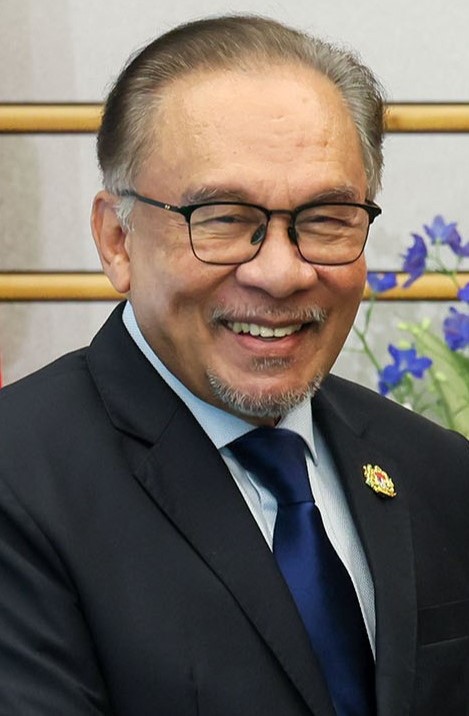
Prime Minister Datuk Seri Anwar Ibrahim is doubling down on his political engagement in Johor with a second visit to the state in just three days, underscoring the mounting importance of the nation's second-largest state as the election campaign enters a critical phase. The rapid succession of visits reflects strategic calculations by the federal leadership regarding Johor's pivotal role in shaping the broader political landscape, with coalition parties keen to consolidate support in a region that has historically wielded significant influence over national politics.
Johor's electoral significance extends beyond its geographical size or population numbers. The state has long been regarded as a bellwether for broader political trends, with its voting patterns frequently foreshadowing outcomes in national contests. Control of Johor's state government carries symbolic weight that reverberates through the federation, making it an essential battleground for any coalition seeking to demonstrate momentum and popular legitimacy. The federal government's intensive campaigning strategy reflects awareness that performance in Johor could substantially influence perceptions of overall political strength heading into any broader electoral contests.
The pattern of multiple high-level visits within compressed timeframes signals that the campaign has moved beyond routine political engagement into active mobilisation mode. Such concentrated scheduling typically indicates that campaign strategists have identified critical voter groups, marginal constituencies, or specific regions within Johor requiring direct intervention from senior leadership. The presence of the Prime Minister himself carries particular weight, as his appearances generate media attention and convey to party members and supporters that contests in Johor warrant top-level attention and resources.
For Malaysia's political coalition led by Anwar, Johor represents territory where sustained performance is essential. The state's economic importance—encompassing major manufacturing hubs, port facilities, and growing urban centres—means that voters in Johor are acutely conscious of federal policies affecting employment, infrastructure, and business confidence. Campaign messaging in the state likely emphasises economic management credentials and development initiatives, resonating with an electorate keenly aware of how Putrajaya's decisions impact their daily lives and economic prospects.
The election campaign in Johor also occurs within the context of ongoing political realignments across Malaysia. Coalition dynamics, particularly among constituent parties, continue to evolve, and state-level contests offer opportunities to test new alliance configurations and voter appeal strategies. Multiple visits by the Prime Minister allow for differentiated messaging to various demographic groups, regional audiences, and party factions, each potentially requiring distinct emphasis on policy priorities or developmental achievements.
Ground-level campaign activity in Johor likely encompasses engagement with state-level party machinery, local government representatives, and community leaders whose networks and influence shape voter perceptions. The Prime Minister's visits facilitate coordination between federal and state party structures, ensuring messaging consistency and maximising the mobilisation of party resources. Such visits also provide platforms for addressing specific local concerns that may not register prominently in national discourse but significantly influence voting behaviour at the state level.
Johor's ethnic and religious demographics present particular considerations for campaign strategy. As a state with substantial Chinese and Indian populations alongside its Malay-Muslim majority, voter outreach requires carefully calibrated messaging that acknowledges diverse community interests and concerns. The frequency of Prime Ministerial visits suggests that bridging these communal divides and maintaining coalition cohesion across different voter groups remains a priority requiring senior leadership engagement rather than delegation to lower-level party functionaries.
The opposition's activities and counter-campaign in Johor likely influence the timing and intensity of government-led engagement. Electoral contests typically feature reciprocal escalation, where intensified efforts by one side provoke corresponding responses from competitors. The rapid scheduling of consecutive Prime Ministerial visits may partly represent a reaction to opposition campaign momentum, or alternatively, an attempt to establish narrative dominance before opposition campaigning reaches comparable intensity levels.
Resource allocation patterns evident in this campaign approach reveal how Malaysian political parties prioritise electoral contests. The deployment of the Prime Minister's limited time and energy to Johor repeatedly over short intervals indicates that party strategists regard success in this state as essential for legitimacy and momentum. This prioritisation may come at the expense of engagement in other regions, reflecting calculations about which contests offer the best prospect of gains or where threats to existing positions are most acute.
Looking ahead, the intensity of federal-level engagement in Johor's campaign will likely set the tone for broader electoral mobilisation across the federation. Success or setbacks in Johor will influence confidence levels within coalition parties, potentially affecting their willingness to invest resources in campaigns in other regions. The state election thus functions both as a direct contest for Johor's governance and as a proving ground for political viability and electoral competence at the national level, warranting the concentrated attention evident in the Prime Minister's schedule.
For voters in Johor, the heightened visibility of federal leadership presents opportunities to engage directly with top-level policymakers, voice concerns, and assess whether campaign promises translate into tangible commitments. The frequency of Prime Ministerial appearances should theoretically increase accountability, as promises made during campaign visits can subsequently be evaluated against actual policy delivery and resource allocation to the state.