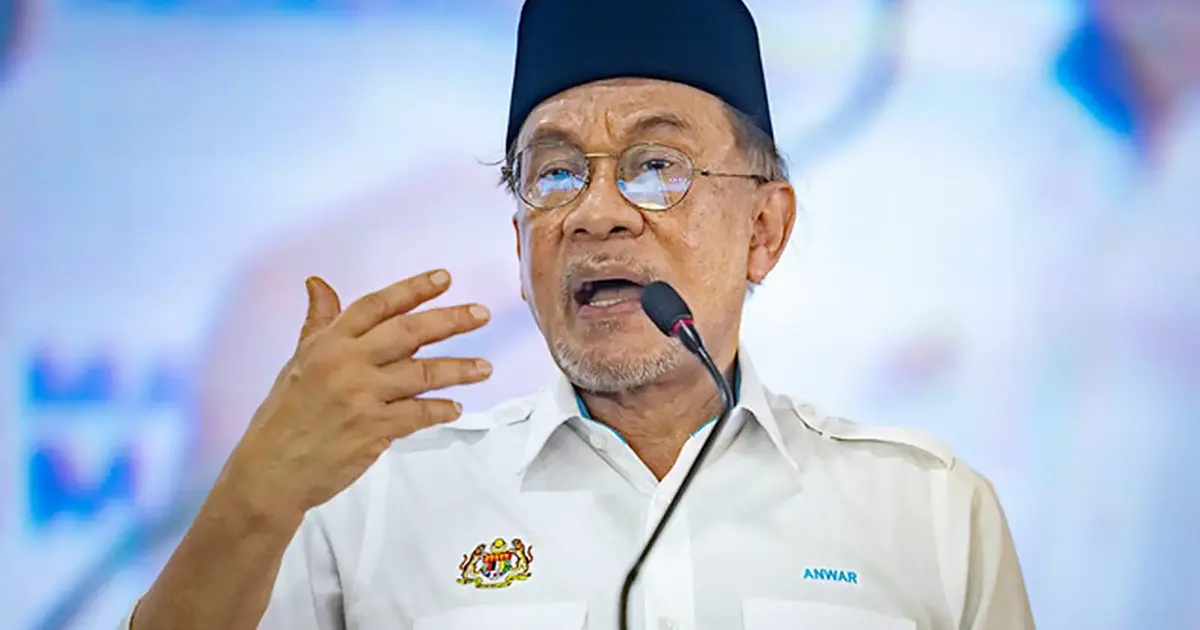
Prime Minister Anwar Ibrahim has issued a stern warning to his ministerial team regarding their conduct during forthcoming state election campaigns, signalling that those who exploit their government posts to undermine coalition partners risk being forced from office. The admonition reflects mounting tensions within Malaysia's unity government framework, where multiple parties with divergent interests must navigate the delicate balance between electoral ambition and administrative cohesion. Anwar's statement underscores the inherent difficulties in maintaining a broad-based coalition when individual parties pursue competitive state-level campaigns.
The prime minister's caution specifically targets ministers who might weaponise their official positions to launch attacks on fellow coalition members during state poll contests. This concern touches on a fundamental governance challenge: distinguishing between legitimate campaign activity and the improper use of state resources or ministerial authority to gain electoral advantage. The warning suggests that previous incidents have prompted Anwar to establish clearer boundaries for acceptable conduct, indicating friction points within the unity arrangement that require formal guidance.
Under the proposed framework, ministers found guilty of misusing their positions face concrete consequences, including potential demands for their resignation from cabinet. This represents a significant enforcement mechanism, as ministerial tenure typically depends on prime ministerial confidence. By explicitly linking campaign misconduct to the possibility of losing office, Anwar has created a direct incentive structure designed to discourage offending behaviour. The severity of this threat demonstrates the seriousness with which the prime minister views the integrity of the coalition arrangement.
Malaysia's unity government, established following the 2022 general election, comprises several political parties with competing bases and regional strongholds. State elections present particular challenges because they determine local power distribution and influence over state resources, creating fierce competition even between coalition partners. The tension between maintaining cabinet solidarity and pursuing aggressive state-level campaigns has proven difficult to manage, necessitating the prime minister's intervention. This dynamic mirrors experiences in multi-party coalition governments globally, where electoral pressures frequently strain cooperative arrangements.
The warning becomes particularly relevant given Malaysia's scheduled and anticipated state elections across various territories. State campaigns often turn personal and provincial, with politicians highlighting local grievances and competing claims about development records. When ministers participate actively in such contests—leveraging their national profiles, media access, and administrative networks—the line between political campaigning and abuse of office can blur significantly. Anwar's directive attempts to clarify where that boundary lies within the unity government context.
From a Malaysian governance perspective, this guidance addresses longstanding concerns about the politicisation of public administration. The civil service and government machinery must theoretically serve all citizens regardless of political affiliation. When ministers use state resources, media appearances tied to their portfolios, or official visits for campaign purposes, they potentially compromise governmental neutrality. The prime minister's emphasis on preventing such conduct reflects commitments to maintain administrative standards that support democratic principles, even amid intense electoral competition.
The coalition structure also influences how individual parties calculate their interests. Some coalition members may view state elections as opportunities to strengthen their hand within federal arrangements, hoping electoral gains will translate into enhanced negotiating power in future national politics. This motivation can create pressure on party members and allied ministers to engage in aggressive campaigning. Anwar's warning essentially sets limits on how far such ambitions can extend without jeopardising coalition stability and ministerial positions.
Compliance with this directive will likely require ongoing monitoring and judgment calls about what constitutes misuse of position versus legitimate political activity. Where precisely should officials draw lines between attacking rivals and attacking coalition allies? When is a minister's media appearance campaign activity versus official duty? These practical questions will require interpretation by the prime minister's office as incidents arise. The absence of specific, detailed criteria may leave some ambiguity, potentially creating disputes about whether particular conduct violated the warning.
The Malaysian political context adds complexity because coalition arrangements remain relatively new and still evolving. Parties have not yet fully established customary norms for managing disagreements while maintaining overall cooperation. Previous unity governments in Malaysia had different compositions and operated under different frameworks. This warning represents an attempt to establish clearer operational norms, helping coalition members understand expectations and reduce inadvertent breaches that could destabilise the arrangement.
For regional observers, this situation illustrates broader challenges facing coalition governments in Southeast Asia, where multiple parties must manage competing interests while sharing power. Thailand, Cambodia, and other regional democracies have experienced similar difficulties balancing coalition maintenance with political competition. Anwar's approach—using the threat of ministerial dismissal to enforce coalition discipline—represents one mechanism for managing such tensions, though its effectiveness remains to be tested through actual enforcement.
The warning also carries implications for Malaysia's democratic development. Strong coalitions can provide stability and inclusive governance, but they require frameworks that prevent excessive exploitation of official positions for partisan advantage. Anwar's directive suggests recognition that constitutional norms and administrative expectations alone may prove insufficient, necessitating explicit prime ministerial guidance to shape ministerial behaviour during contested elections.
Looking forward, implementation of this warning will prove crucial for coalition sustainability. If enforcement appears inconsistent or politically selective, confidence in the system will erode, potentially triggering further tensions. Conversely, consistent application might establish precedents that gradually strengthen coalition cohesion. The coming state elections will provide the first real test of whether ministers respect these boundaries or whether the prime minister will need to pursue dismissals to enforce his directive.

