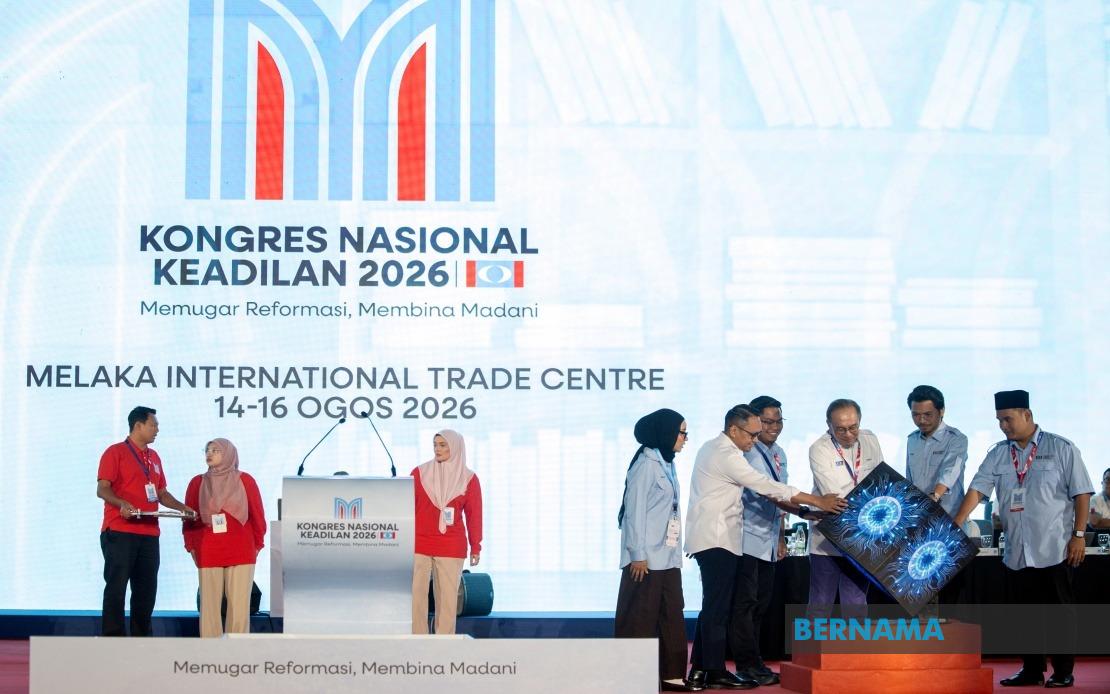
Prime Minister Datuk Seri Anwar Ibrahim unveiled a significant intellectual document in Melaka on August 16, marking a strategic effort to consolidate ideological direction within Parti Keadilan Rakyat's youth wing. The 113-page publication, co-authored by Angkatan Muda Keadilan (AMK) chief Muhammad Kamil Ahmad Munim and executive committee member Ashraf Ahmad Hadi, represents an attempt to institutionalise the party's reform agenda through structured cadre development.
The timing of the launch carries political weight within Malaysia's current landscape. Anwar characterised the publication not as administrative guidance or temporary political messaging, but as a framework for what he termed "civilisational renewal"—a concept extending beyond conventional policy implementation to encompass the re-humanisation of national development itself. This framing suggests PKR's intellectual leadership is positioning itself as addressing deeper structural questions about Malaysia's post-pandemic trajectory and social cohesion.
At its core, the document outlines contemporary approaches to governance and social challenges, reflecting AMK's attempt to translate Reformasi principles into actionable leadership philosophy. For Malaysian political observers, the emergence of such structured ideological materials indicates a maturation of the party's institutional capacity—moving beyond campaign rhetoric toward sustained intellectual output designed to shape a generation of party cadres.
Anwar's remarks during the launch revealed a deliberate effort to reframe youth engagement with politics. Rather than celebrating youthful energy or organisational growth, he emphasised the "heavy responsibility" and spiritual dimension of political power. This messaging appears calibrated to counter perceptions of political opportunism among younger activists, redirecting focus toward moral integrity and institutional accountability as prerequisites for leadership.
The publication's dual purpose—serving simultaneously as historical documentation and contemporary guide—reflects an understanding that Malaysia's reform narrative requires constant reinforcement. Young party members are being asked to internalise not merely operational procedures but the historical context of the Reformasi movement itself. This educational dimension suggests concern that institutional memory may fade among those joining the party without lived experience of the 1998 crisis.
Anwar's invocation of "extraordinary creativity, intellectual courage and spiritual resilience" as necessary qualities for rebuilding a nation "scarred by past injustices and leakages" articulates a specific diagnosis of Malaysia's condition. The reference to leakages—commonly understood as corruption and fiscal mismanagement—positions the document within broader national conversations about institutional reform and accountability. For Southeast Asian readers, this resonates with regional efforts to strengthen governance and civil service integrity.
The emphasis on understanding party foundations and ideals suggests internal challenges within PKR regarding organisational coherence. By formalising ideological training through a dedicated publication, leadership signals commitment to preventing dilution of reform principles as the party consolidates power and attracts diverse constituencies. This represents standard practice among established parties managing rapid growth, yet carries particular weight in Malaysian politics where ideological consistency has historically been contentious.
For Malaysian observers following succession planning and youth leadership development, this initiative indicates structured pathways for emerging political figures. The AMK publication serves as both screening mechanism and developmental tool—identifying intellectually engaged members whilst providing standardised frameworks for political thought. This professionalisation of party training reflects lessons from earlier party management failures across Malaysian political history.
The document's integration of historical consciousness with contemporary problem-solving addresses a recurring challenge in reform movements: maintaining revolutionary spirit whilst functioning within institutional governance. By framing development as requiring moral grounding, Anwar's presentation suggests PKR is attempting to navigate this tension by connecting economic policy to ethical frameworks—an approach with relevance across Southeast Asia's governance debates.
The broader implication for Malaysian politics centres on whether such intellectual scaffolding effectively shapes cadre behaviour and policy implementation. Documents function as guides only insofar as organisations enforce alignment between stated principles and daily practice. The publication's success will ultimately depend on PKR's institutional capacity to translate its ideological commitments into consistent governance outcomes—a challenge that has confronted reform-oriented movements throughout Malaysian political history.
For regional audiences, AMK's intellectual formalisation reflects broader Southeast Asian trends toward more structured party organisation and ideological coherence among reform-minded political movements. Malaysia's experience in this domain, including both successes and failures, offers instructive lessons for neighbouring democracies navigating similar terrain. The document represents one effort among many to anchor political reform within institutional frameworks capable of surviving individual leadership transitions.
Looking forward, the real test of this publication's significance will emerge through observable changes in how AMK members approach governance challenges, interact with constituents, and uphold institutional accountability. Whether the document functions as cosmetic gesture or substantive reform tool depends entirely on implementation and enforcement by party structures—dimensions that invariably prove more consequential than intellectual output alone.

